Pray It Forward: The Virtue of Temperance

Temperance, otherwise known as moderation or self-restraint, is often relegated to the appetite, but it’s a necessary virtue for all our actions, thoughts, and feelings. One of the definitions of temperance is to know a calmness of mind, so this month, we will explore how to train our children to gain and maintain calmness of mind. St. Agustine defined virtue as “rightly ordered loves.” Aristotle said virtue is, in the mean, the middle between two extremes: excess and deficiency. Developing calmness of mind in our actions, thoughts, and feelings requires vigilance in reordering our loves; our children rely on us to model this before them.

The intemperate child struggles to restrain their passions; if you have passionate children who struggle to restrain their tongue, control their emotions, overcommit, and go to extremes in their pursuits and expectations of themselves and others, they need to be strengthened to moderate their motives and calm their minds. They tend to be high achievers who find it impossible to let themselves off the proverbial hook of their expectations. Passion is a beautiful strength, but as in all strengths, there’s an underbelly–a disordered passion that gives rise to disordered thinking and behavior. Consider the Holy Spirit’s counsel to us in the letter of St. James (4:1): “Where do the wars and where do the conflicts among you come? Is it not from your passions that make war within your members?” Unbridled passion becomes vice when it conflicts with others, eroding goodwill. That’s easy enough to recognize in our children’s conflicts with us and their siblings, but let’s take it further. James refers to the war among your members because he wrote to fellow believers. However, look at it this way: we as individuals have interior “members’ that war with each other: mind, body, and spirit.  St. Paul put that war in this way: “…take heed to yourselves, lest at any time your hearts be overcharged [with untamed] behavior.” (KJV I Cor. 10:12) Let the taming begin!

Inordinate love of the flesh is cruelty because, under the appearance of pleasing the body, we kill the soul. ~St. Bernard of Clairvaux

Tame the Actions

Self-discipline is especially difficult for intemperate children because their passion drives them; this may manifest in impetuous behavior. “Take a beat” may be an excellent cue to use with your impetuous child. Learning to slow down their reaction time by teaching them to wait to speak or do whatever has gotten into their head is good practice for them.  You can train them to moderate in that beat by asking provocative questions while reinforcing their passion and teaching them to be circumspect. I know how exciting it seems to you to do … let’s think about it for a few hours/days and talk to the Lord about your heart’s desire.  What do you hope to learn from your desire? Are you ready to commit to the responsibilities the desire requires? Do you want to spend your money on this desire, or do you want to keep saving it…? Do you want to eat it all now, or do you want to save some to enjoy later?

Tame the Thoughts

Learning to recognize negative thought patterns and restrain extreme emotional responses is a lifelong challenge for all of us. The thought pattern most likely manifested in our childhood, but we may not trained to recognize our emotions were out of control. Children susceptible to fear or anger are susceptible to irrationality. We can help them moderate the irrationality by teaching them to face the fear or anger and learn to cope with it. Through consistent reflective exposure to their fear or anger, we will help them self-moderate. You may want to relate your own stories of struggle and how the Lord helped you through it. There is nowhere you can go or nothing that can happen to you that our Lord doesn’t know about before you do. Isn’t that comforting? Let’s talk about this fear/anger. What made you afraid/angry? What do you think will happen because of this fear/anger? What do you need from Jesus most to help you with this circumstance? 

Tame the Feelings

A highly sensitive child is more sensitive to outside influences and is easily overcome by intense emotions and overwhelming responses to those emotions. We can recognize this in their inability to control their emotions, which drives them to overreact–physical or verbal reactions with others or within themselves.  They need firm boundaries that are secure as they experience their feelings. Rather than blaming their sensitivity for their physical and verbal reactions or sending them into isolation when their emotions flare, we must help them face what they have done to others or themselves during their response. I understand you are frustrated; let’s talk about how you feel. Why do you feel this way? How do you think so-and-so feels when you act like that toward them? This is an excellent time to remind our children what the gifts of the Holy Spirit and the fruits of virtue are by comparing their chosen behavior with the attributes that will strengthen them. The Lord has given you a passionate spirit, and we desire that you learn to discern if your strong desire has tempted you to forget how so-and-so may feel when you don’t control your [anger, frustration, sadness, impatience] towards them. 

Prayer for Temperance

Temper my desires, O Lord,

and turn my focus towards you.

Deliver me from the tendency to go to extremes

that strain both body and soul.

Help me to be content with what I have

instead of constantly seeking more.

May I come to recognize the grace of moderation

that brings both contentment and

appreciation.

Let temperance grow in me

and lead me to discover other virtues

that bring deeper union with you.

In your sacred name, I pray.

~Amen

Pray It Forward: The Virtue of Justice

That’s not fair! It isn’t just the exclamation of a child who lost a game anymore; it’s the catchphrase of a self-absorbed society constantly looking for Justice for causes they’ve adopted as their identity. In this article, we will empower ourselves as parents and grandparents by clarifying the virtue of Justice and how we can help our children learn to be just in their relationships inside and outside the home. 

Let’s begin by defining the virtue of Justice as St. Thomas Aquinas did: [moral] Justice is a habit that makes us “capable of doing what is just, and of being just in action and in intention.” The Catechism of the Catholic Church expands on the definition of a just person as the constant and firm will to give their due to God and neighbor and establish harmony in human relationships that promote equity with others. CCC1807 

How good and pleasant it is when we dwell together in unity! ~Psalm 133:1

One of our highest goals for our home environment is harmony, another word for unity because we learn to come together in mutual respect.  Building a harmonious home goes beyond a fundamental desire to hear no quarreling or devouring of one another (Galatians 5:15); it is habituating our family in equity to each other and for the common good of the family. Where do we start? 

And Justice For All 

Love and truth will meet; Justice and peace will kiss. ~Psalm85:11

The entire narrative of the Story of Salvation is where love and truth meet, and justice and peace kiss. We can utilize appropriate Bible storybooks and Bibles as guides for teaching the attributes God desires for us by using the “Where in the World is Waldo?” theme, looking for examples of God’s Justice and man’s injustice in every story. The parables of Christ are particularly helpful since they are short and simple but packed with a moral lesson. Jesus told more than 50 parables to teach us how to live in the Kingdom of God here on earth; at least 11 parables were about Justice according to God’s way of doing things. 

The term “ethics” is from a Greek word that means “habits,” among other things. What we want to model for our children is a familial relationship where we delight in each other, are dear to one another and promote each other’s welfare by serving one another–this is the foundation of Justice. When we make just treatment of each other a habit in our homes, our children learn to be just to others. When we establish a pattern of a virtuous life in our homes, our children live that pattern with those around them. Wouldn’t that be refreshing to our culture? 

You have been told, O mortal, what is good,

You have been told, O mortal, what is good,

    and what the Lord requires of you:

Only to do Justice and to love goodness,

    and to walk humbly with your God.

~Micah 6:8

When we, as a family, approach reality from the vantage of goodness, defined as mercy, we fortify the virtue of Justice in our lives. Let’s do this! Below are some ideas for you:

Teach your children to be grateful. Learning to say “thank you” trains our children in gratitude. How does that teach the virtue of Justice? They are learning to be fair to others by recognizing what others do for them. A thankful heart recognizes that everything is a gift.

Teach your children to be respectful. Consider that they are regularly exposed to unjust behavior like bullying, interrupting people, laughing at others, or harming others. Teach them to see Jesus in others through your example–refuse to allow gossip, complaining, and backbiting in your own life, and it will rub off on your children’s lives.

Model prayer as a conversation with God where we thank him for all the good graces he favors us. We learn to tell him about our frustrations about the “unfair” things in our lives but ask him to help us treat others how we would want to be treated. Make a habit of praying on a daily examen with your children; they learn to have conversations with Jesus as they review their day, and confessing to the Lord their unjust actions toward others helps build their spiritual muscle.*

Prayer for Justice

Lord, I want to be a just person. You told us to love you above all else and love our neighbor. Help me practice the virtue of Justice by being patient with others and grateful for their lives. Please grant me the ability to treat everyone justly and love them by being generous, respectful, honest, and kind. 

~Amen.

*https://www.dsj.org/wp-content/uploads/2016/10/STF-Daily-Examen-for-Families.pdf

Pray It Forward: Fostering the Virtues in our Homes

When we become parents, we choose a vocation as old as time and still the most challenging in history! Snazzy books and curricula line library shelves on how to“raise good humans,” but most of those books predominately dress up Aristotle’s philosophy on cultivating good character for souls to flourish. What’s old has always been what’s new, just with more flashing lights!

Let’s return to the roots of Aristotle’s philosophy by examining the moral and human virtues described in the Catechism of the Catholic Church (CCC) and implicit throughout the Sacred Scriptures.

“Human virtues are firm attitudes, stable dispositions, habitual perfections of intellect and will that govern our actions, order our passions, and guide our conduct according to reason and faith. They make possible ease, self-mastery, and joy in leading a morally good life. The virtuous [person] is [one] who freely practices the good.”

“The moral virtues are acquired by human effort. They are the fruit and seed of morally good acts; they dispose all the powers of the human being for communion with divine love.”
(CCC 1804)

Being a good human requires stability of disposition and purposefulness in efforts, and we are responsible for teaching that as we nurture our children. We do that by stabilizing our children’s emotional and spiritual foundation through the daily practice of virtue.

We often say children look or act just like their parents. It stands to reason since parents passively and actively imprint their image on their children. Just think what can happen in our vocation when we allow our heavenly Father to imprint HIS image first on us! We then bear witness to the Lord’s desires for our children in our motivations and behaviors. We impress upon our children godly character: a flourishing human, stabilized in who they are, who knows why they are here, and who knows their purpose.

God created man in orderly fashion, so must he
also restore him in orderly fashion… An example [of virtue] is all-efficacious when
it both invites to the summit of virtue and shows the way there.
~St. Bonaventure

Over the next several posts, we will consider training our children in virtue by effectively modeling and teaching it daily in family life. By way of reminder, let’s recall the four cardinal virtues (cardinal because the human virtue hinges on the pursuit of them). Like the roots of a tree, prudence, justice, fortitude, and temperance anchor our soul in a good moral conscience. As the soul strengthens, the human virtues of chastity, moderation, charity, diligence, patience, kindness, and humility form our behavior.

Learning to make good decisions in relationships sets our children up for the inevitable truckload of bad choices they’ll be exposed to in life. We can strengthen their prudence by guiding them in self-reflection when a wrong choice has been made. What do you think you could do differently in that conflict? Let’s consider some other actions you can take next time?

First, let’s consider prudence. The Sacred Scriptures teach, “By wisdom, a house is built, and by understanding it is established” (Proverbs 24:3). Prudence is the ability to perceive the right course of action as we prove our soul in virtue. Let’s consider some bricks to build prudence in our children’s souls.

If your child has a problematic relationship with a sibling or friend, help them to consider the other’s viewpoint instead of running off the rails with their emotions. Learning to think before we speak is just a good life skill for all of us! Here are some helpful questions to ask.

Let’s think of all the stuff you like about so and so. What don’t you like about so and so? Is the relationship important enough to you to change the way you play/relate with them?

What we are teaching our children to do is to be circumspect (a virtue closely related to prudence) rather than inconsiderate of others. Future friends and spouses will rise up and bless you for modeling this to them!

Common sense is another meaning for prudence; it helps to keep life in order (prudence and proper order are kin to each other). Good activities for us to engage in with them are playing games that require decision-making and learning to be good sports, which a prudent person always strives to be. Working on projects together that require following instructions teaches them to seek knowledge to do a job well; this trains them in humility to accept authority and instruction. Future teachers and employers will rise up and bless you for teaching this to them.

One other way to teach prudence is to let our children fail when it is safe to do so; helicopter parenting short circuits learning virtue because we always run interference. Allowing our children to make a decision we know isn’t the best one opens up a real-life lesson plan for us to help our children progress in the forethought and contemplation required for wise decision-making.

Heavenly Father, endow us with your virtue as we train our children to be good humans!

Pray It Forward: Praying with Authority

In the story of Creation, there is an exchange between God and Cain (the first son of Adam and Eve). Cain had an anger management problem that stemmed from envy and jealousy. Following is the conversation before the first murder was committed from Genesis 4:5-7:

So Cain was very angry, and his countenance fell. The Lord said to Cain, “Why are you angry, and why has your countenance fallen? If you do well, will you not be accepted? And if you do not do well, sin is lurking at the door; its desire is for you, but you must master it.”

Cain probably didn’t set out to commit murder, but he chose not to master his envy, jealousy, and anger; because Cain refused to master these sins, he descended a ladder, so to speak, into mortal sin. (”Veniel sin is a sin that is relatively slight, or that is committed without complete reflection or consent. While a venial sin weakens the sinner’s union with God, it is not a deliberate turning away from God and so does not wholly block the inflow of sanctifying grace. An example of such a sin might be gossip, impatience, or a failure to pray. Venial sins are usually contrasted with mortal sins, which are the gravest of sins and represent a deliberate turning away from God.”)

It’s most likely that the enemy of our child or grandchild’s soul will never take possession of them to such an extreme mortal sin against the LORD. However, consider the venial sins of Cain–envy, jealousy, anger, lying. We sometimes witness those things in our lives and our family, right? What is our role as parents and grandparents when we notice venial patterns set into the mind, body, and soul of our loved ones?

First and foremost, we live a life of integrity before them! Little eyes and ears are always watching and listening! Our speech patterns and attitude can foster goodness, however; if our venial sins go unchecked, they can infest our lovies with the same venial sins we have not mastered. That’s enough about that. Let’s consider our authority as children of God when we pray for our family.

There is one resource other than the Sacred Scripture that I sometimes employ in my intercession for my family. They come from the book Deliverance Prayers For Use by the Laity by Father Chad Ripperger, a priest, theologian, and exorcist for The Roman Catholic Church. The book has the Imprimatur, which assures us as the laity that we can utilize the prayers in our intercession with confidence in the Sacred Authority of The Roman Catholic Church. As the laity, we cannot be exorcists, but we must intercede with the constant petition for protection from the evil one when we observe the enemy lurking about the door of their minds. We can pray the words of the prayers of deliverance on behalf of our family in the name of Jesus, who has conquered death, hell, and the grave. St. Peter, referring to the Risen Savior, proclaimed to the religious court of Israel (Acts 4:12):

There is salvation in no one else, for there is no other name under heaven given among mortals by which we must be saved.

By the time St. Peter proclaimed this to the religious court, he had already given into the temptation that it was up to him to save himself from the threats of evil. But he learned through his remorseful failures that salvation is from no one else but Jesus. He later goes on to warn believers in a letter to them (I Peter 5:7-9).

Cast all your anxiety on him because he cares for you. Discipline yourselves, keep alert. Like a roaring lion your adversary the devil prowls around, looking for someone to devour. Resist him, steadfast in your faith, for you know that your brothers and sisters in all the world are undergoing the same kinds of suffering.

We have a Savior; we can cast all our anxiety on him for our loved ones, and he will always come through for us. Just this morning, as I was praying for my family and future generations, I was overcome by an urgency to pray against the enemy’s influence on them. I don’t know why and will probably never know why the Holy Spirit prompted me to pray so specifically at that moment, on this day, in this year, but I am confident that the prevenient grace of God took action in the life or lives of my family! Praying In the Name of Jesus is our only hope for the protection and salvation of our loved ones.

Follows is a prayer from Deliverance Prayers that is referred to as the Short-Form Deliverance prayer. I commend it to you as a weapon in your prayer arsenal against the adversary of our soul that prowls like a roaring lion seeking to devour.

In the Name of the Lord Jesus Christ, I bind you, Satan, and all your evil forces by the power of His Cross, His Blood, and His resurrection. I take authority over all evil influences that are directed against [ ]. I break them by the power and authority of our Lord Jesus Christ. I bind all evil interactions, interplay, and communications between spirits sent against [ ], and send them directly to Jesus Christ to deal with as He wills…I ask Jesus, the son of the living God, to pour His shed Blood over every aspect of [ ] life for their protection. I pray all this in the precious Name of my Lord and Savior, Jesus Christ. –Amen

****

…[Because] His Hour Had Not Yet Come

Again Jesus spoke to them, saying, “I am the light of the world. Whoever follows me will never walk in darkness but will have the light of life.” Then the Pharisees said to him, “You are testifying on your own behalf; your testimony is not valid.” Jesus answered, “Even if I testify on my own behalf, my testimony is valid because I know where I have come from and where I am going, but you do not know where I come from or where I am going. You judge by human standards; I judge no one. Yet even if I do judge, my judgment is valid; for it is not I alone who judge, but I and the Father who sent me. In your law it is written that the testimony of two witnesses is valid. I testify on my own behalf, and the Father who sent me testifies on my behalf.” Then they said to him, “Where is your Father?” Jesus answered, “You know neither me nor my Father. If you knew me, you would know my Father also.” He spoke these words while he was teaching in the treasury of the temple, but no one arrested him, because his hour had not yet come.

The Gospel According to Saint John 8:12-29

My strong sense of justice sometimes becomes disordered because of my prideful hubris. It’s a besetting sin that provides many lessons for me to learn the virtue of humility–mea culpa! The Sacred Scripture is a syllabus of sorts for transformation in the virtues. I’m a willing student but often feel like I’m failing the course. Do you ever feel that way, friend?

Jesus had a perfect sense of justice; we could say Jesus is Justice. So whenever I read passages such as today’s gospel reading, I lean in a little closer to listen to The Teacher as he shows me a more excellent way to live. It just so happened that today is also when we recall the Joyful Mysteries where we visualize, through Mary’s eyes, the wonder of the Incarnation of Jesus. The last mystery we recall in today’s rosary is Jesus in The Temple. Joseph and Mary had “lost” Jesus on the way back home to Nazareth after the Passover in Jerusalem. They found him after three days, sitting in the Temple. St. Luke 2:48-51 puts it this way:

After three days they found him in the temple, sitting among the teachers, listening to them and asking them questions. And all who heard him were amazed at his understanding and his answers. 

Mary and Joseph let him know what he had put them through and Jesus replies:

“Why were you searching for me? Did you not know that I must be in my Father’s house?” But they did not understand what he said to them. Then he went down with them and came to Nazareth, and was obedient to them. His mother treasured all these things in her heart.

As I prayed with that mystery, the Teacher asked me a question. Why do you suppose I reveal my understanding to these particular teachers of the Law? It was early morning, I was barely awake, and it was too much to ponder. But the Teacher wasn’t done teaching. A bit later, with my coffee in my mug and the incense burning, I opened The Daily Liturgy. As I read the gospel reading, the Teacher was still there; he didn’t mind the interruption, he wasn’t done teaching for the day.

“I am the light of the world. Whoever follows me will never walk in darkness but will have the light of life.”  Oh, Jesus! As I see the sun just now rising above the trees, I am grateful that you never stop shining, even when I’ve “rotated” away from your light. Help me to remain oriented to your light, especially when my disordered pride makes me think I have just the right insight into other people’s behavior that they need to hear–mea culpa!

Jesus is in the same Temple again; the Pharisees–teachers, probably some of the same teachers from decades earlier argue with Jesus after he made the above declaration. Their disordered pride was getting in the way of their ability to understand The Teacher. Oh, Jesus! Forgive me for thinking my way of thinking is how you see things. There is no way I can fathom the depth and breadth of your wisdom; what’s that you say to me?

“You know neither me, nor my Father. If you knew me, you would know my Father also.”  I stand up in protest. Oh, Jesus! How can that be? I am convinced you are the Son of God; surely, I’m thinking correctly. But you say, I am Love. I am not like love. I am Love. You must learn to love me more and love your big fat ego less. Only then will you understand. When you speak words motivated by your disordered pride, you are speaking out of turn. He looks at me with gentle eyes, and I sit down.

He spoke these words while he was teaching in the treasury of the temple, but no one arrested him, because his hour had not yet come. Is this the lesson for me today, Jesus? That even though you were God incarnate–Perfect Wisdom–you allow the errant teachers to remain convinced of their errant teaching. Rather than striking the verbal blow that would knock them to their knees, you walk away because your hour had not yet come.

That subordinate clause, “because,” gets me to wondering if I have missed something from the lesson. Ah, yes. You are the Cause; the beginning and the end. You are the Incarnate God that began a discussion with the errant teachers of your Law when you were just a child. I suppose you could have knocked them to their knees then, but the time you chose to reveal your Divinity had not yet come. Jesus, forgive me! Forgive my ego-centered attitude toward others. Forgive me for not listening to you–all those times in my past when the words of my mouth came out like knives to slyly pierce the one in front of me–mea culpa!

You, Lord, are the Cause of my life. In you, I have my beginning and end. Through you I receive Wisdom that leads to understanding, that leads me to keep my big fat mouth closed. Humble me into Love–genuine and pure–self-giving love that seeks to understand the other rather than to conquer the other.

In the name of the Father and the Son, and the Holy Spirit. As it was in the beginning, it is now, and ever shall be, world without end.

Amen

Wealth that Matters to God

Someone in the crowd said to Jesus,
“Teacher, tell my brother to share the inheritance with me.”
He replied to him,
“Friend, who appointed me as your judge and arbitrator?”
Then he said to the crowd,
“Take care to guard against all greed,
for though one may be rich,
one’s life does not consist of possessions.”

Then he told them a parable.
“There was a rich man whose land produced a bountiful harvest.
He asked himself, ‘What shall I do,
for I do not have space to store my harvest?’
And he said, ‘This is what I shall do:
I shall tear down my barns and build larger ones.
There I shall store all my grain and other goods
and I shall say to myself, “Now as for you,
you have so many good things stored up for many years,
rest, eat, drink, be merry!”’
But God said to him,
‘You fool, this night your life will be demanded of you;
and the things you have prepared, to whom will they belong?’
Thus will it be for the one who stores up treasure for himself
but is not rich in what matters to God.”

The Gospel According to St. Luke 12: 13-21

The “someone in the crowd” on this day came to Jesus with a complaint about an inheritance that he thought should be divided up between him and his brother. We don’t know the whole story, but Jesus did and he graciously responded with a parable to illustrate to him the spiritual lesson he needed to learn. Jesus’ method, so to speak, still works today. We are all someone in a crowd seeking answers for the dilemmas in our life, and Jesus knows our whole story. What Jesus had to say then, he still speaks today–this is what I treasure about the gospels–it is the good news I need for every moment of my life.

Let’s consider together this interaction from St. Luke’s narrative. Jesus warns the brother, as he does us, to take care to guard against all greed because our quality of life here on earth doesn’t rely on the accumulation of earthly goods. We know that in theory, but how do we follow Jesus’ advice to become rich in what matters to God? The parable Jesus then tells has been referred to as The Parable of the Rich Fool, for the man, so caught up in his greediness, doesn’t seem to consider treasuring what matters to God. It seems that he believed that the accumulation of money would give his life purpose. He certainly isn’t alone in his greediness, what began in Eden plays out in the habits of the human condition!

St. Augustine wrote that our hearts are restless until they rest in God. Like the rich fool, the restlessness of the human condition drives us toward immediate satisfaction from whatever fascinates or consoles us–all under the umbrella of over-weaning fear or pride. The rich fool’s pride was obvious, our’s might not be so obvious. The man’s question of what shall I do to satisfy my restlessness is the question that sends each of us down paths that may appear benign enough. But do they make us rich in what matters to God?

Consider Jesus’ words again, “‘You fool, this night your life will be demanded of you; and the things you have prepared, to whom will they belong? ‘Thus will it be for the one who stores up treasure for himself but is not rich in what matters to God.” St. Augustine taught people to seek the invisible rewards of God in loving what is good, loving what God has created, but only if they are lovers of God. That’s the tipping point, isn’t it? He exhorted his congregation to pursue what they love in the right order: heavenly things before earthly ones, the LORD before everything else.

Here’s the thing, it’s much easier to pursue the things we see rather than the things we don’t see! We can’t quantify charity, joy, peace, patience, kindness, goodness, generosity, gentleness, faithfulness, modesty, self-control, and chastity. And how do we quantify temperance, justice, prudence, and fortitude or faith, hope, or charity? I’ve referred to this before by considering them as investments that roll back dividends into our lives, all for the sole purpose of glorifying God and attracting those around us to do the same. It’s the most simple and difficult method to guide us away from being fools!

Father, reveal to us how our restlessness for you is misguided by our drive to eat, drink, and be merry with the temporal wealth of this world. 

Draw our wandering hearts back to you, and open our eyes and ears to the abundance of your blessings. May we treasure what you think about us more than what those around us think of us.

Holy Spirit of God, train us in storing up the eternal riches of God’s glory as you guide us into the abundant freedom of detachment from this world’s empty treasures.

In the name of the Father and the Son and the Holy Spirit.

As it was in the beginning, it is now, and ever shall be, world without end.

Amen

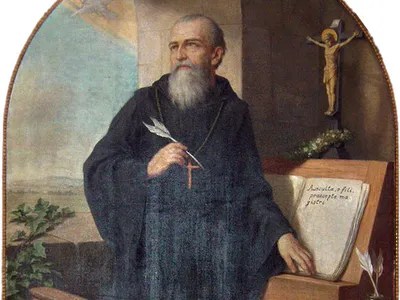
The Feast Day of St. Benedict

Preferring Christ: The Rule of St. Benedict

Today is the Feast Day of St. Benedict of Nursia. St. Benedict is among the posse of saints that surround my life, interceding for me before the LORD, our God. The Rule of St. Benedict which is so revered in the history of The Church is a rich tapestry of wisdom that is tightly woven with Sacred Scripture to guide us in living our ordinary life in an extraordinary way.

The Rule orientates us to the knowledge that God is everywhere, all the time, and because of this, every element of our ordinary day is potentially holy. Ascending to this truth that seems a little homely reorients us to our created identity because we learn to recognize that daily life is the grist for the mill of our consecration to our Creator. Does your day-to-day life seem stressful, challenging, hum-drum, or dull? Then St. Benedict is your guide through the ordinary into the extraordinary life in God.

The title, The Rule of St. Benedict, is better understood in its ancient context of the Latin word, regula, or guidepost. The prologue of The Rule begins with this: Listen, my child….incline the ear of your heart. Hearing and listening are two different things. Have you ever spent time with someone who hears you but doesn’t incline their spirit toward you enough to listen to you? Worse yet, do we hear the Word of the LORD without our spirit leaning toward him in order to really listen? St. Benedict emphasizes the importance of turning toward Christ with the posture of a child leaning into him to hear every word of beauty, goodness, and truth. In this way we are trained in preferring Christ above all things which is one of St. Benedict’s favorite themes. Praying with St. Benedict as we pray Sacred Scripture helps us look at our world through interior eyes. It helps us become better listeners to our Father and, in turn, better observers of the people and events of our lives.

Early in The Rule, we are guided in three monastic virtues: obedience, restraint of speech, and humility. Hmm? That sounds like the folk in the sixth century were just like us. St. Benedict makes it clear that these timeless virtues are inseparable. As we practice these virtues, we gain everything the LORD has promised us of the abundant life with Him. We, like St. Benedict, live in a culture of protest, excessive self-promotion, and overweaning pride. You and I can choose from the vices of the culture or we can pursue the virtues of God’s Kingdom; how is it going for you? It’s hard work to swim upstream in our downstream society! So let’s briefly consider these primary virtues.

Here’s a little side note, each of these virtues has its own chapter in The Rule. Obedience gets 19 verses of attention; Silence gets one verse of attention, and Humility has a whopping 70 verses of attention! Take a knee with me at this observation!

Regarding the virtue of obedience, St. Benedict writes that the first step of humility is obedience without delay. He encourages us to, immediately leave all that is our concern and forsake our own will, with our hands disengaged from what seems urgent to us. I am driven by goals, so much so that finding balance in the daily round is a consistent prayer I offer to the LORD. Do you suffer from tunnel vision as I do? Disengaging my hands from what seems so important to me in a moment takes monumental effort sometimes. I am learning to appreciate the slowness that St. Benedict emphasizes throughout The Rule because it is in slowing down my pell-mell thoughts and actions I’m trained in obedience. What I am discovering as I slow down is there’s very little in life that is worth the whims and appetites of my self-indulgent grasping.

Regarding the virtue of Silence, St. Benedict writes Let us do as the prophet says: “I said, I will take heed to my ways that I do not sin with my tongue: I have placed a watch over my mouth… He draws our attention to the importance of silence with scriptures from the book of Proverbs: In too much speaking you shall not avoid sin. (Proverbs 10:19) And, Death and life are in the power of the tongue. (Proverbs 18:21) Oh, so much could be said here (pun not intended). I kindle to what fellow Benedictine oblate Norene Vest wrote about this: it seems to me that the more we love words, we tend to let ourselves be satisfied by them, thus stopping short of the true satisfaction [that comes from Jesus alone]. It calls to mind St. Paul’s observation that people are always learning but never understanding. I respond to that verse by praying, Lord, I don’t want to be so caught up in speaking about what I am learning at the expense of not understanding it and living it out. Lord, remind me that it is through listening and silence that you teach and lead me into rest.

And finally, regarding the virtue of humility, St. Benedict gives us extensive guidance, beginning with the straightforward point: the problem of the spiritual life is pride (self-exaltation); the remedy is humility. St. Benedict emphasizes the need to contemplate Sacred Scripture; it comes down to this, the more we immerse ourselves in praying with Sacred Scripture we become acutely aware of our prideful leanings.

He writes that we must, by our ever-ascending actions, erect a ladder, like the one which the proud and fearful Jacob beheld in his dream in his flight from duty and responsibility. Daily life offers plenty of opportunities to learn how to descend and ascend the ladder of humility. As we practice humility, the ladder is lifted by the LORD to heaven; I like that! Yet, some days when I’ve forgotten to allow the LORD to teach me this way, the Holy Spirit remains on each rung with me, guiding me. How about you, friend? When you face an old struggle and bristle at someone’s words or actions, does pride knock you off the ladder of humility? I regularly find myself flat on my backside, wondering how I could fall off the ladder again!

When we follow the guideposts in St. Benedict has provided us, we receive the remedy for the consumer-driven society that peddles discord, disenchantment, and dis-ease. We live in the chaos of evil times, full of anxiety, anger, and the noise of modernity! St. Benedict shows us the path away from it into preferring Christ over all things (no matter how entertaining or attractive they are) and abiding in the dailiness of our extraordinary life with God.

Let’s pray with St. Benedict:

O Lord, I place myself in your hands and dedicate myself to you. I pledge to do your will in all things: To love the Lord God with all my heart, soul, strength

I desire to prefer nothing to the love of Christ…To desire eternal life with spiritual longing…to pray often. To ask forgiveness daily for my sins, and to seek ways to amend my life…Not to desire to be thought holy, but to seek holiness…Never to despair of your mercy, O God of Mercy.

I ask this in the name of the Father and the Son, and the Holy Spirit.

As it was in the beginning, it is now, and ever shall be, world without end.

Amen

The Little Foxes Steel the Vine

The Old Testament reading for Mass today is well worth our consideration. As is The Church’s way, we are offered the daily scripture readings that require more than a cursory glimpse, for in keeping with the Sacred Tradition of the Church–all of Sacred Scripture is written for our salvation. As we open our spirit to the Holy Spirit’s inspiration contained in the written word, we are tutored on how to live the virtues in order to fight the good fight against the vices of sinful thought that can lead to sinful actions which are on display in the narrative of Ahab and Jezebel. So, with that in mind, let’s examine the reading to discover what the Holy Spirit desires to accomplish in our thoughts, motives, and actions.

If you have been following the daily readings in the Old Testament, then you know much of the backstory of King Ahab and his wife Jezebel. I bet you already know today’s recorded event won’t end well for them. Ahab and Jezebel refused to accept God’s authority over them by acting on the many vices that festered in their spirits. Those actions eventually led to a messy ending for them where God’s justice was served. Let’s pick up the narrative of I Kings 21: 1-17 as the extent of their spiritual disease reveals their evil; I will paraphrase parts of the lengthy narrative.

Naboth the Jezreelite had a vineyard in Jezreel
next to the palace of Ahab, king of Samaria.
Ahab said to Naboth, “Give me your vineyard to be my vegetable garden,
since it is close by, next to my house.
I will give you a better vineyard in exchange, or,
if you prefer, I will give you its value in money.”
Naboth answered him, “The LORD forbid
that I should give you my ancestral heritage.”
Ahab went home disturbed and angry..
.

[Ahab seethed in his anger, complaining to his wife Jezebel]

His wife Jezebel came to him and said to him,
“Why are you so angry that you will not eat?”

[I wanted something Naboth had and he wouldn’t give it to me!]

His wife Jezebel said to him,
“A fine ruler over Israel you are indeed!
Get up.
Eat and be cheerful.
I will obtain the vineyard of Naboth the Jezreelite for you.”

[Jezebel used the power of Ahab’s office as king to plot against Naboth with lies and accusations to paint him into a corner that he would not be able to get out of alive]

And they
[the bribed accusers] led Naboth out of the city and stoned him to death.
Then they sent the information to Jezebel
that Naboth had been stoned to death.

[Jezebel went in to the king with the “good” news]

“Go on, take possession of the vineyard
of Naboth the Jezreelite that he refused to sell you,
because Naboth is not alive, but dead.”
On hearing that Naboth was dead, Ahab started off on his way
down to the vineyard of Naboth the Jezreelite,
to take possession of it.

Such evil people! Such duplicity! Such injustice! But wait, let’s consider the heart and soul of Ahab and Jezebel. A small parable comes to mind from another Old Testament book; The Song of Solomon 2:15. It reads:

Catch us the foxes,
    the little foxes,
that damage the vineyards—
    for our vineyards are in blossom.

The putridity of Ahab and Jezebels’ behavior reveals that somewhere along the way, they had little foxes that snuck into their minds and began to damage them from the inside out. Those little foxes had names: pride, lust, gluttony, greed, sloth, anger, and envy: the seven vices. Those vices motivated their actions and ended in God’s judgment against them.

This is why The Church keeps the Sacred Scripture ever before us. This is why our Triune God sends his Holy Spirit into our lives to grant us his wisdom to live our lives. The Holy Spirit gifts us so that we may fight against the vice that motivates us to act unjustly toward another. Because of Christ’s Passion for us, we can confess those vices and be forgiven. Because of Christ’s resurrection from death, hell, and the grave, we can be strengthened in virtue and transformed to live in the abundance of a well-tended vineyard!

How does the vineyard of your soul look today? Are their little foxes running amuck in your heart and mind? If you are anything like me, friend, you regularly have to walk the wall of your vineyard looking for the holes that allow the little foxes into your soul. The Holy Spirit comes alongside us as we examine the wall, giving us the grace and mercy of our Lord Jesus Christ, helping us repair what has broken down in us. The Church comes alongside us, as well, to give us the Sacrament of Confession and the Daily Examine as tools for the repair. Sometimes I need to do minute-by-minute examinations of my thoughts and motivations; do you feel me? I invite you to pray with me the prayer of examen with the seven vices with the seven virtues.

Triune God, please grant me your humbleness to remove my prideful self-promoting thoughts and actions.

Grant me your purity and self-restraint to remove my lustful striving after more; for excess.

Grant me your patience to remove my judgmental assumptions that lead to an angry spirit.

Grant me your temperance to remove my gluttonous consumption of all the distractions that I use to ignore the sickness in my soul.

Grant me your kindness to remove the envy of others that traps me in comparisons, jealousy, and self-loathing.

Grant me your forbearance to remove the sloth of spirit that causes me to sink under the weight of what I perceive is demanded of me or causes me to despair that I will never change.

I ask this, in the name of the Father and the Son and the Holy Spirit.

As it was in the beginning, it is now and ever shall be, world without end.

Amen


Say Yes More Than You Say No

Jesus said to his disciples:
“Be merciful, just as your Father is merciful.

“Stop judging and you will not be judged.
Stop condemning and you will not be condemned.
Forgive and you will be forgiven.
Give and gifts will be given to you;
a good measure, packed together, shaken down, and overflowing,
will be poured into your lap.
For the measure with which you measure
will in return be measured out to you.”

The Gospel according to St. Luke 6:36-38

The best advice I received as a parent of young children was this: “Say yes more than you say no.” It’s a lesson that stayed with me long after our children left home because it applies to all relationships. The child psychologist that wrote that advice was referring to the spirit of “no” that we must guard against in parenting children with rigidity and close-mindedness. We can soften by saying “yes” in the important task of raising children with love, acceptance, and forgiveness. I thought of this as I read the gospel reading today for Jesus; the Master Psychologist is the perfect example of saying yes more than no. His mercy is his yes to us!

The response of mercy is the prerequisite of living as God’s child, you could say it’s in our DNA as a beloved child of the Most High God; woefully dormant sometimes, but it is there. The heart of the good news of Jesus is this: “God so loved the world that he gave…” and the entirety of his giving to us is revealed in Jesus’ actions and teachings. We witness the if/then of saying yes to God as Jesus lived among us giving practical insight into how to say yes more than we say no to our neighbor, be it our child, spouse, sibling, friend, co-worker, or acquaintance.

Perhaps you grew up under the supposition of God as Judge rather than of God as Lover; that kind of thinking can entangle us in a briary patch that only the Lover of our Soul can rescue us. Do you feel me? I think what hinders us in saying yes with mercy and acceptance to others is that we’ve deluded ourselves by believing this of the LORD because sometimes we transfer this thinking to our reactions to others. We so easily default to judgment in our thoughts, words, and actions that others have a hard time seeing mercy and love in us; it’s as though the word “No” is flashing with neon lights from our countenance. The LORD desires to purge us of this sin.

The remedy is the confession of the judgmental spirit we excuse in ourselves. But then, we must allow the Holy Spirit to guide us in choosing to say yes to others as the LORD says yes to us! What makes me think that I can do otherwise? Remembering “For God so loved the world that he gave…..” is helping to remove the proverbial log in my eye as I live beside others in this life; this is how I have been praying that truth over my life, “For Lois so loves God that she gives…..” Wow! That stops me in my tracks when judgment and condemnation begin to poison my thought life. It’s hard work, but Christ is yoked with us as we plow through the weeds that entangle us!

Today’s gospel reading happens to be one of the many “Come-to-Jesus” readings that are helping me relearn the LORD as Lover by unlearning the attitudes and actions I can accumulate in saying “no” to others through my judgmental thoughts and words. I invite you to pray with me the Gospel according to St. Luke 6:36-38

“[Lois] Be merciful, just as your Father is merciful.”

Father, your forbearance and grace cannot be measured; it’s beyond my comprehension. Help me learn to extend my “yes” of love and acceptance of others. Holy Spirit, reveal all the thoughts I have that are contrary to love. Purge them from my mind.

“[Lois] Stop judging and you will not be judged.
Stop condemning and you will not be condemned.”

LORD Jesus, you rubbed shoulders with anyone and everyone, even those that we would avoid if left to our own devices. You love! No matter the creed or ethnicity or sexual identity or state of existence! Holy Spirit, expand mercy in me until I no longer see anyone as unequal to me. I love you so much that I choose to give acceptance to everyone. We are your children.

[Lois] Forgive and you will be forgiven.

Savior and Redeemer, you love me so much that you forgive me–my sins and failings, my raw edges, my pride, fear, and anger. I choose to love you so much that I desire to forgive others. I choose to love you so much that I extend grace rather than second-guessing judgment when I don’t understand another’s words or actions. I love you so much that I choose to look for you in another’s eyes; I choose to see your face looking back at me. I love you so much that I choose my countenance says yes to everyone, EVERYONE!

“[Lois] Give and gifts will be given to you;
a good measure, packed together, shaken down, and overflowing,
will be poured into your lap
.”

Father of all Good Gifts, you overwhelm me with your grace and mercy, your joy and peace. Your love is endless! Forgive me for putting limits on my love for others. You did not create me this way; would you recreate generosity of spirit in me? I don’t want to give by counting what it will cost me because it already cost you everything to love me. I choose to love you so much that I freely give the gifts of love, joy, peace, patience, kindness, goodness, generosity, gentleness, and faithfulness to others.

[Lois]… the measure with which you measure
will in return be measured out to you.”

Holy Spirit of God, I’m ashamed at how quickly I measure others by impossible standards! Forgive the stingy thoughts that creep into my unguarded mind. Train me to say yes to your love at the first hint of my withholding love from another.

I love you so much that I give my thoughts, words, deeds to you without any measure. I love you so much that I choose to love as you have loved me, laying my life down in favor of the love you desire to give through me.

In the name of the Father, and the Son, and the Holy Spirit.

As it was in the beginning, it is now, and ever shall be, world without end.

Amen

In A Word….”Selah”

Today’s readings from the psalms and oracles of the prophets serve as a soundtrack, as it were, for us as we have been considering the beginnings of God’s chosen people, the Israelites, recorded in Genesis. It’s not hard to recognize the same soundtrack plays as a backdrop for our own lives as we grow into our identity as God’s child. In fact, I believe that is why the psalms and oracles are so prevalent in The Liturgy of the Church, the words unite our spirit with the Spirit of God’s voice throughout the ages.

There is a certain word that is often sung or implied as a theme and by heeding it I may receive the LORD’s help as I walk the path of salvation. The word acts as a pop-up reminder to us to remember who we are and to whom we belong as we tread our own way through the high and low places of our journey of salvation. Consider this paraphrase of Psalm 46.

God is [my] refuge and strength,
    a very present help in trouble.  Therefore [I] will not fear …… Selah

…God is in [my] midst; [I] shall not be moved;
God will help ….
 Selah

….“Be still, and know that I am God.
    I will be exalted among the nations,
    I will be exalted in the earth!”….
 Selah

The words of the psalmist convey the ever-present help of the LORD to us as the way to mindfulness of the LORD’s quiet presence to us. The psalmist ends each phrase with the word “Selah”, which means “forever” or “to lift up; exalt”, its presence in the psalm is a cue for us to pause or to take a breath allowing our minds to take in what the psalmist has proclaimed. It serves as a sacred and silent interlude for us to receive the LORD’s truth. Within this particular psalm, there is the implication of the “if/then” of the fullness of God’s Covenant with us. He calls the people to “Be still and know that I am God,” to consider what the LORD in his mercy is trying to teach us as we live out our salvation: If you will remain silent, listen and linger with me, then you will know I am your fortress; I will be your salvation! Sounds easy enough, doesn’t it? Yet in practice, it can take a colossal effort to remain silent. I am sometimes tempted to rely on my own judgment to quickly plow through the interruptions of life or become so enamored by the shiny parts of life that I’m distracted from the reality of the LORD’s Covenant with me.

We see this evidenced in what we’ve been reading about the history of God’s people; how fear and pride dogged their path, how they allowed the so-called gods of the culture around them to lose sight of the LORD’s Covenant. Eventually, fatigue from their striving to fit in with the culture wears them down. What I have observed in my own life is that if fear and pride don’t drive me to my knees before the LORD, fatigue certainly will. I need “Selah” for I weary of the tug of war between my own will and the LORD’s will…..that’s just like him, isn’t it? He allows us to come to the end of ourselves where we finally cease striving. It’s as if the LORD says, “Lois, I finally have you where I need you…..now, let’s consider how you are striving to achieve and acquire what comes from Me alone.”

Two other passages from the psalms and the prophet are included in the Liturgy today that draws our spirit into a “Selah”. From Isaiah 30:15, “By waiting and by calm you shall be saved. In quiet and in trust your strength lies.” And again in Psalm 124 we can imagine the psalmist seated on a mountainside of the rugged terrain of Israel. As he sits there, he is pondering all the “what ifs” of life and remembers the faithfulness of the LORD as his rock and refuge. In that “Selah” a song formulates in his mind and he begins to sing,

If it had not been the Lord who was on my side
    when people rose up against me,
then they would have swallowed me up alive,
    when their anger was kindled against me;
then the flood would have swept me away,
    the torrent would have gone over me;
then over me would have gone
    the raging waters.”

Friend, are there “what ifs” in your life? Do you sit still before the LORD as you ponder them?…. Selah

Have you come through a time of celebration and are left with a sense of satisfaction and gratitude?… Selah

Were you following a path set before you when circumstances went sideways for you? …Selah

Has someone you trusted betrayed you? ….Selah

Has the pandemic brought about a financial reversal in your life?… Selah

Do you tend to focus on what the LORD hasn’t done for you?… Selah

When you scurry after pleasures that are passing, do you…Selah?

The joy of our salvation comes through our own willingness to Selah; to be still and know that the LORD is forever faithful and true. Only He can truly satisfy.

LORD God, remind us that nothing is new under the sun. You never change and your responses to our own choices are the same as they were to our ancestors in the faith. LORD, you are faithful and true even when we are not. Slow us down, train us to embrace “Selah” in our posture before you.

In the name of the Father and the Son and the Holy Spirit. Amen