Nobodies

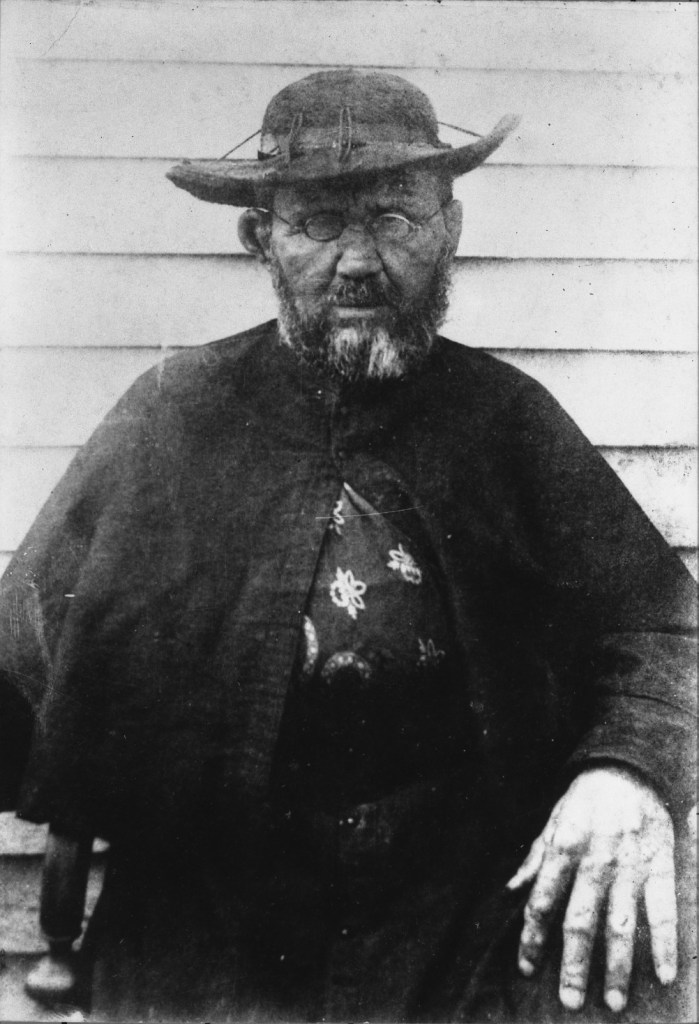
This past week The Church honored the memory of St. Damien de Veuster. It was said of Father Damien that there was nothing supernatural about him. He was a vigorous, forceful man with a big kindly heart in the prime of life and a jack of all trades. He was a man of determined tenacity to Christ his world, specifically the world of the leper colonies of Hawaii. Ambrose Huthison, who worked alongside him and became a close friend of Father Damien, said that “he loved to work with him in his crusade to put down evil. There was no hypocrisy in him.”

Fellow priests thought Father Damien was too uneducated; they believed he wasn’t up to the task. Yet St. Damien persisted in prayer and study and depended on the intercession of St. Francis Xavier to be chosen for the mission to the lepers. St. Francis Xavier was a priest who served The Church in Portugal, India, Japan, and China. He, as well as St. Damien, died in their service to the people they helped.

The Church honors the memory of Saints of Scripture and Salvation History during Eastertide who continued Christ’s mission of setting captives free. The people they served are the nobodies of history that remain nameless to us, yet they bear the name: Beloved.

***

“The Spirit of the Lord is upon me,
    because he has anointed me
        to bring good news to the poor.
He has sent me to proclaim release to the captives
    and recovery of sight to the blind,
        to let the oppressed go free,
to proclaim the year of the Lord’s favor.”

And he rolled up the scroll, gave it back to the attendant, and sat down. The eyes of all in the synagogue were fixed on him.  Then he began to say to them, “Today this scripture has been fulfilled in your hearing.”

The Gospel according to St. Luke 4:18-21

***

We read of the mission of the Early Church during Eastertide and we witness the disciples and followers Christing the world by setting captives free through the power of the Holy Spirit flowing through them.

The readings for today in The Divine Office and the Mass include two events from the Acts of the Apostles that embody the mission that Christ gave to the disciples. We recall Peter and John’s encounter with a nameless lame man in our Morning Prayer readings:

Now Peter and John were going up to the temple at the hour of prayer, the ninth hour.  And a man lame from birth was being carried, whom they laid daily at the gate of the temple that is called the Beautiful Gate to ask alms of those entering the temple. Seeing Peter and John about to go into the temple, he asked to receive alms. And Peter directed his gaze at him, as did John, and said, “Look at us.” And he fixed his attention on them, expecting to receive something from them.  But Peter said, “I have no silver and gold, but what I do have I give to you. In the name of Jesus Christ of Nazareth, rise up and walk!” And he took him by the right hand and raised him up, and immediately his feet and ankles were made strong. And leaping up he stood and began to walk, and entered the temple with them, walking and leaping and praising God. And all the people saw him walking and praising God and recognized him as the one who sat at the Beautiful Gate of the temple, asking for alms. And they were filled with wonder and amazement at what had happened to him.

And then we read about Saints Paul and Barnabas’ encounter with a nameless lame man in our Mass readings:

[There was a] a crippled man, lame from birth,
who had never walked.
He listened to Paul speaking, who looked intently at him,
saw that he had the faith to be healed,
and called out in a loud voice, “Stand up straight on your feet.”
He jumped up and began to walk about.

The first saints-in-the-making saw the nameless nobodies and listened to their pleas for help, and they gave them Christ through the Holy Spirit flowing through their lives. Those nobodies, no doubt, had been crying out to other nobodies passing by for a long time, but someone different passed by them in these encounters. The disciples and apostles didn’t hear their pleas as noise; no, they stopped, looked intently at them, and listened. And it made all the difference for those nobodies! There have been multitudes of nobodies throughout Salvation History up to this very day who need someone to look intently at them, acknowledge their pain, and listen to them. And here we are Christing our corner of the world, living beside nobodies who wait for us to look intently at them. Isn’t the Holy Spirit just waiting for us to stop and listen?

The Saints in Salvation History chose to suffer as Christ suffered because of their deep love for God. They were ridiculed, ostracized, maligned, and persecuted, but they remained faithful to Christ’s mission to set captives free. Saints Peter, John, and Paul were martyred, and Father Damien became a leper himself. He chose to remain beside the lepers, and as he continued to fight against the prejudice and ignorance of his day, society gradually changed its mind about the “nobody lepers.”

Today we aren’t surrounded by the extremes of physical disease as our ancestors were, but I submit, that we suffer from the extremes of spiritual dis-ease–the blindness of pride, the lameness of fear, the deafness of pride–it emanates from the nobodies in our lives. Well, fellow saint-in-the-making, who is in your corner of the world just waiting for us to look intently at them and listen to the pain of their lives? How long have they been observing us as we come and go past them? How long have they been waiting for us to stand up for them in the face of prejudice and misunderstanding?

LORD, sometimes it’s not easy to listen to others’ complaints. We sometimes grow impatient with their fear, pride, and anger. Just as you bore our disease, may we love the nobodies that are difficult to love.

Holy Spirit of God, make us self-forgetful. Remove our self-preoccupation so that we may abide with the marginalized and forgotten in our corner of the world.

LORD, our Savior, and Healer open our eyes and ears to the reality of the nobodies in our life that need us to listen to them for you. Quiet our hearts so that we may join you in setting the captives free.

In the name of the Father, and the Son, and the Holy Spirit.

As it was in the beginning, it is now, and ever shall be, world without end.

Amen


Grace and Power

The word of God continued to spread; the number of the disciples increased greatly in Jerusalem, and a great many of the priests became obedient to the faith...

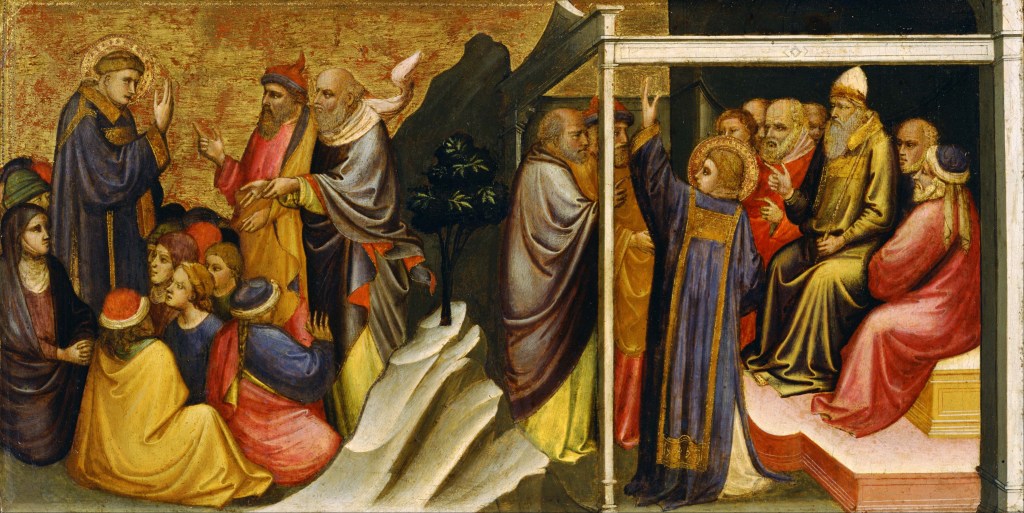
 Stephen, full of grace and power, did great wonders and signs among the people. Then some of those who belonged to the synagogue of the Freedmen (as it was called), Cyrenians, Alexandrians, and others of those from Cilicia and Asia, stood up and argued with Stephen.  But they could not withstand the wisdom and the Spirit with which he spoke. Then they secretly instigated some men to say, “We have heard him speak blasphemous words against Moses and God.” They stirred up the people as well as the elders and the scribes; then they suddenly confronted him, seized him, and brought him before the council.  They set up false witnesses who said, “This man never stops saying things against this holy place and the law; for we have heard him say that this Jesus of Nazareth will destroy this place and will change the customs that Moses handed on to us.” And all who sat in the council looked intently at him, and they saw that his face was like the face of an angel.

Acts of the Apostles 6:7-15

It is Eastertide! The Church draws our attention to the early days of her actions recorded in the book of the Acts of the Apostles. I like the word Eastertide, for indeed, we witness the tide that changed the world: the Tide of Christ and his Church flowed to the shores of every place the Spirit of God sent the disciples. As the tide flowed, we read of men and women becoming the first saints of The Church. In today’s reading, we witness the courage and wisdom of St. Stephen before he becomes the first martyr of the Church.

Likely, we will not have to endure the extent of subterfuge against us or the persecution and martyrdom St. Stephen faced, but we each face daily circumstances that may be unjust, where gossip and slander against us test our courage as we swim against the tide of gossip and slander. The small sacrifices we make each day for the sake of love for our LORD are sometimes referred to as martyrdom of the self in that we learn to love our LORD more than our self-interest. What can we learn by observing St. Stephen’s character that will spur us on in our swim against the tide of the culture around us?

Stephen was a man of integrity. The Church recognized that he was full of faith and the Holy Spirit. When we choose to empty ourselves of every shred of self-interest, we make room for the presence of the Holy Spirit. I’m learning that if I am going to receive the grace and power of the Holy Spirit, I have to let go of my notions and ideas of how life should go for me and for those I love. I have to let go of the fear of what others may plot against me for my faith. St. Stephen may have expected life to turn out differently for him, but we observe that he was a man whose inclination toward Jesus motivated his responses and actions toward his persecutors.

LORD, my self-interests are often motivated by my obstinance and fear of rejection. And self-absorption sometimes drives me into overweening pride. I desire integrity so that my inner person prefers you and your will for me.

St. Stephen was wise, and the synagogue officials were envious of him and outraged by the Spirit with which he spoke. He was not attached to his reputation or proving his worth to others or defending himself against lies about him. He knew who he was as God’s child, and his eyes fixed on standing firm in that truth and responding to others from that truth.

LORD, free me from self-protection. Guard my tongue; I desire that all the words of my mouth echo the Truth, Beauty, and Godness of The Faith. I can waste a lot of words on a lot of stuff that doesn’t matter. I can use words as weapons for my insecurities. But I desire that you fill me with understanding so that what I say or don’t say is motivated by the wisdom of your Spirit within me. 

We learn from the next chapter of the Acts of the Apostles that St. Stephen, amid the stoning that would cause his death, “gazed into heaven and saw the glory of God and Jesus standing at the right hand of God.” The testament of those last moments of his life here on earth revealed the LORD’s faithfulness to him; St. Stephen had received the truth of Christ in his heart and mind; he stood up for the truth about Jesus, now Jesus was standing up for him, waiting to receive him into his presence.

LORD, I desire to fix my gaze on your glory. When I am frightened by the threats around me or the pain I endure, will you lift my chin to look you straight into your eyes? I desire to live in the confidence that you receive my spirit as I choose to remain confident in the truth that you are with me always, no matter what causes me fear.

St. Stephen was a forgiver. His last words echo Christ’s words from the cross, “Lord, do not hold this sin against them.” I’m tempted to cling to injustices and stew in resentments and regrets. I’m tempted to keep mental lists of grievances.

LORD, empty my memories of what others may have done to hurt me; may I only desire to forgive them and will their good. Would you give me emotional amnesia of offenses that can free me to center my heart and mind on you?

St. Stephen, pray for us.

In the name of the Father, and the Son, and the Holy Spirit.

As it was in the beginning, it is now, and ever shall be world without end.

Amen.

Memorial of St. Anthony the Abbot


Today The Church honors the memory of St. Anthony of the Desert. He is known as the Father of all Monks because of his inspiring perseverance in holiness. It is said that when he heard the words from St. Matthew 6:34: “So do not worry about tomorrow, for tomorrow will bring worries of its own. Today’s trouble is enough for today,” he gave away everything and went outside the village to live a life of praying, fasting, and manual labor. What sets St. Anthony apart was that he wasn’t just a hearer of the Word; he desired to become what Jesus proclaimed; he desired to be another Christ. He told many wanna-be monastics who came to visit him that the key to the ascetic life was perseverance, not to think proudly, and treat each day as if it were the beginning.

We have just crossed the threshold into the new beginning of a calendar year. At least for me, the Memorial of St. Anthony has been divinely planned because I have been examining some of the patterns of my own life that require Holy Spirit-given perseverance to become more humble like Christ. In a frenzied world that has lost its center, I can be whipped around by the tail, or get so caught up in trying to control the beat of my life that I lose my breath in effort and striving. Sometimes my life sounds to me like clanging gongs and crashing cymbals as St. Paul wrote. The asceticism of St. Anthony and other monastics entices me, beckoning my heart to retreat from the noise that surrounds me, even the noise within me! I can’t retreat to the edges of the world, but I can retreat into a solitude of the heart through the monastic understanding that all of life is sacred, and God is present to me as much as I will allow him to be.

The word ascetic has negative connotations in a society that turns to superficialities, comforts, and conveniences to solve the deep hunger of our lives. The thought of denying ourselves anything sends chills up the spine. Nevertheless, the self-discipline and intentional practices of self-denial that Christ proclaimed are true for every age. We can take our cues from the hard-won wisdom of the monastic life as it is modeled after Christ’s teaching.

The common theme in the monastic tradition of reverence toward the LORD is striking. Saint Athanasius wrote of St. Anthony, “Anthony was not known for his writings nor his worldly wisdom, nor any art, but simply for his reverence toward God.” Christine Valters Paintner wrote in one of her many books on Celtic monasticism, [To reverence God] “is to see all of creation as woven together in holiness and to live this truthIn this loving act, we begin to knit together that which has been torn; we gather all that has been scattered.” She writes that when we begin to see the Earth as our monastery no matter where we are, our reverence for the LORD can bring Christ’s healing presence to the world. Oh, I desire that for myself?

On the outside, the monastic tradition looks restrictive and rather tedious. But don’t you ever rail against the restrictions of the dull routine of our lives? I’m learning that the more I’m reverent to the LORD, the more I see life with all its dull bits as an offering to him. I’m becoming more aware that the ground I am standing on is holy ground ablaze with God’s presence. Instead of turning to a distraction like eating too much, drinking too much, playing too much, speaking too much, working too much–I can take an ascetic perspective by simply slowing down and recognizing that the very distractions I run to are leading me farther away from becoming another Christ in my corner of the world.

When I begin to understand this, all of life becomes sacramental as I reverence the LORD, in that I persevere in the knowledge that God is making all things new in each moment. Our Catholic Faith is a sacramental faith, not just in how we worship at Mass, but in how we live our ordinary lives deliberately reverent of the LORD. The monastic tradition of our Faith embraces this intentional way of life: we all can benefit from that example! As I knead the dough for our bread for the week or as I fold our laundry I enter into sacramental worship before the LORD God with the work of my hands. And I respond as Moses and probably many monastics before us by taking off my proverbial sandals for the ground beneath me is holy ground, prostrating myself in the very stuff of earth from which I was created.

My burgeoning desire is to follow Christ in the steps of the monastic tradition where Christ calls to us to live mindful of who we are with more intentionality at becoming another Christ. Just as Jesus lived, monastics unite themselves to the rhythm of God’s providence. Words like reflect, linger, savor–can become the music of our life when we choose to NOT to worry about tomorrow when we choose NOT to distract ourselves with soul-sucking pursuits when we choose NOT to acquire more of the stuff of this world.

How about you, friend? Do you find yourself more agitated by life as you try to keep pace with the world around us? Are there some deliberate steps you know you need to make to slow yourself down, to slow your family life down? As you embark on this calendar year you may want to ask yourself some of the questions I’ve been examining the hindrances in my life to how I reverence the LORD.

What am I distracting myself with that is hindering my holiness and robbing my joy? Jesus answers, “Do not lay up for yourselves treasures on earth, where moth and rust destroy and where thieves break in and steal,  but lay up for yourselves treasures in heaven, where neither moth nor rust destroys and where thieves do not break in and steal. For where your treasure is, there your heart will be also.” –St. Matthew 6:19-21

Am I allowing this day’s trouble to overrule trusting in the LORD? Jesus answers, “…do not be anxious about your life, … Look at the birds of the air: they neither sow nor reap nor gather into barns, and yet your heavenly Father feeds them. Are you not of more value than they?  And which of you by being anxious can add a single hour to his span of life? …Consider the lilies of the field, how they grow: they neither toil nor spin …  seek first the kingdom of God and his righteousness, and all these things will be added to you.” –St. Matthew 6: 25-33

What peace of mind am I missing out on by delaying my decision to persevere in holiness and wholeness in this particular area of my life? Jesus answers, “The Helper, the Holy Spirit, whom the Father will send in my name, he will teach you all things and bring to your remembrance all that I have said to you.  Peace I leave with you; my peace I give to you. Not as the world gives do I give to you. Let not your hearts be troubled, neither let them be afraid.” St. John 14:26,27

Oh, Jesus, we long for your transforming grace in our lives. Holy Spirit, teach us how to reverence you, Blessed Trinity whom we adore!

In the name of the Father, and the Son, and the Holy Spirit.

As it was in the beginning, it is now, and ever shall be, world without end.

Amen

The Beloved: Feast Day of St. John, the Evangelist

When I realized that today is the feast day of St. John the Evangelist, and that I am privileged to share my thoughts about St. John, I didn’t know where to start! The Holy Spirit has guided me in my journey into the fullness of our Faith using the incredible gift we have in St. John’s contemplative narration of Jesus’ life as well as his letters to the Early Church. St. John’s gospel is quite different than the other three; it is more like a conversation between friends. Yes, we observe Jesus’ compassion and passion as Jesus spoke his salvation into others, but St. John draws us to see Jesus right here, right now in our daily round. Salvation is a noun, yet as we live our life, it is a verb that unfolds through the extremes and the mundane of our life. I need that reminder so that I will allow myself to be saved from myself through living my ordinary life. Learning to live intimately inclined to Jesus as the Lover of my Soul has been a hard-fought battle. It wasn’t until I reclined in conversation with the Jesus of St. John’s gospel that I saw him beholding me!

The next day John again was standing with two of his disciples, and as he watched Jesus walk by, he exclaimed, “Look, here is the Lamb of God!” The two disciples heard him say this, and they followed Jesus. When Jesus turned and saw them following, he said to them, “What are you looking for?” They said to him, “Rabbi” (which translated means Teacher), “where are you staying?” He said to them, “Come and see.”

Seeing or beholding is a prevalent theme St. John uses throughout his gospel narrative. He begins his gospel with the words, “In the beginning was the Word, and the Word was with God, and the Word was God…What has come into being in him was life, and that life was the light of all people. The light shines in the darknessand the darkness did not overcome it…And the Word became flesh and lived among us, and we have seen his glory.” St. John proceeds to narrate the fullness of this truth by pleading with us to “come and see”; to behold our Savior through contemplation.

Take a moment to place the palm of your hand close to your face. What do you see? What can’t you see? In essence, what St. John is asking us to do is to pull away OUR palm (our SELF) and see what lies before us. Do you have trouble with your vision? Is it hard for you to see the life our Savior desires for you? I’ve struggled most of my life to look for God with my palm in front of my face. Through tremendous healing, I learned to remove my palm from my vision. Beholding the LORD through John’s eyes was transforming. What I saw in that light was that I am the beloved daughter of the Most-High God. I kindle to that word, “beloved.”

Today’s mass readings include a passage from one of St. John’s letters to the Early Church that begins with the greeting, “Beloved,” and concludes with, “We are writing this so that our joy may be complete.” Isn’t that what we long to know? That we are beloved and that our joy can be complete. Seem’s impossible sometimes, does it not? How do you feel about yourself and your life right now, right this minute? Is there a permeating understanding that you are God’s beloved and that joy is complete because of it? Or are you still waiting for some next thing to make you feel Beloved and joyful?

Beloved:
What was from the beginning,
what we have heard,

what we have seen with our eyes,
what we looked upon
and touched with our hands
concerns the Word of life —
for the life was made visible;
we have seen it and testify to it
and proclaim to you the eternal life
that was with the Father and was made visible to us— 
what we have seen and heard
we proclaim now to you,
so that you too may have fellowship with us;
for our fellowship is with the Father
and with his Son, Jesus Christ.
We are writing this so that our joy may be complete.

I John 1:1-4

Eugene Peterson wrote that the two most difficult things to get straight in life are love and God. Do you agree with that? I’ve come to believe it to be true in my own life. I know how messy my understanding of God has been and how that affected how I received his love and gave love to others. Is it just me, or do you struggle to detach “love” from approval and performance from abuse or neglect? For much of my life, I saw God as Judge, period. It wasn’t until these later years of my life that I’ve allowed myself to consider God as Lover, it has and continues to save me!

A turning point for me was a moment I shared with our eldest grandchild when she was eight months old. I was taken up in the wonder of Margot, the dimples on her tiny hands that would one day emerge as knuckles, her blue eyes that were so much like our sons, every detail of her existence swept me up in a love that only a grandparent can know for a grandchild. I adored her as I had never adored anyone else! We sat alone one day on the floor as she watched a Baby Einstein video. Observing her delight in the show caused me to delight. She would turn to me and look at me and smile and giggle, then point back to the television as if to invite me to watch the show with her. Into those moments, I dropped that proverbial palm from my face, and the LORD spoke very clearly to me, “Lois, I know that you could gaze at Margot for a long, long time, you would move heaven and earth for Marguerite to remain safe and secure in your presence and your love for her. Lois, I adore you more than you can adore Margot. I enjoy you; you are a pleasure to love; you are MY beloved daughter! Will you adore me as I adore you?” Tears poured from a wound that had never healed, a wound caused by conditional love and harsh judgment, a wound that infected my understanding of God, my Father. What followed was a journey guided by St. John’s gospel and letters.

God is love. When we take up permanent residence in a life of love, we live in God and God lives in us. This way, love has the run of the house, becomes at home and mature in us, so that we’re free of worry on Judgment Day—our standing in the world is identical with Christ’s. There is no room in love for fear. Well-formed love banishes fear. Since fear is crippling, a fearful life—fear of death, fear of judgment—is one not yet fully formed in love. We, though, are going to love—love and be loved. First, we were loved, now we love. He loved us first.

I John 4:17-19 (The Message)

I’ve learned that God desires to dwell with ME! Where once I felt I had to get things just right, say the right things, look the right way, perform in a certain way, I now see him sitting on the floor beside me. He doesn’t reject me; he adores me! There is nothing that would ever change his mind about me.

Friend, do you have a wound that festers in your life? A wound that blinds you to the truth of God’s love for you and infects how you love others. God adores you!

What are the messes you have made because of your fear that God will not come through for you or that you have to earn his love? God still adores you!

Does your fear, your pride, or your anger cripple you? Stand in line. Our first parents acted on their fear but God still loved them. God did, God does, and God will always adore you!

Lover of our Soul, teach us to see you; to behold you; to adore you!

In the name of the Father, and the Son, and the Holy Spirit.

As it was in the beginning, it is now and ever shall be, world without end.

Amen
“The-Saint-Who-Stocks-Me”

Remain in Me. It is the Word of God who gives this order, expresses this wish. Remain in Me, not for a few minutes, a few hours which must pass away, but remain… permanently, habitually, Remain in Me, pray in Me adore in Me, love in Me, suffer in Me, work and act in Me. Remain in Me so that you may be able to encounter anyone and anything; penetrating further still into these depths. This is truly the ‘solitude into which God wants to allure the soul that He may speak to it,” the prophet sang.‘”

–St. Elizabeth of the Trinity

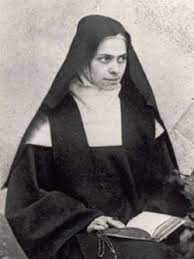
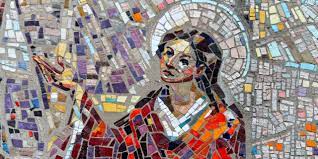
I was visiting a friend recently, and I noticed a new picture on her wall of one of the Saints of the Church. I commented on it and asked if the saint was her patron saint. She replied, “No, it’s The Saint-Who-Stocks-Me!” She went on to explain how the writings and prayers of the saint had compelled her so many times in her walk with the LORD. I knew what she was getting at because I had had the same experience with St. Elizabeth of the Trinity. I had talked with my spiritual director about how the timeliness of St. Elizabeth’s prayers and letter at a point in my life was a surprise blessing for me. She said that St. Elizabeth had chosen me. My experience confirmed what she said. And now, since hearing my friend’s title for the saint on her wall, I refer to St. Elizabeth as The-Saint-Who-Stocks-Me. Her prayers have so melted into my prayers that, at times, I’m not sure who’s voicing my prayer, me or St. Elizabeth through the power of the Holy Spirit praying through me!

It’s been three years since St. Elizabeth began stocking me. You see I had reached a point in my life where after three surgeries to give me relief from a genetic disease failed to stay the deterioration of my physical abilities. I was in a dark place, unable to see any good coming out of the physical suffering. I was more focused on what I had lost than what I might find. And then came St. Elizabeth of the Trinity, offering me insight and wisdom from her physical suffering with Addison’s disease that eventually took her life at age 26 in 1906. Me, I suffer because of loss of ability and chronic pain, but it is unlikely I will end in a physical death because of it. I had so much to learn and so much joy and hope yet to discover! St. Elizabeth stocks me as a persistent companion along the path of holiness.

The first words recorded from her final days begin with the Latin word, Nescivi–“I no longer know anything.” That’s quite a declaration coming from a nun who consumed the Word of God as breath itself! I think, though, I know what she was getting at. We come to the place in life where we realize all that we thought was sure, dependable, and controllable illudes us. I echo her thoughts, for I no longer know anything that I thought I knew before permanent deterioration set in. Have you been in a place where your spirit screams Nescivi? We can say with St. Elizabeth in response to an altered reality, “I no longer know anything. I do not want to know anything except ‘to know Him, to share in His sufferings, to become like Him in his death.'”

The LORD’s ultimate goal for us is to conform us into the image of Jesus, our LORD with skin on. How he allows life to unfold to accomplish that perfection in us varies, but it will always include suffering in some form or another. According to the letter to the Hebrews in the New Testament, God redeems suffering: “It was fitting that God, for whom and through whom all things exist, in bringing many children to glory, should make the pioneer of their salvation perfect through sufferings.” St. Paul wrote to the Colossians, “I am completing what is lacking in Christ’s afflictions for the sake of his body, that is, the church.” As uncomfortable it is to take in this truth, it does offer hope. My physical suffering isn’t unique when I consider this truth, and learning from St. Elizabeth’s short life is how the LORD opened my spirit to acceptance of life as it is and freedom from the futile doubting that delays spiritual transformation.

St. Elizabeth prayed, “O my God, Trinity whom I adore, help me to forget myself entirely so as to be established in you as still and as peaceful as if my soul were already in eternity. May nothing be able to disturb my peace…” She desired that every moment of suffering from Addison’s disease carry her into the depths of God. She asked Him to pacify her soul and make it His heaven. When I read that, I regretted the time I had wasted being agitated by what God had allowed in my life. I began to recognize that He chose me as his beloved daughter, and nothing escaped his divine plan for me. I began praying with St. Elizabeth in her prayer, “Come into me as Adorer, as Healer, as Savior. O Eternal Word, Word of my God, I want to spend my life listening to you; I want to be completely docile, ready to learn everything from You. Then, through all nights, all voids, all weakness, I want to fixate on you always and to remain under your great light.” 

What about you, friend? Is your spirit bogged down in the miry clay of disappointment and regret? Do you wonder if God is a loving God intimately acquainted with your existence? The Saints of the ages have suffered and questioned God’s love, too. They stand as witnesses to us, sometimes weeping with us, sometimes instructing us, always cheering us on in the good fight of Faith in God. The Saints do stock us because they have eternity’s perspective to offer us if we will but seek the LORD in the Communion of Saints.

Dear loving Father, into your hands we commit our spirits.

In the name of the Father, and the Son, and the Holy Spirit. As it was in the beginning, it is now and ever shall be, world without end.

Amen.

Friends in High Places

The saints have always known that the power of good is something incalculable.

–Sigrid Undset

This month of November is, for Catholics, a month of remembering those individuals who have gone before us into eternity. We concentrate our intercession for their souls as they await judgment. But every day of the year offers moments to join our prayers with the Saints who have gone before us, who are before the Throne of God in worship, praise, and intercession for us. They are our mentors and guides as we make our way to Eternity; they surround us, interceding for us, the Church here on earth! (Book of Revelation 5-22).

There are saints among us, as well; saints-in-the-making. The ordinary people in our lives whom the Holy Spirit has placed there to spur us on and intercede for us. No doubt you can think of the names of the people who the LORD has sent at the right time in the right place to walk with you in our journey in sainthood. St. Paul lists a cadre of people in his letters who were nobodies by the world’s standard but were a part of the community of saints-in-the-making who assisted him.

I have benefited from the influence of a handful of individuals over these last few decades of desiring to know God more deeply. Let me tell you about one saint-in-the-making that came along beside me to introduce me to another completed Saint. I was a water fitness instructor for years, and in those years, I came to know Sister Margretta Doyle, who regularly came to swim during my early morning shift at a local health facility. Sister Margretta’s winsome spirit was contagious, and it wasn’t long before I positioned myself in the pool next to her so that I could learn from her life. The attractiveness of her life and her obvious love and devotion to Christ and His Church was a gift to me at a tumultuous time in my life. I desired stability, order, and purpose. The circumstance of my life had shown me that there are some things in life that simply cannot be easily manipulated. I was in a situation that wasn’t getting better, and the unpleasant realization of this wouldn’t go away. Have you ever felt that way, kind of painted into a corner that you did not choose? The common mentality that surrounded me focused on external solutions for that deep ache of my soul. You’ve been there, I am sure. When you realize that prized comforts no longer bring enough comfort. When you hear the emptiness of constant conversations and cultural noise does nothing but wear you out. When superficialities that once gave you a sense of false contentment now suck the life out of you. That’s where I was at, I was seeking depth and integrity. The Holy Spirit knew this, of course, and that’s why Sister Margretta was appointed to me, a guardian saint-in-the-making for the journey that was ahead.

One day, Sister Margretta wisely asked me if I had ever heard of St. Benedict. I had in the historical sense, but my knowledge of him was woefully limited (I didn’t grow up in a faith tradition that accepted the fullness of the truth of the Communion of Saints). What followed that conversation was the beginning of the fulfillment of a spiritual longing I had had for much of my life. I studied the life of St. Benedict with Sister Margretta and a group of men and women who were beautiful examples to me of how enlivening my life as a Catholic could be.

Through the witness of St. Benedict, I learned the LORD’s wisdom on how to live an ordinary life ordered according to God’s precepts. I witnessed how life-giving it could be if I allowed His Holy Spirit to order my life by the charism of St. Benedict’s life. St. Benedict faced the same challenges in the 6th century as in the 21st century–nothing new under the sun! The culture that is antichrist is perpetual and will be to the end of the age. The Rule of St. Benedict is based on the teachings of the Gospel and offered me hope for living in the mire of the antichrist milieu.

As I opened myself to St. Benedict’s example, I noticed a common thread among the men and women who have passed through the scrim of eternity. St. Benedict faced down the challenges of his day by choosing a way of life and an attitude of mind that mirrored Jesus. The dictum to listen as the foundation of spiritual growth threads through the entirety of the Rule of St. Benedict. His rule begins with, “Listen carefully, my child, to my instructions, and attend to them with the ear of your heart.” St. Benedict and all the Saints teach us not to base our judgments, goals, or sense of worth on what we see around us. We benefit from the story of their lives that live on in the Tradition of The Church.

When we are tempted to fix our gaze on what we can see, touch, hear and taste, we can study the lives of the Saints whose gaze was fixed on heaven in the midst of poverty, disease, persecution, and even death. Another practice we can do is pray with the Saints of the day. Our liturgical calendar cannot exhaust the many men and women who are, right now, praying before the throne of God for the salvation of the world.

When we find ourselves wringing our hands over the influence of the antichrist culture that we live in, we can recall that Saints lived in antichrist cultures, too. Just as St. Benedict stepped through eternity into my life to walk beside me, there is a Saint whom God desires to draw you to when you need them most. Ask the LORD to choose someone for you from the great cloud of witnesses that surround us.

We are all saints-in-the-making. Like Sister Margretta, whose life inspired my faith, we have observers of our life who the LORD wants us to inspire with our presence. They may be as close to you as a family member or as unknown to you as a grocery clerk. As saints-in-the-making, someone is always observing us. We are placed in their lives to spur them on in The Faith.

Father, you know who and what we need every moment. We thank you for the saints-in-the-making you have placed in our lives. We thank you for the gift of communion with the Saints who surround your throne!

In the name of the Father, and the Son, and the Holy Spirit.

Amen.

“You Act Just Like your Father!”

Saints Philip and James, Martyrs

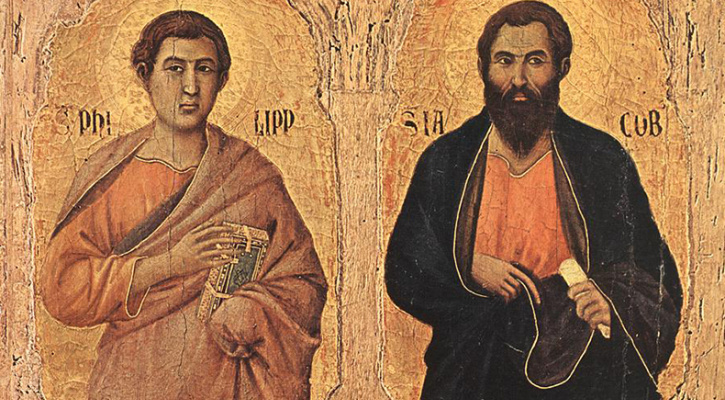
Have you ever been told that you act just like your father? What’s it like to hear that? I imagine it is a good thing to hear if you value the attributes passed on to you. A grateful child will often strive to reflect their father’s values as a way to honor their lives. This thought came to me today as I contemplated the Scripture passages in today’s readings (May 3, 2021) as the Church remembers and celebrates the lives of Saints Philip and James (The Lesser). These early Saints not only acted like Jesus, the Incarnate Father, but they also gave their lives in honor of Him. They stand with the other 12 pillars of the early Church as inspiration and encouragement for us as we, too, endeavor to act just like our Father in heaven.

Saint Paul writes to the believers in Corinth an admonition to remember that they have received the Gospel because men and women were willing to reflect the image of Christ to the world and proclaim His Good News. He writes a mini-lesson on the Passion and Resurrection of Christ, emphasizing that the resurrected Christ appeared to the faithful before his ascension into heaven. The passage ends, “After that he appeared to James, then to all the Apostles. Last of all, as to one born abnormally, he appeared to me.” I wonder why St. Paul makes a point of mentioning the appearance to the apostle St. James. Perhaps St. James had an impact on St. Paul in his early days as a Christian, who knows!

Saint John records in his gospel an encounter St. Philip had with Jesus: “Master, show us the Father, and that will be enough for us.” Jesus said to him, “Have I been with you for so long a time and you still do not know me, Philip? Whoever has seen me has seen the Father…” We see here that St. Philip is remembered for his desire to SEE the Father. There is a theme in the lives of these two apostles that we can learn from as we live in what is now known as the Apostolic Mission of the Church. The age of Christendom that the apostles gave their lives to establish has eroded under the tide of societal ideologies, where the Truth of Christ’s Gospel has “died the death of a thousand qualifications” as Antony Flew once concluded. And now, you and I are called to be the saints-in-the-making for such a time as this, this Apostolic Age version 2, so to speak? How can we, as Saints James and Philip, impact society with the Truth of the Gospel?

Recently, I came across something that Pope Francis said about the necessity of “white martyrdom” of those living in countries where freedom of religion is restricted. As we consider our own country and the growing restrictions on religious expression and freedom of speech, we must not delude ourselves into thinking that if we just keep our head down and continue to be a good neighbor, it will be enough to turn the tide against the escalating hatred of The Faith and the freedom to express that Faith here in the United States. Our white martyrdom is upon us; some of us on the frontline of public debate endure the “cancel culture” mindset every time they speak up for the Truth of Christ. They join the martyrs in this Apostolic Mission we are in now in the 21st century. The bloody martyrdom of Saints James and Philip came about because they did not waver in bearing witness to the Truth of the Gospel. Currently, white martyrs are being marginalized, slandered, maligned, and even imprisoned. Are they losing relationships because of their stand for the Truth of the Gospel? Probably. Does everyone around them cheer them on in their faithfulness to Christ and His Church? Certainly not! Will their lives end in a bloody death? I hope not!

I believe what Pope Francis was getting at in his reference to white martyrdom is a clarion call for you and me. We may not be well-known apologists or public figures; however, we live our lives alongside neighbors, fellow employees, and even family members who would allow the Truth of the Gospel to “die through a thousand qualifications.” If we are to “look just like our Father” by being transformed into the image of Christ, we will be confronted with choices every day that require us to die to our sense of self-protection. Do those around us know us for our faithfulness to the social teachings of Christ’s Church? Do we have the moral backbone to honor Christ’s image in us if we are threatened by their rejection or marginalization?

The white martyrdom of believers who face repeated trials in bearing witness to Christ can be terrifying. When we are tempted to despair over the isolation we may have to endure, we need to remember that the blood of the martyrs was the seed of the Church, and now we must stand up for the Truth they died to protect. We join the company of believers around the world as we stand for this Truth. In doing so, we can water the Church with our faithfulness and courage.

Father, grant us the courage of Saints Philip and James. May we make our own white martyrdom as a total offering to You, where we not only die to ourselves, the world, and its allurements, but we stand against the tide of our culture’s denial of You.

In the name of the Father, and of the Son, and of the Holy Spirit.

Amen