I recently spent time in the desert Southwest where I admired the unique beauty of the desert landscape, not unlike the desert terrain that Jesus entered in the Judean wilderness in his 40-day temptation from the enemy. My visit to the desert at the beginning of this Lenten season was timely in that the Holy Spirit revealed to me that the desert is necessary for the certain beauty that grows there.
Our Catholic Faith refers to our growth in holiness as the Purgative Way where we cast from our lives the stuff our spirit accumulates when we do not guard our hearts. During the Lenten season, purgation becomes what we refer to as the journey of humiliation, but here’s the thing, it’s the journey of love for the LORD first and foremost. Recognizing this, we see the LORD as the Lover of our Soul rather than a leering judge waiting for us to fail; our perspective on the purpose of humbling ourselves in honor of him transforms into the response of love.
The common question we ask of others at the beginning of Lent is, “What are you offering up for Lent? Perhaps a better question would be, “What are you offering to the LORD for his love for you during Lent?” Consider why Christ journeyed into the desert; his motivation was and always is love for us. Love led him to the desert, he didn’t need to prove who he was by conquering the temptations common to us, but we do; and so he went to show us the way through the desert into the abundance of the love-life in him.
One of the very first scriptures in the daily liturgy this past week was from St. John 13:34:
“I give you a new commandment: love one anotherAs I have loved you, so you also should love one another.”
I’ve been meditating on Jesus’ words as I enter into the Lenten season this year because I desire to choose the practice I offer the LORD as a response of love, for I am overwhelmed by the grace he has poured into my life. We are all familiar with John 3:16, “For God so loved the world that he gave…..” I’m taking the liberty to pray, “For Lois so loves God that she gives…..” And you know what? The Holy Spirit has given me a new perspective; the Lenten Fast can be a Feast as well. I desire to feast on this Lover of my Soul and respond as the beloved. I believe that he will faithfully reveal to me the attitudes of heart that need purging from my life as I remain with him feasting at his table.
I came across this litany recently and now I am praying it these days of the Lenten season:
The Fast Life
Fast from judging others; Feast on Christ dwelling in them. Fast from fear of illness; Feast on the healing power of God. Fast from words that pollute; Feast on speech that purifies. Fast from discontent; Feast on gratitude. Fast from anger; Feast on patience. Fast from pessimism; Feast on hope. Fast from negatives; Feast on encouragement. Fast from bitterness; Feast on forgiveness. Fast from self-concern; Feast on compassion. Fast from suspicion; Feast on truth. Fast from gossip; Feast on purposeful silence. Fast from problems that overwhelm; Feast on prayer that sustains. Fast from anxiety; Feast on faith.
– Author Unknown
LORD Jesus, deepen our love for you that fosters an eagerness to rid our lives of whatever habit or disposition that robs us of the feast you set before us.
In the name of the Father, and the Son, and the Holy Spirit.
As it was in the beginning, it is now, and ever shall be, world without end.
“Children, how hard it is to enter the Kingdom of God! It is easier for a camel to pass through the eye of a needle than for one who is rich to enter the Kingdom of God.”
As Jesus was setting out on a journey, a man ran up, knelt down before him, and asked him, “Good teacher, what must I do to inherit eternal life?” Jesus answered him, “Why do you call me good? No one is good but God alone. You know the commandments: You shall not kill; you shall not commit adultery; you shall not steal; you shall not bear false witness; you shall not defraud; honor your father and your mother.” He replied and said to him, “Teacher, all of these I have observed from my youth.” Jesus, looking at him, loved himand said to him, “You are lacking in one thing. Go, sell what you have, and give to the poor and you will have treasure in heaven; then come, follow me.” At that statement, his face fell, and he went away sad, for he had many possessions.
Jesus looked around and said to his disciples, “How hard it is for those who have wealth to enter the Kingdom of God!” The disciples were amazed at his words. So Jesus again said to them in reply, “Children, how hard it is to enter the Kingdom of God! It is easier for a camel to pass through the eye of a needle than for one who is rich to enter the Kingdom of God.” They were exceedingly astonished and said among themselves, “Then who can be saved?” Jesus looked at them and said, “For men it is impossible, but not for God. All things are possible for God.”
The Gospel according to St. Mark 10:17-21
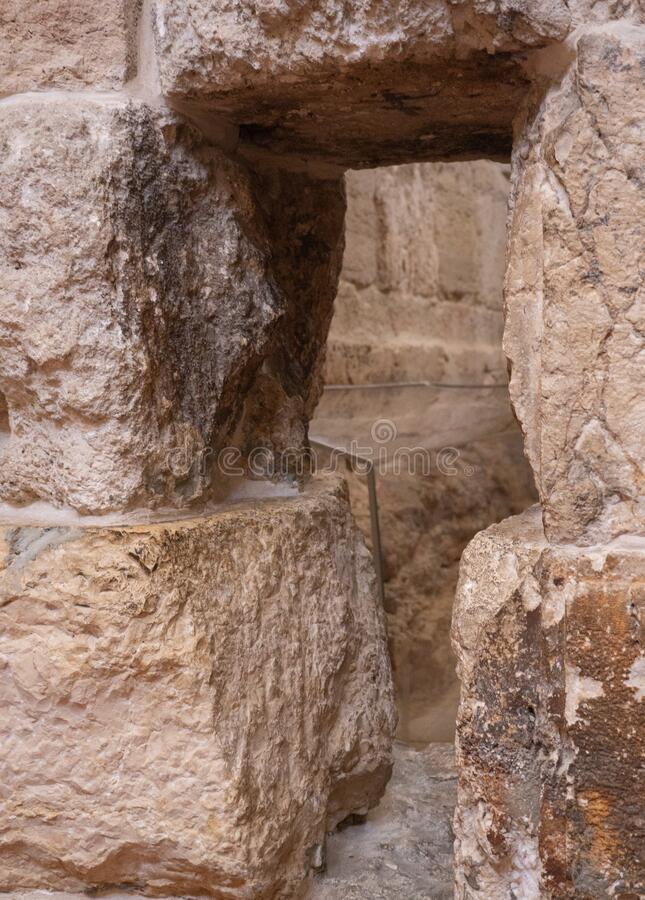
The gospel reading for today includes a phrase that was understood by the Israelites, but unfamiliar to us. Jesus remarks to the disciples, “It is easier for a camel to pass through the eye of a needle than for one who is rich to enter the Kingdom of God.” What exactly was Jesus getting at? There were actually narrow gates named Needles Eye in the formidable city wall that surrounded Jerusalem. They were used when the city’s main gates were closed at night or during an invasion. They were built as security measures since a person would have to unload his camel of the load it was carrying and then carefully lead his camel through the low and narrow gate. Not an easy feat when you consider the 5-6 foot height of a camel, as well as the 300-1,000 pound load in the panniers, slung on each side of the camel! Not only was the camel too tall for the gate, but its load made it too wide for the gate. It was a slow process to unload the camel and then force the camel to its knees to scootch through the gate. An impossible feat, indeed!
It’s pretty clear that the requisite in receiving the abundant life promised to us by Jesus is detachment from anything that would weigh us down or hinder our progress in salvation and transformation. In effect, when we cooperate with Jesus’ mandate to unload ourselves of what we think defines us to follow him in this earthly kingdom, he is preparing our souls for the final entrance into the divine life with our LORD forever in the heavenly Kingdom.
The young man’s eagerness to get the law of God right is revealed in how he approached Jesus–he ran! Jesus, knowing the young man’s sincerity, looks into his soul; the narrative reads,
“Jesus, looking at him, loved him and said to him, ‘You are lacking in one thing...'”
That “one thing” is a depth of love that seeks to live and move and have our being in Christ alone! And that’s the tipping point, isn’t it? I find myself often running to Jesus wanting to do more out of my love for him while ignoring the load I’m trying to carry that will not fit through the proverbial eye of the needle. What’s in that load? Well, that’s as varied as humanity; the load contains an array of human endeavors unique to each of us. The young man carried the visible wealth of accumulation for that was his attachment. What’s in your load? I know what’s in mine!
Interestingly enough the The Church’s daily liturgy, prayers, and readings have included readings from the book of St. James and the Saints while we’ve been contemplating the gospel readings about following Christ. St. James and the Saints of The Church had to learn what we need to learn. What did they learn? As we lay down the load we’ve acquired from this earthy kingdom, he gives back the weight of his glory! And what makes up that weight? The eternal goods that Jesus speaks to when he said to his disciples, “I came that you may have life, and have it abundantly.” The one thing he asks of us is love of him first and foremost He desires to pour into our life the stable disposition of Prudence, Justice, Fortitude, and Temperance that lead us in the faith, hope, and love of God. Then he gives more of the weight of his joy, peace, and mercy. And then his Holy Spirit pours in wisdom, understanding, counsel, fortitude, knowledge, holiness, and reverence! The Father of all good and perfect gifts then gives the seeds of charity, joy, peace, patience, kindness, goodness, generosity, gentleness, faithfulness, modesty, self-control, and chastity that grow and flourish. And the thing is, we easily carry those through the Eye of the Needle into eternity. What’s not to love about that one thing Jesus asks of us!?!
LORD God, giver of all good gifts, helps us to unload from our lives the other things we replace you with.
We desire the gifts from weight of your glory upon our lives. We want to live in the fullness of the abundant life here and now, and in eternity.
In the name of the Father, and the Son, and the Holy Spirit.
As it was in the beginning, is now, and ever shall be , world without end.
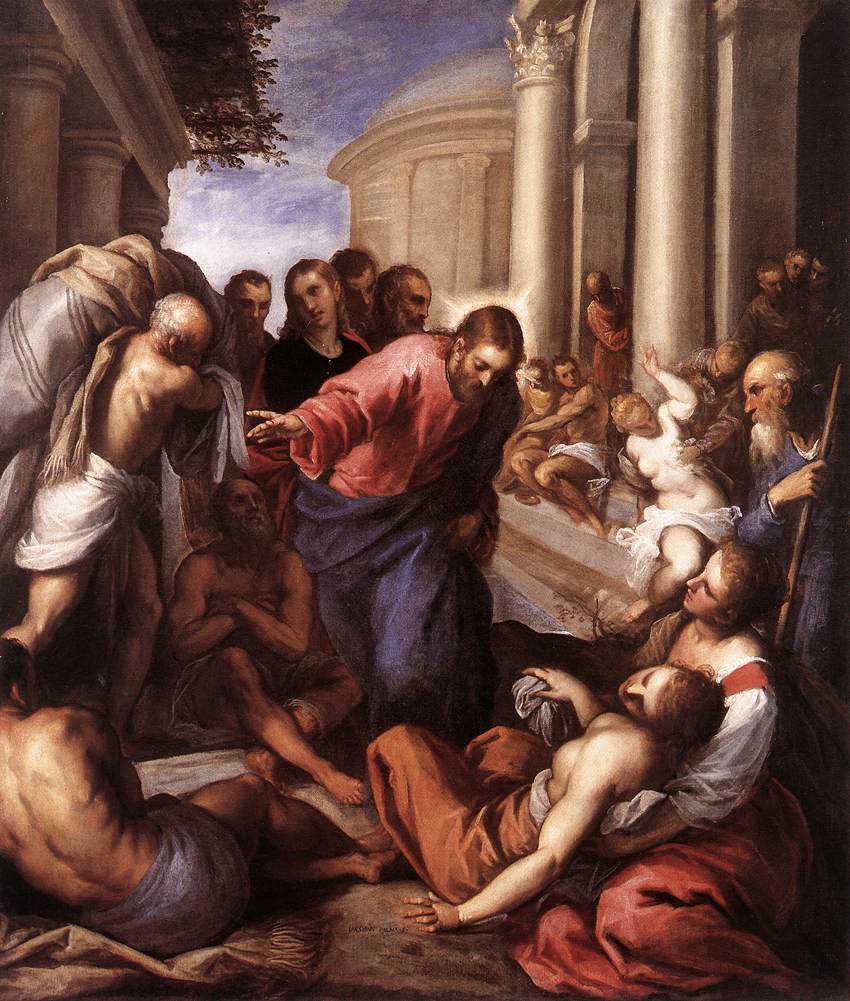
As Jesus came down from the mountain with Peter, James, John and approached the other disciples, they saw a large crowd around them and scribes arguing with them. Immediately upon seeing him, the whole crowd was utterly amazed. They ran up to him and greeted him. He asked them, “What are you arguing about with them?” Someone from the crowd answered him, “Teacher, I have brought to you my son possessed by a mute spirit. Wherever it seizes him, it tears at him; he foams at the mouth, grinds his teeth, and is withered up. I asked your disciples to drive it out, but they were unable to do so.” He said to them in reply, “O faithless generation, how long will I be with you? How long will I endure you? Bring him to me.” They brought the boy to him. And when he saw him, the spirit immediately threw the boy into convulsions. As he fell to the ground, he began to roll around and foam at the mouth. Then he questioned his father, “How long has this been happening to him?” He replied, “Since childhood. It has often thrown him into fire and water to kill him. But if you are able, have compassion on us and help us.” Jesus said to him, “‘If you able!’ All things are possible to one who has faith.” Then the boy’s father cried out, “I do believe, help my unbelief!” Jesus, on seeing a crowd rapidly gathering, rebuked the unclean spirit and said to it, “Mute and deaf spirit, I command you: come out of him, and never again may you enter him!” Shouting and throwing the boy into convulsions, it came out. He became like a corpse, which caused many to say he had died. But Jesus took him by the hand, raised him, and he stood up. When he entered the house, his disciples asked him in private, “Why could we not drive the spirit out?” He said to them, “This kind can only come out through prayer.”
The Gospel According to St. Mark 9:14-29
I’d be hard-pressed to choose a favorite gospel account of Jesus’ healings, but I know this one would be among my top choices. The interaction between the father and Jesus reveals guidance for my prayer life. The truth that “Jesus became flesh and dwelt among us” is in full array in this encounter, and we can receive the same graces through prayer with Jesus as the father and son received from his physical presence to them. Jesus’ life on this side of eternity was a prayer with our heavenly Father, and he consistently invited the observers of his life into the same intimacy. His actions, healings, and teachings, his very flesh, were united with humanity to show us the way back to our created identity of intimacy with our Triune God, and that only comes through the communion of his body and flesh in The Eucharist and the communion of prayer with him.
The father was just another whobody to everyone else, but he was the very reason Jesus approached the folk surrounding him. Long before the father emerged from the crowd, Jesus knew him and how the father had suffered for his son and how the son had suffered because of the presence of an unclean spirit in his life. How life happened to them is not as important to Jesus; no need to connect the dots to cast blame. It had happened to the father and the son, and now Jesus would happen to the father and the son. It is the same for you and me. We are sometimes like father and son, aren’t we? We either suffer on behalf of someone or we are the one who suffers. Jesus sees us just as he saw the father and son long before that encounter. He knows what we silently carry in our hearts and souls.
Jesus comes to us without condemnation, and he sees into our hearts, not our past. He doesn’t see how we may have fumbled; he doesn’t bring up what could have been or what should have been. No, he, the suffering servant of mankind, absorbs our suffering as he did for the father and son, and then, healing transformation unfolds in us. He asks us the same question, “How long have you carried this? Do you want to be made whole…what are you looking for?” He knew the father needed to pour out the pain he had carried before him. The act of speaking our pain before the LORD is a part of healing because it requires humility to confess our need, doesn’t it? The psalmists often prayed, “Hear, O Lord, and be gracious to me! O Lord, be my helper!” (Psalm 30:10) And I can’t help but hear Jesus’ words echoing in the encounter with the father and son,“Come to me, all you that are weary and are carrying heavy burdens, and I will give you rest. Take my yoke upon you, and learn from me; for I am gentle and humble in heart, and you will find rest for your souls.” (St. Matthew 11:28-29)
“If you are able, have compassion on us and help us.” Jesus said to him, “‘If you are able!’ All things are possible to one who has faith.” Then the boy’s father cried out, “I do believe, help my unbelief!”
The scene unfolds in what I imagine to be an intimate conversation between Jesus and the Father. Do you feel the father’s guarded hope as he says to Jesus, “If you are able…” Ever doubted like that? I have. When you’ve tried your best but your best wasn’t good enough, or when you are so attached to a hindrance that you can’t believe it is possible to be free from thinking about it! When you suffer for another who has been seized by a spiritual or emotional disease that has withered them up, tossing them to the ground over and over. Helplessness is too anemic a word to describe that kind of parental anguish. Jesus replies to the father, what he whispers to us, “All things are possible to one who has faith.”
The narrative of the account closes with Jesus’ words to his disciples, “This kind can only come out through prayer.” Interesting conclusion. Something worth remembering when we carry our or another’s struggle to Jesus. We can choose to ignore our pride, fret in our fears, or wallow in our anger, or we can pray, “I believe, help my unbelief.”
“Jesus became flesh and dwelt among us!” to reveal the impossible to those who seek him! He exorcises the evil spirit from the boy and takes him by the hand to raise him to stand. Did Jesus lose any holiness by touching the boy? No, instead, he infused wholeness into the boy so that he and the father and the onlookers could witness the holy compassion of God that saves and heals, restores, and resurrects! How does that come about? What does that mean for us in our life of prayer with Jesus? St. Theresa of Lisieux wrote, “…prayer is a surge of the heart; it is a simple look turned toward heaven, it is a cry of recognition and of love, embracing both trial and joy.” What causes your heart to surge toward God? Joy, Hope, Faith or despair, doubt, and unbelief. It’s all the same to the LORD Jesus because in the surge, the upward glance, he stands ready to reveal himself to us in the embrace of intimate communion with him. How beautiful! How lovely! How mysterious the presence of God is to us, but as we incline toward Jesus, we are saved!
“The whole reason why we pray is to be united into the vision and contemplation of God to whom we pray.”
–Julian of Norwich
LORD Jesus, you took on flesh and dwelt among us to save us from the fear, pride, and anger that cause us to doubt your love!
LORD Jesus, we are flesh of your flesh, restore us to wholeness of life in you!
LORD Jesus, open our eyes to recognize your presence before us!
In the name of the Father, and the Son, and the Holy Spirit.
As it was in the beginning, it is now, and ever shall be, world without end.
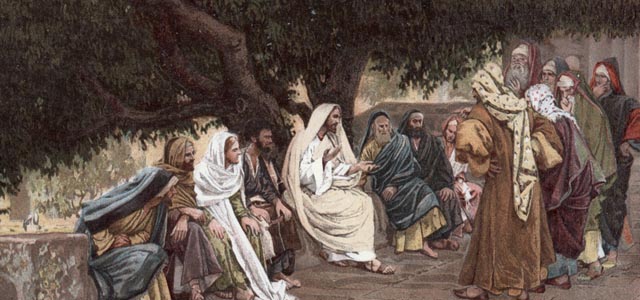
The Pharisees came out and began to debate with [Jesus], seeking from him a sign from heaven testing him. He groaned in his spirit and said, “Why does this generation seek a sign? Amen, I say to you, no sign will be given to this generation.” And leaving them, he again he got in the boat and went off to the other shore.
The Gospel of St. Mark 8:11-13
The daily gospel readings these early weeks of Ordinary Time can leave you breathless with the pace of St. Mark’s narrative, yet they have several reoccurring themes that are worth our meditation. One, in particular, is how Jesus responds to the ever-present Pharisees lurking at the edges of many of the beautiful actions of our Savior. The gospel reading for today follows the miracle of Jesus feeding the crowd of 4,000 plus hungry folk who had followed him.
The Pharisees, known to “strain at a gnat but swallow a camel,” floundered in their understanding and acceptance of Jesus. Jesus had just fed the large crowd, the word had spread, and now the Pharisees debated with Jesus’ ability to provide a sign from heaven. What?!? What seems so obvious to us illuded the Pharisees. Why? That is worth pondering because if we are not careful to keep our eyes fixed on Jesus, we can become just as blinded by our pride. Have you ever been in conversation with someone who already had their mind made up about something and they were not interested in your perspective? They just wanted an opportunity to prove their point. In effect, they were saying, “My minds made up, don’t confuse me with the facts.”
Is it any wonder that “Jesus groaned in his spirit?“ He knew the heart of man; he knew the Pharisee’s hardness of heart caused their spiritual blindness. We know he healed some of them of their hardened hearts, but most remained intractable. Jesus’ dismay over humanity’s spiritual blindness wasn’t reserved for the Pharisees, though. A few verses later in the narrative, Jesus has a conversation with the disciples. The scripture doesn’t say it, but I imagine that Jesus once again groaned in his spirit over their lack of understanding.
Now the disciples had forgotten to bring any bread, and they had only one loaf with them in the boat. And he cautioned them, saying, “Watch out—beware of the yeast of the Pharisees and the yeast of Herod.”They said to one another, “It is because we have no bread.” And becoming aware of it, Jesus said to them, “Why are you talking about having no bread? Do you still not perceive or understand? Are your hearts hardened? Do you have eyes, and fail to see? Do you have ears, and fail to hear? And do you not remember? When I broke the five loaves for the five thousand, how many baskets full of broken pieces did you collect?” They said to him, “Twelve.” “And the seven for the four thousand, how many baskets full of broken pieces did you collect?” And they said to him, “Seven.” Then he said to them, “Do you not yet understand?”
The Gospel of St. Mark 8:14-21
The Greek transliteration of Jesus questions to the disciples reads,
“Do you not perceive, nor understand? Do you keep an obdurate heart in you? Having eyes, do you not look? And having ears do you not listen? And do you not remember?”
Yikes, even the disciples (that would be you and me) missed the boat sometimes (pun intended)! It just so happens that as I set out to write my thoughts down about this scripture reading, I had a moment where I was a bit obdurate myself. (There are many synonyms for obdurate: stiff-necked, unrelenting, adamant, pigheaded, etc.) I greeted the LORD as I awakened, thanking him for the day ahead. It was a day I had already planned for prayer, writing, and reading. I thrive on order and stability, but sometimes my eyes are so fixed on how I think a day should go that I suffer from the same sight and hearing problems the disciples had. And, yes, I have to admit that I can become pharisaical in my determination to get righteousness right! Does that sound as funny to you as it does to me?
My day started with a plan in mind, but in the LORD’s mind, he wanted to restore my sight about the limitations of my health that I regularly try to ignore. The matter of my health is beside the point in light of how the LORD got my attention. I sensed him saying to me, “Lois, you are zealous for me, but sometimes you struggle with balance. The sign I’ve given you is clear; your body needs to lay down and rest. You have a choice now. Are you going to ignore the sign I’ve given to you, or are you going to pig-headedly force this day to go according to your big fat ego!” No, kidding, that’s just how the day started. At least on this day, I answered the LORD by remembering that I am his beloved daughter and that he desires holiness as well as wholeness for me.
What would have happened to the stiff-necked Pharisees if they would hadn’t been so hell-bent on proving their points with Jesus? They would have received all the graces of salvation that Jesus desired for them because he loved them. We know that eventually, the disciples learned to see and hear what Jesus was giving to humanity through his flesh in miracles and teachings. The disciples transformed into the freedom of spirit that comes from the humble acceptance that we are not in control and that life is not about us.
“Hardness of the heart” is another description used for obdurance, and that hits too close to home when putting that way, does it not? Jesus comes to us offering his grace and mercy as he did to the Pharisees, the crowds that pursued him, and the disciples that followed him. I ask you what I ask the LORD.
LORD, am I so consumed by concern about what’s happening around me that I don’t leave room to be surprised by your grace? You answer me: I know what you need, be more concerned that my kingdom comes into you. I’ll take care of everything else.
LORD, in my determination to gain the upper hand in this relationship, am I losing sight of your desire for me to humble myself? Even before this person who is a burr under the saddle of my existence? You say to me: Don’t second guess her; that’s my job. Pull out that tangle of thorns under your saddle.
LORD, am I following your commandments and precepts to impress others or to love the others? You answer me: “…without love for Me and others; you can do nothing.”
But what about So and So, LORD? Does she seem to look for opportunities to make me feel insignificant? You answer me: No one can use their words to “revile you and persecute you and utter all kinds of evil against you” without answering to me. Rejoice and take heart, I love you, and that is all that matters!
LORD Jesus, open our eyes and ears so that your kingdom may come into us!
In the name of the Father, and the Son, and the Holy Spirit.
As it was in the beginning, it is now and ever shall be, world without end.
The eternal Truth that “Christ took on flesh and dwelled among us” is revealed in how Jesus lived in his Creation alongside humanity. He entered into the joy of celebration and the ordinary, as well as the misery of disease and death, hunger and fear, in sum, all facets of the human condition, to unite his flesh with us so that we may unite our flesh with him and receive the fullness of his salvation. It’s a profound truth that inspires and encourages me as I live my faith in the LORD in my corner of the world! Today’s reading is yet another glimpse into this truth and it’s revealed in how Jesus breaks through the darker side of the human condition.
When they had crossed over, they came to land at Gennesaret and moored the boat. When they got out of the boat, people at once recognized him, and rushed about that whole region and began to bring the sick on mats to wherever they heard he was. And wherever he went, into villages or cities or farms, they laid the sick in the marketplaces, and begged him that they might touch even the fringe of his cloak; and all who touched it were healed.
The Gospel according to St. Mark 6:53-56
These healings follow a series of encounters where Jesus revealed the salvation contained in his flesh by healing the sick, feeding the 5,000, and walking on water. The earthiness of Jesus in the narrative is something to ponder; his flesh infuses into the encounters and saves body and soul!
Jesus offers the same touch to us as he did to the sick and lame upon their mats, the isolated outcasts hidden in crowds. He walks up to the unseen boundaries of our lives and touches us. In Gennesaret he didn’t see an anonymous body lying on a mat, he saw his own flesh! The salvation contained within his touch poured into the lives of those sick in body and reached into their souls. His perfect flesh united with diseased flesh and restored what sin and death had stolen from humanity. The instant salvation from disease opened the heart and mind for the fullness of his salvation. That’s amazing grace, isn’t it?
“And all who touched [him] were made whole.” God’s purpose of incarnating the flesh of humanity was to recreate us into the image of himself, to make us whole! Rampant diseases are somewhat controlled by modern medicine, but the human condition of the sick in soul is pandemic; humanity is reaching in all sorts of directions to remedy what can only be remedied through the incarnation of Christ’s salvation poured into our flesh. How does this actually work? We receive insight into the ways of our LORD in this very gospel reading.
We can observe a few details in the encounters at Gennesaret that are required for us in our own day. The narrative reads, “… they rushed about that whole region and began to bring the sick on mats to wherever they heard he was.“ The anonymous “they” reached for their diseased friends and relatives; therefore, they had to touch them in order to bring them into Jesus’ presence. You and I rub shoulders with the sick of soul in our corners of the world. The salvation we know is the salvation they need; it requires of us the use of our own senses to love and understand them, in other words, to pick up their mats and bring them to Jesus. Jesus touches through us, he listens through us and our lives become conduits of his healing to those around us.
What about the diseased lying on their mats? It may be that we are the one on the mat, sick of soul, helpless, and perhaps even in denial of our own need of the healing touch of our Savior. The morning of January 10 of this year I faced a startling realization about my life that I had successfully denied for 62 years! What brought me to that realization? The willingness to face a humiliating encounter with the LORD; in effect, I was laid out on a mat before him. He wasn’t the one humiliating me, he was the one whose touch reached deep into my mind and heart and revealed how my refusal to humble myself was infecting my soul. I felt the humiliation of the mat I had woven beneath me, even around me. And there were trusted individuals who offered the counsel of the Holy Spirit to me by carrying the mat of my existence to our loving and healing Savior through interceding for me in my low estate. A miracle did happen that day, at once I received the healing that could only come from the Incarnated Savior’s touch and I jumped off that mat for good, never to return. That’s the miracle! And like the sick who were healed, I heard Jesus say what he said to the woman who had struggled for 12 years with her disease (St. Mark 5:24-34), “[Lois], your faith has made you well; go in peace, and be healed of your disease.”
Friend, how is it with you today? Do you find yourself carrying the mat for someone or lying on the mat? Have you isolated yourself from hope? Perhaps you recognize you are sick of soul. Jesus sees the flesh of our hearts that is scarred by what has happened to us or by what we do to ourselves. Jesus took on that flesh and dwelled with us so that his perfect flesh would be absorbed and destroyed in his death. And through his resurrection from eternal disease, he offers his perfect flesh back to us so that he may give us wholeness and holiness.
As we incline toward the LORD by receiving his body and blood, his touch reaches into our fear and anger and the pride that hinders our faith to believe and trust that he can heal the hidden disease of our heart; that he can recreate us into his image. It’s a humbling gesture to admit we will die without his flesh and blood, but that is how faith makes us whole!
LORD, Jesus, Savior, and Healer, we bow before you in humble adoration for dwelling with us, absorbing us, recreating us into your image.
In the name of the Father, and the Son, and the Holy Spirit.
As it was in the beginning, it is now, and ever shall be, world without end.
…I journeyed to Damascus with the authority and commission of the chief priests. At midday, O king, I saw on the way a light from heaven, brighter than the sun, that shone around me and those who journeyed with me. And when we had all fallen to the ground, I heard a voice saying to me in the Hebrew language, ‘Saul, Saul, why are you persecuting me? It is hard for you to kick against the goads.’ And I said, ‘Who are you, Lord?’ And the Lord said, ‘I am Jesus whom you are persecuting.But rise and stand upon your feet, for I have appeared to you for this purpose to appoint you as a servant and witness…”
Acts of the Apostle 26: 12-16 (St. Paul’s Defense before King Agrippa)
Today the Church celebrates the Feast of the Conversion of St. Paul, and rightly so since he was the lead apostle of the early Church in bringing The Faith to Gentiles (that’s most of us). I’ve always been intrigued by Saul/Paul’s life, for it is a dramatic testimony of God accomplishing the impossible that he is known to do. Right? St. Paul’s conversion reads like a sci-fi account–blinding light from heaven, the thundering invisible voice, and sudden blindness. But what we know of St. Paul required such a conversion, for he was a man hell-bent on his self-righteous agenda. Saul/Paul’s zeal was matched by no other. Christianity, known as The Way, spread across the Roman Empire like fire across a dry field, and that messed with Saul’s pharisaical convictions. True to his nature; however, his zealous defense of the Jewish Faith to the ‘nth-degree messed Jesus’ system. Jesus had other plans for Saul’s life. And Saul’s zeal was no match for Jesus!
Saul/Paul’s life stands out to me since I, too, am a person known for zealous pursuits. That zeal, some call strong-will, has been displayed by me a bombastic-bull-in-a-china-shop type of pounding the path beneath me as I pursued one of the many points I’ve tried to prove over my lifetime. Not proud moments, to be sure! Thank goodness for Saul/Paul because I’ve learned from how the Holy Spirit transformed him that it is possible for me, too. Though I’ve never been made blind by the literal light of Jesus’ presence before me, I’ve certainly been knocked down off my high-horse time and time again. It wasn’t until I stopped trying to climb back on that horse that the LORD Jesus was able to work with the dust and dirt surrounding me in the fall to bring about the necessary humbling. There is a phrase from St. Paul’s testimony before King Agrippa that echoes how the LORD got my attention after a hard fall because of my disordered pride:
“Saul, Saul, why are you persecuting me? It hurts you to kick against the goads.“
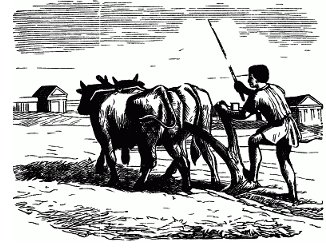
I never viewed my zealous point-proving as kicking against any goads. The imagery of a goad, a spiked-stick used for driving cattle, hit my backside in that moment of my fall: It was when the Spirit said to me, “Lois, this isn’t their problem, it’s yours!” that I felt his conviction deep in the hard flesh of my heart! Another realization came over me as well, “Everywhere I go, there I am.” I imagine Saul/Paul must have had been hit with a similar awareness in the dust that day. For Saul/Paul to hear that his actions persecuted the LORD God he was valiantly striving to protect could have been the very thing that blinded him, who knows. It certainly was mind-blowing for me!
Friend, do you kick against the goads, we may kick against the goad differently, but the kicking has the same motivation born from pride, fear, anger–we want to go our own way? Those disordered attitudes and actions kick against the Spirit’s movement in our lives. Over-weaning pride gets me every time and threatens to set me on a path away from the LORD’s desire for me. The Holy Spirit, like the farmer, desires to gently, sometimes dramatically, guide me back, and he’ll do that in countless ways. When I begin to recognize that humility will guide me to abundant life, then I begin to see self-will fall like scales from my life.
Are you tired of kicking against a goad in your pride, fear, or anger? Is there a restlessness hidden beneath those motivations, a restlessness that may knock you off your horse? Can you see how your disordered attachment is persecuting Jesus? Strong words, I know! But I have to endure that kind of blinding realization.
Saul’s eye-opening experience after his blindness took a few days, and he needed his companions to help him back on his horse so that they could lead him to the appointed place of his physical healing from blindness. I believe the Holy Spirit works the same way in us. It takes time and a willingness to be led to our healing; humility is the only remedy. I could recount one by one each of the moments my disordered pride led me off the path of salvation and down the shadowed path of soul-sucking death. I, like Saul, can only answer for myself what Saul asked while he lay there in the dirt, “Who are you, LORD?”. Who is the LORD of my personality, emotions, thoughts, and actions? Only when I answer these questions can I rise and stand on my feet and reach out to the Holy Spirit, to be led into the divine purpose for my life!
LORD Jesus, everywhere we go, there we are. How do YOU feel about how we show up before you? Holy Spirit of God, grant us your perspective on ourselves.
LORD Jesus, we are blinded by the Truth of your Word to us, lead us in the direction you desire to take us? Holy Spirit, lead us even when we’re kicking and screaming against you.
LORD Jesus, we despair, sometimes, at how hard it is to learn from you? Holy Spirit, our times are in your hands. Slow us to your pace.
I ask this in the name of the Father, and the Son, and the Holy Spirit.
As it was in the beginning, it is now, and ever shall be, world without end!
Today The Church honors the memory of St. Anthony of the Desert. He is known as the Father of all Monks because of his inspiring perseverance in holiness. It is said that when he heard the words from St. Matthew 6:34: “So do not worry about tomorrow, for tomorrow will bring worries of its own. Today’s trouble is enough for today,” he gave away everything and went outside the village to live a life of praying, fasting, and manual labor. What sets St. Anthony apart was that he wasn’t just a hearer of the Word; he desired to become what Jesus proclaimed; he desired to be another Christ. He told many wanna-be monastics who came to visit him that the key to the ascetic life was perseverance, not to think proudly, and treat each day as if it were the beginning.
We have just crossed the threshold into the new beginning of a calendar year. At least for me, the Memorial of St. Anthony has been divinely planned because I have been examining some of the patterns of my own life that require Holy Spirit-given perseverance to become more humble like Christ. In a frenzied world that has lost its center, I can be whipped around by the tail, or get so caught up in trying to control the beat of my life that I lose my breath in effort and striving. Sometimes my life sounds to me like clanging gongs and crashing cymbals as St. Paul wrote. The asceticism of St. Anthony and other monastics entices me, beckoning my heart to retreat from the noise that surrounds me, even the noise within me! I can’t retreat to the edges of the world, but I can retreat into a solitude of the heart through the monastic understanding that all of life is sacred, and God is present to me as much as I will allow him to be.
The word ascetic has negative connotations in a society that turns to superficialities, comforts, and conveniences to solve the deep hunger of our lives. The thought of denying ourselves anything sends chills up the spine. Nevertheless, the self-discipline and intentional practices of self-denial that Christ proclaimed are true for every age. We can take our cues from the hard-won wisdom of the monastic life as it is modeled after Christ’s teaching.
The common theme in the monastic tradition of reverence toward the LORD is striking. Saint Athanasius wrote of St. Anthony, “Anthony was not known for his writings nor his worldly wisdom, nor any art, but simply for his reverence toward God.” Christine Valters Paintner wrote in one of her many books on Celtic monasticism, [To reverence God] “is to see all of creation as woven together in holiness and to live this truth. In this loving act, we begin to knit together that which has been torn; we gather all that has been scattered.” She writes that when we begin to see the Earth as our monastery no matter where we are, our reverence for the LORD can bring Christ’s healing presence to the world. Oh, I desire that for myself?
On the outside, the monastic tradition looks restrictive and rather tedious. But don’t you ever rail against the restrictions of the dull routine of our lives? I’m learning that the more I’m reverent to the LORD, the more I see life with all its dull bits as an offering to him. I’m becoming more aware that the ground I am standing on is holy ground ablaze with God’s presence. Instead of turning to a distraction like eating too much, drinking too much, playing too much, speaking too much, working too much–I can take an ascetic perspective by simply slowing down and recognizing that the very distractions I run to are leading me farther away from becoming another Christ in my corner of the world.
When I begin to understand this, all of life becomes sacramental as I reverence the LORD, in that I persevere in the knowledge that God is making all things new in each moment. Our Catholic Faith is a sacramental faith, not just in how we worship at Mass, but in how we live our ordinary lives deliberately reverent of the LORD. The monastic tradition of our Faith embraces this intentional way of life: we all can benefit from that example! As I knead the dough for our bread for the week or as I fold our laundry I enter into sacramental worship before the LORD God with the work of my hands. And I respond as Moses and probably many monastics before us by taking off my proverbial sandals for the ground beneath me is holy ground, prostrating myself in the very stuff of earth from which I was created.
My burgeoning desire is to follow Christ in the steps of the monastic tradition where Christ calls to us to live mindful of who we are with more intentionality at becoming another Christ. Just as Jesus lived, monastics unite themselves to the rhythm of God’s providence. Words like reflect, linger, savor–can become the music of our life when we choose to NOT to worry about tomorrow when we choose NOT to distract ourselves with soul-sucking pursuits when we choose NOT to acquire more of the stuff of this world.
How about you, friend? Do you find yourself more agitated by life as you try to keep pace with the world around us? Are there some deliberate steps you know you need to make to slow yourself down, to slow your family life down? As you embark on this calendar year you may want to ask yourself some of the questions I’ve been examining the hindrances in my life to how I reverence the LORD.
What am I distracting myself with that is hindering my holiness and robbing my joy? Jesus answers, “Do not lay up for yourselves treasures on earth, where moth and rust destroy and where thieves break in and steal, but lay up for yourselves treasures in heaven, where neither moth nor rust destroys and where thieves do not break in and steal. For where your treasure is, there your heart will be also.” –St. Matthew 6:19-21
Am I allowing this day’s trouble to overrule trusting in the LORD? Jesus answers, “…do not be anxious about your life, …Look at the birds of the air: they neither sow nor reap nor gather into barns, and yet your heavenly Father feeds them. Are you not of more value than they? And which of you by being anxious can add a single hour to his span of life? …Consider the lilies of the field, how they grow: they neither toil nor spin … seek first the kingdom of God and his righteousness, and all these things will be added to you.” –St. Matthew 6: 25-33
What peace of mind am I missing out on by delaying my decision to persevere in holiness and wholeness in this particular area of my life? Jesus answers, “The Helper, the Holy Spirit, whom the Father will send in my name, he will teach you all things and bring to your remembrance all that I have said to you. Peace I leave with you; my peace I give to you. Not as the world gives do I give to you. Let not your hearts be troubled, neither let them be afraid.” St. John 14:26,27
Oh, Jesus, we long for your transforming grace in our lives. Holy Spirit, teach us how to reverence you, Blessed Trinity whom we adore!
In the name of the Father, and the Son, and the Holy Spirit.
As it was in the beginning, it is now, and ever shall be, world without end.
Now after John was arrested, Jesus came into Galilee, proclaiming the gospel of God, and saying, “The time is fulfilled, and the kingdom of God is at hand; repent and believe in the gospel.”
Passing alongside the Sea of Galilee, he saw Simon and Andrew the brother of Simon casting a net into the sea, for they were fishermen. And Jesus said to them, “Follow me, and I will make you become fishers of men.”And immediately they left their nets and followed him. And going on a little farther, he saw James the son of Zebedee and John his brother, who were in their boat mending the nets. And immediately he called them, and they left their father Zebedee in the boat with the hired servants and followed him.
St. Mark 1:14-20
Today’s gospel reading from St. Mark follows right after a messy situation that had gotten St. John the Baptist, the forerunner of Christ, arrested and eventually martyred at the hands of a tyrannical king. The gospel reading is also a turning point, a place marked in time and space (the right time) where a new king and a new kingdom, not of the world but of eternity, would rule.
On the heels of the arrest, the narrative immediately moves to Jesus proclaiming that the time is fulfilled, and the kingdom of God is at hand. What time was fulfilled? I’m not very good at keeping track of time or details or calendars; I’m just not! I don’t believe that Christ was looking at a calendar or triggered by a timer when he made the statement to the disciples. The time he was referring to is called kairos, time measured according to God’s providence. According to chronological standards, the Roman Empire occupied the land of Israel and cruelly ruled over God’s people (Does this sound familiar to you?) Jesus was drawing his disciples’ attention away from chronological circumstances into kairos, into the kingdom of God. Jesus’ proclamation of God’s kingdom sounded nothing like their reality, but all who followed him began to see the possibilities of peace and contentment, forgiveness and healing, hope and mercy.
The gospel reading includes a detail that is a very Chronos thing to do, “…he saw James the son of Zebedee and John, his brother, who were in their boat mending the nets.” Mending nets calls to mind the “the stuff of our ordinary and often disappointing human experience” that Eugene Peterson eloquently writes about in many of his books.
God’s Word reveals how the stuff of our ordinary and often disappointing human experience is the very stuff that God uses to create and save and give hope…nothing is unusable by God. The LORD uses everything and everybody as material for his work, which is the remaking of the mess we have made of our lives.
Just as Peter and Andrew and James and John lived in an appointed time and place, doing the stuff of the ordinary day-to-day life, Jesus comes to us with the same proclamation, “the time is fulfilled.” Sooner or later, we all become dissatisfied with an ordinary that is not united with God’s extraordinary Kingdom. Fulton Sheen wrote that,
“..all the human satisfaction of the cravings of the body and soul have one defect; they do not satisfy forever…[we] restrict ourselves to [ways and means] that will never completely satisfy.”
Jesus desires to withdraw us from the corruptible to the necessary–“the one thing”–the abundant life where worth and success aren’t measured by clocks and calendars. In telling the fledging disciples to leave everything that is under their control for he would make them fishers of men evokes the Kingdom of God’s law to love him with all our heart, mind, body, and strength and to love others as we love ourselves. It’s the abandoning of our self-control and our notions of satisfaction that draws us into the counterintuitive practice of detachment from all things to follow Jesus, our Savior, into our kairos identity.
Jesus calls his disciples to repent and believe in the gospel. Changing our minds about how we live in Chronos-time requires the power of the Holy Spirit rearranging our mindset. Perhaps you struggle to see the draw of following Christ as satisfying. Perhaps you enjoy mending nets far too much to think about the good Jesus has in store for you. Perhaps you don’t see the need to repent of anything.
Or perhaps your eyes are fixed on what is happening around you in society, and it causes you to fear. Maybe the thoughts about the trajectory of our government mess with your understanding and faith in the LORD’s providence. Perhaps the lackluster mending of nets causes you to doubt the LORD’s presence to you. Perhaps you haven’t repented of your emotions, and you can’t see how Jesus can satisfy you.
Jesus comes to each of us in the time and space we are in, and he asks us to follow him. The way we follow him makes all the difference. Whether we are satisfied with life or dissatisfied with life, Jesus aims to lead us to the Kingdom of God where satisfaction, joy, and fulfillment are out of this world!
Oh, Jesus, you know us; you created us. You know how taken up we can be by what is happening around us, whether we enjoy it so much that we ignore you or whether we fear it so much that we doubt you. LORD, would you draw us into your Kingdom here on earth as it is in heaven?
We ask this in the Name of the Father, and the Son, and the Holy Spirit.
As it was in the beginning, it is now, and ever shall be, world without end.
I kindle to light (pun intended)–bright sunshine, the liminal light of a candle, twinkly lights on a Christmas tree, and I even like flashlights. My appreciation for flashlights increased during a recent visit to one of our children’s families. During the first night, I groped my way through a dark hallway to the bathroom, and I stepped onto some stray legos! Let’s just say the words that escaped my mouth are not a part of my day-to-day vocabulary. The next time I got up during the night I used my phone’s flashlight app to light my way. That memory came back to me this past week as I’ve contemplated the many scriptures in the daily readings that drew our attention to a theme of light. I, like the Israelites, can lose myself in groping around in a conjured darkness of my mind or emotion. Have you been there, too? You know what I’m getting at: a spiritual night falls, and you keep stepping on stray pieces of regret or careless words that linger from time already passed. St. John wrote:
“God is light, and in him, there is no darkness at all…walk in the light.”
I John 1
The Light that God sheds on us abides no darkness; he desires that we walk in his Light. Walking forward rather than stumbling around in our darkened understanding requires increased faith that God’s Light became flesh and lived in the darkness with us. Walking forward requires remembering that the LORD has walked the path before us, dazzling this dark world with hope, mercy, and grace. Jesus absorbed all the darkness of the world for us so that his Light would banish our darkness, lightening our way and enlightening our hearts and minds! Much more than that flashlight did for me in a darkened hallway.
Yesterday we celebrated The Feast of the Epiphany, which was the manifestation of The Light of the World, Jesus Christ, to the magi. Great timing! Niggling thoughts about the purpose of life tend to crowd into this time of year as we cross the threshold of a new year. Those thoughts may be caused by the anticipation of what might be ahead of us or what is behind us. This yearly exercise of self-examination needs a light that is not of this world; we need a new Light; so to speak. We need the Light of the World to grant us the peace of mind that he alone can give. A peace that is enduring and stable no matter what day of the calendar year it may be. St. John wrote to The Early Church:
“Beloved, I am writing you a new commandment to you, which holds true in him and among you, for the darkness is passing away, and the true light is already shining…remain in the light“
I John 2
That small word, “remain,” is the kindling for the light God alone gives in every moment that passes. Do you have moments where the thoughts of the past and future threaten to extinguish trust in the true Light of Life? You may even be thinking those thoughts right now as you look at the calendar for 2022.
I came across a phrase a while back, “Don’t fetch fears.” As I learn to “remain” with the LORD present in each moment, I recognize how pointless it is to fetch fears about the unknown. I can picture the times when one of our children would run into my arms out of fear of something; I didn’t pooh-pooh their fear because I knew how fear felt. No, I would soothe them with a back rub and quietly hold them while their heartbeat slowed and their body relaxed into my arms. The heavenly Father is in the present with us, but we, like children, can be held captive by our fears when we fetch all kinds of what-ifs, can’t we? I imagine that the LORD responds to me in the same way as I did to my children’s fears. Shhhhh. Remain here in my arms, dear daughter.
Here’s another phrase I came across that assists me in learning to remain present to the LORD. “Don’t stumble on things behind you.” I’ve wasted many moments consumed by the past; something I said or didn’t say, or something that I did or didn’t do, or something that happened or didn’t happen to me. Even great memories from the past can cause me to stumble. Years ago, we moved from one part of the country to another. We left behind my dream home, cherished friendships, and a great climate that didn’t include arctic winters. The transition was hard on me for a lot of reasons. I wasted many moments thinking about what was behind me instead of what could be in the present. I was stumbling around with self-pity, anger, and resentment about why the LORD had changed things so dramatically for us. Words from an oracle of Jeremiah’s tiptoed into my snagged emotions as I prayed one day, which changed my perspective entirely!
Thus says the Lord: Stand at the crossroads, and look, and ask for the ancient paths, where the good way lies; and walk in it, and find rest for your souls.
Jeremiah 6:16
When I allowed myself to look at the ancient paths God walked with his people in the Old Testament, sunshine broke into my restless emotions because I realized that the good way, the good life, that God grants is not about where I live or how comfy my life is. The rest my soul desired settled in once I stopped stumbling on things behind me.
I’m wondering Friend if you share some of my struggles? As the dawn of the new year is breaking open before us, are you groping your way through emotional or spiritual darkness, stepping on the sharp edges of an untended life?
Jesus, true light, illumine our darkness.
Is fetching fears a pass-time for you? When we’re preoccupied with the “what ifs” of life, so consumed by those thoughts that we even worship them with our unconscious and conscious thoughts, we only need to invoke the Holy Name of Jesus into our thoughts, and he will pierce our self-imposed darkness.
Jesus, God of peace, fill us with your peace.
Do you find yourself spending more time looking back or looking ahead as a way to distract you from where you are? The disordered attachment to what was or what might be cast a shadow over the present. That’s not where Jesus has fixed his gaze; why do we?
Jesus, our way and our life, fix our gaze on You.
In the name of the Father, and the Son, and the Holy Spirit.
As it was in the beginning, it is now, and ever shall be, world without end.
When I realized that today is the feast day of St. John the Evangelist, and that I am privileged to share my thoughts about St. John, I didn’t know where to start! The Holy Spirit has guided me in my journey into the fullness of our Faith using the incredible gift we have in St. John’s contemplative narration of Jesus’ life as well as his letters to the Early Church. St. John’s gospel is quite different than the other three; it is more like a conversation between friends. Yes, we observe Jesus’ compassion and passion as Jesus spoke his salvation into others, but St. John draws us to see Jesus right here, right now in our daily round. Salvation is a noun, yet as we live our life, it is a verb that unfolds through the extremes and the mundane of our life. I need that reminder so that I will allow myself to be saved from myself through living my ordinary life. Learning to live intimately inclined to Jesus as the Lover of my Soul has been a hard-fought battle. It wasn’t until I reclined in conversation with the Jesus of St. John’s gospel that I saw him beholding me!
The next day John again was standing with two of his disciples, and as he watched Jesus walk by, he exclaimed, “Look, here is the Lamb of God!” The two disciples heard him say this, and they followed Jesus. When Jesus turned and saw them following, he said to them, “What are you looking for?” They said to him, “Rabbi” (which translated means Teacher), “where are you staying?” He said to them, “Come and see.”
Seeing or beholding is a prevalent theme St. John uses throughout his gospel narrative. He begins his gospel with the words, “In the beginning was the Word, and the Word was with God, and the Word was God…What has come into being in him was life, and that life was the light of all people. The light shines in the darkness, and the darkness did not overcome it…And the Word became flesh and lived among us, and we have seen his glory.” St. John proceeds to narrate the fullness of this truth by pleading with us to “come and see”; to behold our Savior through contemplation.
Take a moment to place the palm of your hand close to your face. What do you see? What can’t you see? In essence, what St. John is asking us to do is to pull away OUR palm (our SELF) and see what lies before us. Do you have trouble with your vision? Is it hard for you to see the life our Savior desires for you? I’ve struggled most of my life to look for God with my palm in front of my face. Through tremendous healing, I learned to remove my palm from my vision. Beholding the LORD through John’s eyes was transforming. What I saw in that light was that I am the beloved daughter of the Most-High God. I kindle to that word, “beloved.”
Today’s mass readings include a passage from one of St. John’s letters to the Early Church that begins with the greeting, “Beloved,” and concludes with, “We are writing this so that our joy may be complete.” Isn’t that what we long to know? That we are beloved and that our joy can be complete. Seem’s impossible sometimes, does it not? How do you feel about yourself and your life right now, right this minute? Is there a permeating understanding that you are God’s beloved and that joy is complete because of it? Or are you still waiting for some next thing to make you feel Beloved and joyful?
Beloved: What was from the beginning, what we have heard, what we have seen with our eyes, what we looked upon and touched with our hands concerns the Word of life — for the life was made visible; we have seen it and testify to it and proclaim to you the eternal life that was with the Father and was made visible to us— what we have seen and heard we proclaim now to you, so that you too may have fellowship with us; for our fellowship is with the Father and with his Son, Jesus Christ. We are writing this so that our joy may be complete.
I John 1:1-4
Eugene Peterson wrote that the two most difficult things to get straight in life are love and God. Do you agree with that? I’ve come to believe it to be true in my own life. I know how messy my understanding of God has been and how that affected how I received his love and gave love to others. Is it just me, or do you struggle to detach “love” from approval and performance from abuse or neglect? For much of my life, I saw God as Judge, period. It wasn’t until these later years of my life that I’ve allowed myself to consider God as Lover, it has and continues to save me!
A turning point for me was a moment I shared with our eldest grandchild when she was eight months old. I was taken up in the wonder of Margot, the dimples on her tiny hands that would one day emerge as knuckles, her blue eyes that were so much like our sons, every detail of her existence swept me up in a love that only a grandparent can know for a grandchild. I adored her as I had never adored anyone else! We sat alone one day on the floor as she watched a Baby Einstein video. Observing her delight in the show caused me to delight. She would turn to me and look at me and smile and giggle, then point back to the television as if to invite me to watch the show with her. Into those moments, I dropped that proverbial palm from my face, and the LORD spoke very clearly to me, “Lois, I know that you could gaze at Margot for a long, long time, you would move heaven and earth for Marguerite to remain safe and secure in your presence and your love for her. Lois, I adore you more than you can adore Margot. I enjoy you; you are a pleasure to love; you are MY beloved daughter! Will you adore me as I adore you?” Tears poured from a wound that had never healed, a wound caused by conditional love and harsh judgment, a wound that infected my understanding of God, my Father. What followed was a journey guided by St. John’s gospel and letters.
“God is love. When we take up permanent residence in a life of love, we live in God and God lives in us. This way, love has the run of the house, becomes at home and mature in us, so that we’re free of worry on Judgment Day—our standing in the world is identical with Christ’s. There is no room in love for fear. Well-formed love banishes fear. Since fear is crippling, a fearful life—fear of death, fear of judgment—is one not yet fully formed in love. We, though, are going to love—love and be loved. First, we were loved, now we love. He loved us first.“
I John 4:17-19 (The Message)
I’ve learned that God desires to dwell with ME! Where once I felt I had to get things just right, say the right things, look the right way, perform in a certain way, I now see him sitting on the floor beside me. He doesn’t reject me; he adores me! There is nothing that would ever change his mind about me.
Friend, do you have a wound that festers in your life? A wound that blinds you to the truth of God’s love for you and infects how you love others. God adores you!
What are the messes you have made because of your fear that God will not come through for you or that you have to earn his love? God still adores you!
Does your fear, your pride, or your anger cripple you? Stand in line. Our first parents acted on their fear but God still loved them. God did, God does, and God will always adore you!
Lover of our Soul, teach us to see you; to behold you; to adore you!
In the name of the Father, and the Son, and the Holy Spirit.
As it was in the beginning, it is now and ever shall be, world without end.






 The Maiden Warrior