Catholic Living: The Sacrament of Marriage

The Church honors Sacramental Marriage this month by remembering and honoring saints Jochim and Anne, the parents of Mary, and saints Louis and Zelle Martin, parents of St. Therese of Lisieux. And, of course, always St. Joseph and Mary. Their marriages, marked by their unwavering faith and commitment to God’s Covenant, are inspiring examples of sacramental marriage and a source of motivation and encouragement for us all.

Let’s consider what a Sacramental Marriage is; to do this, we will turn to some of the liturgical phrases of the nuptial mass to consider a few words and strands of thought inherent in the biblical understanding of the Sacrament of Marriage laid out for us in the wedding liturgy.

COVENANT

When our priests pray that our union with God and each other will be “sealed”–set apart, sanctified–with God’s blessing, he refers to a covenant. It is assumed we have laid down our life to Him and that we are entering into marriage willing to lay down our lives for our spouse, as Jesus laid down his life for The Church in the New Covenant. It is assumed that we desire to set the trajectory of our marriage toward union with Our Lord. It is assumed there will be borders in our relationship that will hold fast our union with the Lord in the Covenant of Marriage.

It works this way: When we envision our marriage as sacramental and sacrificial, we strive toward that vision. Our union’s apex is the Lord Jesus, and we stand together in a holy trinity of marriage When we stand at the altar on our wedding day, the Lord’s Spirit grants us strength to fulfill the marital covenant and seals us to him, providing us with His virtue for a loving marriage. Isn’t it reassuring to know we don’t have to rely solely on our own strength to love our spouse and keep faith in our covenant? The third member of our holy trinity trumps all our weaknesses!

In the virtues, we receive the gift of wisdom, understanding, counsel, fortitude, knowledge, piety, and reverence for the Lord. Like any gift, the receiver has to open it to be enjoyed, and once we do that, the Lord enables us to exercise it and grow strong in our relationship. Here’s the lovely thing: As virtue puts down roots in our hearts and minds, virtue grows, and we bear the fruits of God’s Spirit in our relationship: love, joy, peace, forbearance, kindness, goodness, faithfulness, gentleness, and self-control.

Is the seal of our covenant being weakened or strengthened by my attitudes and actions?
What virtue do I need to practice to honor my covenant with God and my spouse better?
Are my attitudes and actions toward my spouse gentle, patient, good, and self-controlled?

ENDOWED

Our priests ask the Lord to bless our companionship. God desires to order our marriage to its proper place–union with Him—so He endows us with the grace to nurture companionship. We cooperate with Him by what St. Thomas Aquinas described as “willing the good of the other.”

One definition of grace that gets at that definition of love is “courteous goodwill” toward another. In the life cycle of holy marriage, God endows us with grace; we receive it as a gift, and we open the gift by practicing courteous goodwill toward our spouse in all things.

But here’s the sticky wicket for us: when we fixate on the wounds and resentments in the life cycle of marriage and allow the grievances to fill the space between us, the space tends to widen. Why? When wounds fester, they infect our relationship! All those little irritations and significant differences of opinion hardened into scar tissue between us to force our union apart. You know what I’m talking about!

When we come to our senses and remember that, we must strive toward union with the Lord first. We lift our eyes to him and ask for the GRACE He has endowed us with. He releases the power of His holy Spirit to help us forgive and repair the boundaries of our marriage.

What resentments have I harbored that are driving us farther apart?
How can I work towards restoring the relationship with my spouse?

The regular practice of the Sacrament of Healing through Confession is endowed with that grace of healing, not just for us but for all our relationships. The sacrament of healing is a gift the Lord has given us, and we can receive it as often as needed….. Sometimes, friends, we just need to camp outside the confessional!

KEEP

Our priests pray that our marriage will “be held and kept” in the marriage covenant. Here’s a helpful image: Another way to think of the word “keep” is in its noun form: the stronghold in a castle’s most fortified enclosure. It serves as a refuge against siege or attack from the enemy. We fortify our marriage as we hold and keep ourselves in union with the Lord, and our borders strengthen against the attacks of the enemy of our souls.

Where are the vulnerable areas in my area that weaken our marriage?

ABIDE

Our priests pray we will “abide in mutual love and peace.” Oh, I love this part! I kindle to the word, “abide!” What our priest is asking of the Lord is the state of harmony and understanding that is the hallmark of a Sacramental Marriage. In a culture that would rather “cut and run” than do the hard work of sacrifice, we are summoned to choose to remain faithful to the marital covenant.

Jesus told his disciples, “Abide in me as I abide in you.” (John 15:4) He, the founding partner in our marriage, has endowed us with the ability to remain faithful! He remains with us; we choose to remain with him within its fortified walls. He is present to us here; we choose to be present to Him and one another within this sacred union.

Am I allowing social media, career, friends, recreation, or hobbies to satisfy me instead of my companionship with my spouse?

Let me leave you with something I read recently that helps me as I love my husband: “True love goes beyond the cold exactitude of dry duty; true love gives with a smile, a flourish, and a delicacy that not only meets the beloved’s needs but also meets them in a lovely, pleasing way.” That’s what the Lord desires for us, friends; he has lavished his love on us, and He beckons us to lavish our love on our spouse.

Saints Jochim, Anne, Joseph, Mary, Louis, and Zelle pray for us.
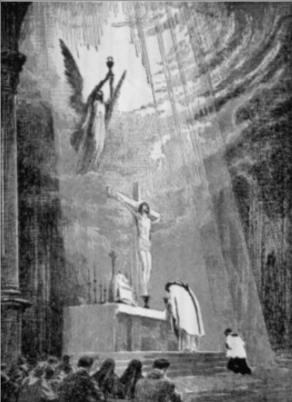
The Solemnity/Feast of Corpus Christi: The Body and Blood of Christ

Greetings, friends. These little talks are intended to be short and pedestrian in content; they do not do justice to the gravity of the theological truth contained in the Sacramental Faith of The Catholic Church. I refer you to the esteemed theologians of Church History for more on them. If you are a new reader of the blog or a follower of the Sioux Falls Diocese where this talk was posted (https://youtu.be/eRrPltaAp7I?si=vhx3255vaqrzF3wj), you may desire to read about my journey into The Catholic Church. You may find that in the site menu below my photo to the left of this post (Category: My Journey into the Catholic Church).

This Sunday, we celebrate The Solemnity/Feast of Corpus Christi or The Feast of the Body and Blood of Christ. On this specific day, we display our belief and gratitude for what we do every day at Mass, but with more pomp and circumstance, hence the designation Solemnity and Feast. We solemnly remember Christ’s Passion for us while we feast on the food of our salvation–His Word to us in the Liturgy of the Word and His Body in the Liturgy of the Eucharist–his Body and Blood, Soul and Divinity-the Whole Grain Bread of Life, so to speak. That is how The Church has done it since its establishment by Christ 2,000 years ago. 

Dress Rehearsal:

The best description I have heard of Mass worship is that it is the dress rehearsal for heaven. So why are so many people skipping out on rehearsal? I wonder. I delayed participating in this dress rehearsal for 56 years, 133 days, and 20 hours! You see, my husband and I converted to The Roman Catholic Church, but we are zealous Johnny-come-lately, true neophytes in all things Catholic.

Journey:

We were committed to Christ and his church as we knew it as Protestant Christians; we even served as “pastor and wife” for 34 years. We knew the Sacred Scriptures inside and out because they were the sole source of our doctrine of belief. Therefore, we thought we knew the whole of the Theology of God passed down from our particular 500-year-old protestant movement, which seemed solid enough then. We didn’t know what we didn’t know! We didn’t know that we hadn’t received the entirety of the Truth of Christ and His Church was held intact since Christ instituted His Church in her 2,000+ years of history. But that’s another story for another time.

On my long intellectual journey from 1996 to Easter Vigil 2015, I worked hard to wrap my brain around the Early Church theology I had not been taught. At first, I relied on the writings of the Saints and The Early Church Fathers–what integrity! And how mind-blowing and life-giving it was to read Church History as it was rather than how I was trained to read it. It wasn’t long before my questions about what I had been taught and what I was observing in the Protestant movement demanded answers, so I studied the Catholic Church’s Catechism over and over again. I recognized the theology that the protestant movement took with it when it left home and departed from our Mother Church’s teachings, but I discovered there was so much that was left behind.

Grappling:

In particular, I grappled with The Real Presence of Christ in the Eucharist, The Four Dogmas of Our Blessed Mother, and The Sacrament of Reconciliation. I often felt like I had been thrown down on a wrestling mat, and the only way to stand back up again was to surrender my misunderstanding and ignorance to the authority of God and His Church. I can’t tell you all about that today right now. Today, I would like to share how the Holy Spirit guided my thinking to surrender to the entire truth of The Eucharist. Suffice it to say that I slowly moved from Communion with Christ as an excellent idea wrapped in a symbol to the firm understanding that the entirety of my mind, soul, and spirit depends on the Real Presence of Christ in The Eucharist in the Worship of the Mass. 

******

Faith is the realization of what is hoped for and ­evidence of things not seen. Because of it the ancients were well attested.

Hebrews 11:1-2

We look not to what is seen but to what is unseen, for what is seen is transitory, but what is unseen is eternal.

II Corinthians 4:18

The Big Questions:

I’m an “If/Then” thinker, so I explored the teachings of the Eucharist by asking myself many questions. 

  1. If I put my faith in and believed God’s Word created the cosmos, and then his Word descended in the miracle of The Incarnation of Jesus–a virgin and the Spirit of God make the Son of God. Say, what?… If I put my faith in and I believed that Jesus, The Word Made Flesh, was the once and for-all fulfillment of God’s plan for our atonement from sin. Christ was dead, then he was alive—stone-cold DEAD, THEN ALIVE!!!
  1. Then why couldn’t I put my faith in and believe that the sacrificial teachings of Salvation History in the Sacred Scriptures were exactly fulfilled in Christ’s Passion and Sacrifice on The Cross?  
  1. Why couldn’t I accept that what appears to me as bread and wine miraculously become Christ’s Flesh, Blood, Soul, and Divinity in the Liturgy of The Eucharist through the Holy Spirit’s power in the Prayer of Consecration said by a priest? I didn’t argue with any other of Christ’s words when He said, “Be healed!” or when he took a meager amount of bread and fish from a boy, blessed it with His words, and distributed it to thousands of hungry people. I didn’t argue that at His Word, “Come,” Peter could walk on water where He was standing ON WATER! 
  1. Over 163 miraculous events are recorded in the Old and New Testaments of the Sacred Scriptures. Why did I come to a full stop about this miracle that Christ’s words declared about his flesh and blood? (St. John 6) Why couldn’t I accept that what appears to me as bread and wine miraculously become Christ’s actual flesh and blood, soul, and divinity in the Liturgy of The Eucharist through the Prayer of Consecration? I didn’t argue with anything else Christ said. Why this miracle in particular? One reason is that I had been taught one thing about this particular miracle that opposed the truth of the matter for 2,000 years.
  1. That led me to this question: Would God still be God if I could comprehend the ways and means of God? What would I be worshipping? The answer finally came with a loud bang—God is God, and I am not. His ways and means are beyond my human understanding; Faith is a mystery that is intended to be beyond my human limitations, 

I Get It, Kind Of:

Doctor of The Church, St. Anselm, wrote, “I do not seek to understand in order that I may believe; I believe in order to understand.… I believe that unless I believe, I shall not understand.” I began to pray, I believe, Lord, but help my unbelief. And sure enough, he did! Then, I asked myself another question. If I believe that the entire purpose of my life is to be transformed into the image of Christ and live with him forever, then why am I relying on the boundaries of human understanding to limit my progress?

Flesh and Blood:

The Holy Spirit reminded me of a reality in my life to grant me insight and understanding into the power of blood. My mother was born with a chronic disease that eventually led to her untimely death. The lifelong disease preceded her eventual death, but because of many, many blood transfusions over the years, it kept her alive and prolonged our years with her. Now, the hematologist could explain how the thrombocytes acted on her blood platelets and make promises based on that scientific knowledge; they could tell her that the transfusions would save the life of her flesh. The transfusions would work whether or not my mother believed in the doctors’ promises; the cure wasn’t dependent on my mother’s understanding of the process. The truth the doctors spoke only depended on one thing: my mother’s permission to receive the life-giving blood. 

Spiritual Transfusion:

We are all born with a disease named Original Sin, and if not treated, we slowly die a spiritual death that deteriorates into eternal death. Consider what God said to his people in the Old Testament, “…The life of the flesh is in the blood, and I have given it to you to make atonement on the altar for yourselves because it is the blood that makes atonement [for one’s life].” (Leviticus 17:11) Friends, our lives depend on the transfusion of Christ’s Body and Blood, Soul, and Divinity! His sacrifice atones for us forever, like the transfusions atoned for my mother’s life temporarily. His Body and Blood—his essence, the cells of his being—infuse us and heal us completely; it is the spiritual transfusion for abundant life here on earth and in eternity, whether or not we understand or believe it doesn’t matter, but what matters is that we must humble our humanity and receive Him to have this life.

What Difference Does it Make?:

When we regularly worship Christ in the Mass, we are transfused with life through Christ’s very lifeblood, his very essence, in The Eucharist! His Body and Blood infuse us with his very nature, and we are transformed into his image in part and finally perfected in eternity. Worshipping in the Mass is not about how well the priest delivers the homily or the appeal of the music. It’s not about how I feel during worship. It is solely about Christ’s Sacrifice on the Cross and His Resurrection from the dead. I can go elsewhere to hear self-improvement tips. I can go elsewhere to listen to the music I prefer. But when I worship in the Mass, I enter Heaven here on earth to participate in the eternal Mass of Heaven. It takes a lifetime of dress rehearsals to prepare for The Wedding Feast of The Lamb, Christ himself, in eternity. Regular worship in The Mass keeps my wedding clothes clean, without spots or wrinkles, and I keep oil in my lamp! (Ephesians 5:27; Matthew 25:1-13)

Conclusion:

Moses said to God’s Chosen People; I have set before you today life and prosperity, death and adversity… Choose life so that you and your descendants may live, loving the Lord your God, obeying him, and holding fast to him, for that means life to you and length of days…  Friends, our very lives–quality and quantity–depend on us choosing life! Why wouldn’t we worship Christ in the Mass? Why wouldn’t we crawl to the altar in humble adoration to consume LIFE?!

Carry Your Cross: The Suffering Servant

Then the soldiers of the governor took Jesus into the governor’s headquarters, and they gathered the whole cohort around him. They stripped him and put a scarlet robe on him, and after twisting some thorns into a crown, they put it on his head. They put a reed in his right hand and knelt before him and mocked him, saying, “Hail, King of the Jews!” They spat on him, and took the reed and struck him on the head. After mocking him, they stripped him of the robe and put his own clothes on him. Then they led him away to crucify him.
Matthew 27:27-31

Consider:
Who was in the cohort around Jesus? People like you and me who were patriotic, doing their duty and living according to the laws of Rome. They carry out justice according to the law of the land, well-meaning, yet tragically misled. Jesus had come to show a new law that wasn’t violent, a law where mercy and justice meet. Imagine what thoughts invaded Jesus’ mind while they were torturing him and mocking his deity; we can’t, can we? But we do know that he didn’t call down justice on them at that moment; revenge was not on his agenda. He offered himself as a willing sacrifice for the sins committed against him!

We have all been wounded at some time or another—ganged up on, ridiculed for our beliefs, mocked, and humiliated—no easy recovery from these wounds. Perhaps you are struggling to release yourself into the healing hands of Jesus. In a post-WWI novel, “The Light Between Oceans,” a conversation between a wife and her German husband speaks right to the heart of our struggle. Rachel, the wife, asks her husband, “How can you just get over these things … you’ve had so much strife, but you’re always happy; how do you do it?” Frank replied, “I can choose to spend my time rotting on things in the past and hating people for what happens … or I can forgive and forget … Oh, but it is so much less exhausting; you only have to forgive once; to resent, you have to do it all day. Every day, you have to keep remembering all the bad things—a very long list to make sure you keep remembering all the bad things to make sure that I hated the people on it the right amount and that I did a very proper job with hating too. No, we always have a choice, all of us.”

Pray:
Jesus, Suffering Servant of humanity, teach me how to forgive! You suffered my sins on your Cross so that I wouldn’t have to suffer, yet I choose to suffer when I hold tightly to the offenses toward me. Revenge creeps into my soul like a slow cancer, destroying my spirit. Oh, Jesus, forgive me! –Amen

Act:
Prayerfully examine your spirit and allow yourself permission to record the suffering you carry with you from past injustices. If possible, take the list with you to Adoration. Tell our Suffering Servant each injustice you are holding onto. Allow your imagination to take you into the governor’s headquarters, and look at Jesus’ eyes as he silently receives the crown of thorns and the strikes to his Sacred Head. He sees your pain; he KNOWS your pain. Allow the Blood that is pouring from his head wounds to flow over your mind and memory; as soon as you can, light a match to your list, surrendering it to the Lover of your soul.

Pray It Forward: Keep the Faith

We continue our theme of the family altar by considering our “why” for prioritizing a holy atmosphere in our homes. Moses instructed God’s people to observe the statutes and ordinances of God diligently so that their children and children’s children may revere the Lord. He ended by saying,

… Observe them diligently so that it may go well with you.
Deuteronomy 6:3

Our children are growing up in a world of competing worldviews manufactured to lead us to anywhere but God. The balance of living in the world and not of it seems more challenging to maintain than ever before. Where do our children learn a Christian worldview if not in our home? All of us, at one time or another, search for the answers to the five big questions of existence. Where did I come from? Who am I? Why am I here? How should I live? Where am I going? God’s intention for our families is for them to learn that in the home environment. How are we doing at that? Yes, the rubric for answering those questions is contained in The Sacred Scripture and the worship of the Mass, but does it really answer life’s questions? A resounding yes!

Our children can learn to know their origin, identity, and purpose as we create an environment where the answers to the questions of morality and destiny are woven moment by moment into the very fiber of our children’s understanding. So, let’s revisit the first lines of the Shema to observe how we can do this.

The Lord is our God, the Lord alone. You shall love the Lord your God with all your heart, and with all your soul, and with all your might. Then he instructs the people, “Keep these words that I am commanding you today in your heart…”
Deuteronomy 6:4-6

As discussed in a previous blog (The Family Altar), these words are our magna carta for creating our home atmosphere around the Truth, Goodness, and Beauty of The Faith. We must be intentional and remain at our post as parents and grandparents so that it will go well for our family. Notice that Moses then instructed, “Keep these words…” What does that mean, and how do we do it? To keep is to “cause to continue in a specified condition, position, or course.” Webster expands the meaning by referring to this phrase, “The guidance system keeps the machine on course.” When we “Keep The Faith,” we guide our family on the course of God’s desire for us and our future generations. How do we do that?

Recite them to your children and talk about them when you are at home, when you are away, when you lie down, and when you rise.
Deuteronomy 6:7

There are so many things to keep track of in our busy family lives, right? Perhaps a minor assessment of the busyness of your family life is in order. What can you eliminate? Where can you carve out 15 minutes to unite each day as a holy family? There is always a way, but not always a will. Ask the Lord for his will to be your will for your family. Yes, it is inevitable to experience some resistance, but you are the parent! Stay the course.

One last thought about the word: keep. As a noun, Keep refers to a castle’s most vital or central tower, acting as a final refuge. Establishing a family altar in our home serves as a Keep for our children. When we build our Catholic Faith as THE most substantial influence in our family life, our children will know where to return to when they encounter their existential crisis, which is inevitable for all of us.

The beauty of honoring the Lord as a family is that we learn together as we discuss the faith. I recommend a few age-appropriate Bible storybooks to you. The following recommendations are ecumenical in that they contain nothing untoward to our Catholic Faith.

The Jesus Storybook Bible: Every Story Whispers His Name is appropriate for 2-6-year-olds.

The Action Bible: God’s Redemptive Story is appropriate for school-aged children and adolescents.

I highly recommend The Power of the Praying Parent and The Power of the Praying Grandparent by Stormie Omartian. Prayer is the foundation for our success as holy parents and grandparents.

Holy Father, We are grateful that we are not alone. You are our Teacher, always whispering to us, “This is the way; walk in it.” Help us to listen. Your Word promises that we honor you in praise and worship, our future generations will declare you as Lord. We are banking on that, Lord. Lead us on!
–Amen

Christing the World

Lift up your heads, O gates;
rise up, you ancient portals,
that the king of glory may enter.
Who is this king of glory?
The Lord of hosts, he is the king of glory.

Psalm 24:9,10

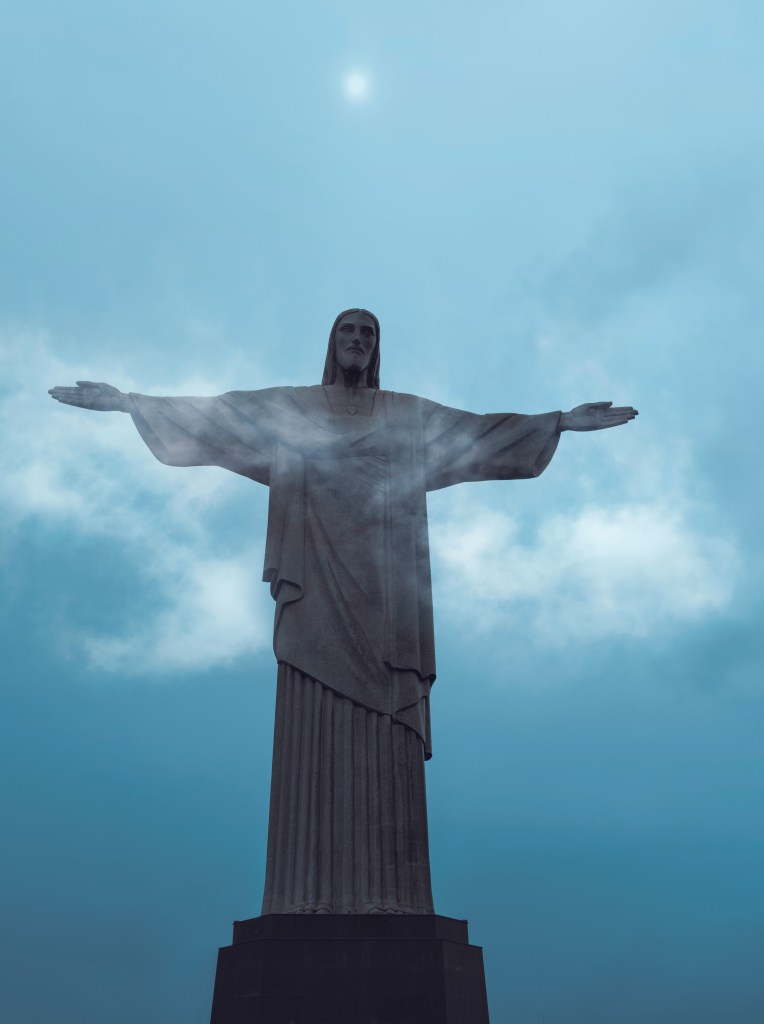
I’ve just returned home after celebrating Christ the King of the Universe Sunday at our parish; this particular Sunday is one of the most treasured masses of the year for me. Throughout the liturgical calendar, we ascend to the throne of Christ in the worship of the Mass, but on this day of solemnity, we ask Christ, the King, to descend onto the throne of our hearts to be Christ OUR King. Tears flowed as I joined our congregation in singing the high hymns of the Church. “Jesus shall reign, and to him shall endless prayer be made and praises throng to crown his head. His name, like sweet perfume, shall rise with every morning sacrifice!” On this day, I am keenly aware that my life is a prayer of gratitude and thanksgiving to the One who knows me better than I know myself and waits for me to respond to his presence in humble acceptance of his lordship of my life. My worship of him ascends like a fragrant offering; I wonder if he is pleased by the fragrance of my life.

We responded to His sacrifice of love as we received his body and blood in the Source and Summit of our Faith–The Worship of the Mass and the Holy Eucharist! With all the pomp and circumstance of a royal court, we responded to this solemn truth with the hymn of thanksgiving, The King of Love. As we sang, “The King of love my Shepherd is, whose goodness faileth never: I nothing lack if I am his and he is mine forever.” I was reminded that I can only receive his abundance when I humble myself before him as Sovereign Lord!

We call today’s mass The Solemnity of Our Lord Jesus Christ, King of the Universe, because it is a fitting preparatory mass celebration for the Sunday before Advent. We are closing the liturgical year with thanksgiving for Christ the King’s coming into our hearts, and we open the new year by remembering Christ’s incarnation as a baby and his entrance as the King of Glory! A Baby King! Of course, it’s the most wonderful time of year. Jesus, the very Light of the World, entered our darkened world wearing a swaddling cloth as a Crown of Glory to begin the final battle between good and evil in our lives and, ultimately, in the last battle in the history of the world.

Caryll Houselander wrote that we are “Christing the world” as we bear His Light in our corners of the world. “…Light’s glory is to dispel darkness. Christ has illumined you with wisdom and the fire of his presence. It has been sparked and kindled in you. Let it blaze.” I desire to bear that blazing light! The prophet Malachi described how we do this when he spoke for God by saying, “A great King am I, says the Lord of hosts, and my name will be honored among the nations. And now, all priests, this commandment is for you… give glory to his name.” (Malachi 1:14b-). We give God glory in our worship. We join our priests, the vanguard, advancing the truth that Christ is the King. We are the rearguard for our priests as we reveal the King of Glory to our corner of the world. The last words of the mass literally mean, “Go, you are sent to bear Christ to the world.” We carry the banner of Christ the King from the proper worship of Almighty God in the mass to the proper worship of Christ with our lives!

We sing our victory songs as we did this morning when we sang, “All hail the power of Jesus’ name…to him, all majesty ascribe…we’ll join the everlasting song, and crown him Lord of all!” We sing them in how we live and move and have our being in the royal court of heaven in the here and now. My corner of Christ’s court is small, and the number of people I interact with in a week is negligible by the world’s standard, but I know my orders, and I am a faithful courtier in the court of The Most High God! I choose to ascribe to him praise and honor before my loved ones and friends with every word I speak and every prayer I pray!

Pray
Christ, the King of Glory, I glorify you! I ask that you strengthen my arms as I carry your Victory Banner before my loved ones. I confidently proclaim you in my corner of the court of heaven as a shield of righteousness that I may be ready to testify to your reign of peace in each moment. You promise to help your anointed; you will answer me and give victory as I worship you as King of my life. Even when I collapse and fall, you will help me to rise and stand straight! O, Lord, thank you for consoling me today with that beautiful truth.

In the name of the Father and the Son and the Holy Spirit.
~Amen

(Adapted prayer from Psalm 20:5-9; I Corinthians 15; Isaiah 55:12)

Pray it Forward: Tradition!

“Without our traditions, our lives would be as shaky as a Fiddler on the Roof.”

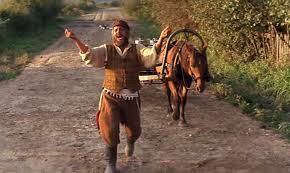
The Broadway musical The Fiddler on the Roof is about a Russian village that strives to protect the traditions of Judaism to keep their religious culture alive and thriving as the pre-Holocaust world threatens to destroy them. The story’s protagonist is Tevya, who has a running dialogue with God throughout the musical. His desire to keep the tradition alive drives him to his knees about how he raises his family–he’s a lovable character because his struggle is standard in every age. At one point in the musical, his wife and he dialogue about their struggles in keeping the traditions of their faith front and foremost for their family amidst the inevitable changes they face in the culture. One of the most tender songs between the husband and wife relays what I believe you, and I feel as parents and grandparents.

Sunrise, sunset. Sunrise, sunset,
Swiftly fly the years.
One season following another,
Laden with happiness and tears.

What words of wisdom can I give them?
How can I help to ease their way?

We must ask ourselves the same questions if we hope to vibrantly live the Sacred Tradition of our Catholic Faith in our domestic church today and in future generations. How can we do that? I suggest that the daily, weekly, monthly, and yearly small “t” traditions we practice within the culture of our family support the capital “T” traditions of The Faith. We must be attentive to what habits and dispositions we form daily to protect our family and future generations from forgetting what they believe and why they believe it. The orthodox Jewish home stands on three pillars we most likely recognize: the Torah (The Law of God), Service to God, and Acts of human kindness. We are Judeo-Christians in that we are the extension and fulfillment of the history of salvation recorded in the Old Testament and fulfilled in the New Testament. And through Jesus Christ’s sacrifice for us once and for all, we are united to God for his Good Purpose. God’s Word is living and active, guiding us today as it did as it was recorded.

The Shema (Deuteronomy 6) alluded to in the musical is a declaration to adhere to as we raise a faithful Christian family. To do otherwise is to risk forgetting the purpose of our vocation as parents and grandparents. When we forget or are apathetic toward what we are about and why we observe our Faith traditions, we are in danger of our children and future generations walking away from The Faith. It is not enough to say, “That’s just what we do,” as Catholic Christians, our faith in God is to be lived purposefully, supported by faith and reason and action. Lack of attention leads to a lack of understanding, giving way to a lack of appreciation. All this culminates in a dismissal of the ancient traditions that sustain and frame the domestic church.

Beyond ensuring our children attend CCD and Sunday Mass each week, where do we form our Christian identity? In the domestic church! We take care to keep The Faith vibrant and life-giving 168 hours a week in our family’s life. The active attention to the integrity of The Faith is reflected in our thoughts, words, actions, and the choices we make for our family, and that forms the domestic church traditions that will guard our families against relegating our faith in God to just another option in a world of shinier but inferior options.

We can’t read the words of The Shema without noting how pivotal the actions are in fulfilling the ordinance. God directs Moses to remind the people: The Lord is our God, the Lord alone. You shall love the Lord your God with all your heart, and with all your soul, and with all your might. Then he instructs the people, “Keep these words that I am commanding you today in your heart. Recite them to your children and talk about them when you are at home, when you are away when you lie down, and when you rise. Bind them as a sign on your hand, fix them as an emblem on your forehead, and write them on the doorposts of your house and on your gates .…You must diligently keep the commandments of the Lord your God, his decrees, and his statutes that he has commanded you. Do what is right and good in the sight of the Lord, so that it may go well with you, and so that you may go in and occupy the good land that the Lord swore to your ancestors to give you, thrusting out all your enemies from before you, as the Lord has promised. (Deuteronomy 6:4-19)

Friends, we live in a culture that is anti-Christ, which is the enemy at war against us. It is the enemy we must thrust out before us one deliberate action at a time. In the words of Tevya, “Without our traditions, our lives would be as shaky as a Fiddler on the Roof.”

Resource recommendations:
The Catholic All Year Compendium: Liturgical Living For Real Life by Kendra Tierney
The Catholic Home: Celebrations and Traditions for Holidays, Feast Days, and Every Day by Meredith Gould
Theology of Home: Finding the Eternal in the Everyday by Carrie Gress, PhD

The Examined Life

When author and pastor, Rick Warren, wrote The Purpose Driven Life, he attempted to answer the question, “What on earth am I here for?” The book became a best-seller and joined many others that attempt to answer the same question. The search for meaning and purpose is as old as humankind. Why can’t we answer the question and be done with it instead of looking for another opinion? The struggle to know who we are and why we are here, I believe, is because we don’t realize God’s unfailing desire for us to know him. In knowing Him, we learn to know our purpose for living. In this post, I would like us to consider the need for silence and introspection as we search for the meaning of our lives.

St. Paul wrote to the Ephesians, “In [Christ] we were also chosen, destined in accord with the purpose of the One who accomplishes all things according to the intention of his will, so that we might exist for the praise of his glory, we who first hoped in Christ.” (1:11-12) God chose us; we are his beloved! He created us in his image. It was perfect and beautiful, and it was enough.

That is, until we chose something other than him.

And the rest of history reveals what happens to us when we stop listening to him. We distract ourselves with the seemingly fascinating options for self-fulfillment that move us farther and farther away from God’s intention for our lives—always coming up short and dissatisfied. How may we return to the intention of God’s will for us? 

We begin by silencing ourselves and our surroundings, which takes a herculean resolve in a distracted and noisy society. Reminding myself that Jesus often withdrew to a quiet place helps my resolution. Just think of what he can do when we retire from our noisy surroundings to meet him there. His Word to us can pierce through our darkened understanding about ourselves to restore us to the intention of his will for us.

So, if we’ve silenced ourselves and inclined our hearts to God, then what do we do?

Socrates wrote, “An unexamined life is not worth living.” Examination of our life requires introspection, and we just aren’t comfortable with that, are we? St. Ignatius of Loyola developed a guide of Spiritual Exercises to help us examine our lives and discern God’s desires for us. In considering our lives, we allow the Holy Spirit to reorient the inclination of our lives toward God. We learn to know ourselves–strengths and weaknesses. We understand how our unique nature can “exist for the praise of his glory.” St. Ignatius provides a template, so to speak, for prayer called The Suscipe (the Latin word for “receive”) that will guide us in examining our strengths and weaknesses and giving them back to the One who created us the way we are.

Take, Lord, and receive all my liberty, memory, understanding, and entire will, all I have and call my own.  You have given all to me. To you, Lord, I return it. Everything is yours; do with it what you will. Give me only your love and grace; that is enough for me. Amen

Beginning the prayer with the word “take” assumes we will give up. What do I hold too tightly that needs surrendering to the Lord? What is the disposition of my heart? What does the essence of my heart incline me toward? Remembering the saying, “Everywhere I go, there I am,” is a good place for me to start when answering those questions.

Do I recognize a running theme in my conversations and relationships? Do I see a pattern of behavior toward others that repeats in every circumstance? I must stop and consider if disordered pride, fear, or anger motivates my words and actions, dragging me farther away from God’s intention.

What liberties do I take with myself and with others? What memories keep me from entrusting myself to the Lord? What do I have difficulty understanding about God, myself, and others? Most of the confusion and conflicts we have in life come from our unwillingness to understand ourselves and others. The Holy Spirit is always faithful to affirm our strengths and counsel us in our weaknesses if we remain silent before him, desiring to seek God’s purpose above all.

This examination prepares us to entrust our entire will to him, where all questions about our existence are answered. St. Paul wrote to the Romans, “…Be transformed by the renewal of your mind, so that you may discern what the will of God is–what is good and acceptable and perfect.” (12:2).

What are we here for? Not ourselves. No, we are here for the praise of God’s glory–that is the abundant life worth living!

Place Yourself in a Place Where You Can Be Found

A priest who served a small town parish found himself going blind due to a congenital disease. As he was preparing for his new life as a blind person memorized the layout of the streets in the town, making Main Street his anchor for navigation. As his sight deteriorated and soon disappeared, he walked each road of the town, constantly navigating back to Main Street before turning toward the parish rectory. One day, he got turned around. He knew how to make his way to the main street, so he walked to it and sat down, knowing someone from the parish would find him. Sure enough, a parishioner passed by and gave him a drive back to the rectory. He thanked the parishioner for finding him. Then the parishioner asked him how he had known how to make his way to Main Street. The priest told him of his practice of memorizing the town as he was going blind. “But, why Main Street?” the parishioner asked. The priest reminded him that everybody in town must drive down the main street to get where they are going. And then he added, “When you are lost, put yourself in a place where you can be found.”

I have never been so lost that I couldn’t be found (we never are), but I certainly have felt that way from time to time over my life. And, like the priest, I want to always be in a place where I can be found! Like Zaccheus, who wanted to see Jesus but couldn’t see over the crowd because he was vertically challenged, I sometimes needed to climb a tree to be found. The hard part is to sit and wait for Jesus. An Ignatian Spirituality principle about the discernment of spirits helps me to remain “seated” as I wait to be found, or I should say, as I wait for the Lord’s consolation. Life just happens, does it not? We are perennially in a state of consolation, tranquility, or desolation; and sometimes life just drives us up a tree; pun intended. We have seasons when our spirit is tranquil and still in the hands of our LORD, but then something comes along to disturb our peace, and it can make us feel discontent, doubt, or fear settling in around the edges of our mind. I believe the LORD allows those times to come to help us relearn that he is always with us despite how we feel. Usually, we can recognize that it’s simply another opportunity to entrust ourselves to the LORD. Normally. But then there are those times when discontentment, doubt, or fear move into our hearts and begin to nag us into looking for love in all the wrong places.

Saint Ignatius of Loyola refers to those seasons of our life as “desolation.” It may start with a bit of melancholy or feelings of isolation tiptoeing their way into our thoughts or a dramatic life event that assaults us. Either way, we risk losing sight of the LORD’s abiding love for us if we try to avoid the season by distracting ourselves from the LORD’s love. It is then that we need to take the blind priest’s advice and place ourselves in a place where we can be found.

He cautions that we should never make decisions when in desolation; in other words, we are to remain in the LORD’s hands as he carries us through the unwelcomed season back to the tranquil rest that is ours when we wait for the LORD. When we continue to do what we know to do in our relationship with the LORD–worship, prayer, reading the Sacred Scriptures–we are placing ourselves in a place we can be found. And just as Jesus did for Zacchaeus, he will do for us even though we cannot see the forest for the trees, another pun intended!

I believe I know why Ash Wednesday is the third most attended mass of the Liturgical year; we all share the knowledge that our physical lives are just dust after all. St. James writes:

What is your life? For you are a mist that appears for a little while and then vanishes.

Yet we all know or at least hope to know that when we place ourselves in the place where we can be found, Jesus comes to us with his abundant life as he did to Zaccheaus. And like Zaccheaus, we know that when we repent of whatever got us lost in the first place, a season of refreshing will come. That’s another way to look at Lent’s meaning- a time of renewal and refreshment.

Repent therefore, and turn to God so that your sins may be wiped out, so that times of refreshing may come from the presence of the Lord, and that he may send the Messiah appointed for you, that is, Jesus

“Acts 3:19,20

Do you ever doubt God will come through for you? Do you long for contentment that isn’t rattled by your circumstances? Do you struggle with feelings of doubt and discontent? The malignant enemy of our soul nags us with feelings of shame and regret, discontentment and doubt. Yet our loving Lord Jesus has his eyes fixed on us, waiting for us to place ourselves where we can be found.

LORD Jesus Christ, there are so many ways we get ourselves lost. You know them all, don’t you? There is one way to be found, and you are the One who sees us. Teach us how to place ourselves where we can be found momentarily as we make this Lenten journey together.

In the name of the Father, and the Son, and the Holy Spirit.

Amen

Holy Work

And whatever you do, in word or in deed, do everything in the name of the Lord Jesus, giving thanks to God the Father through him… Whatever you do, do from the heart, as for the Lord…

Colossians 3:17, 23

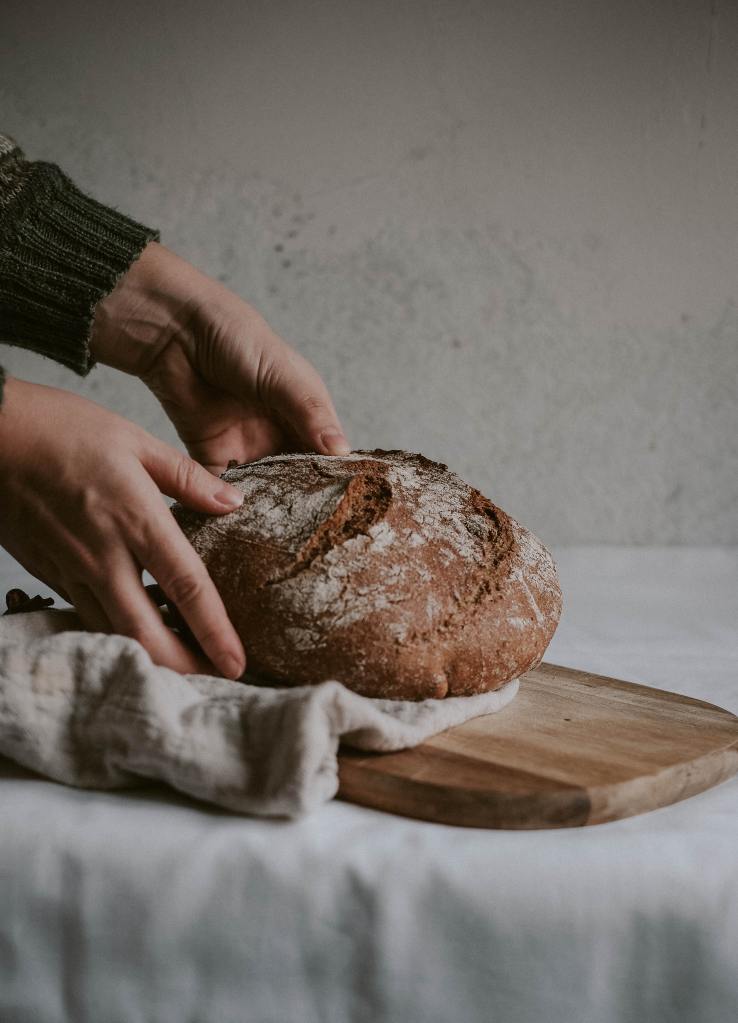
St. Paul writes that whatever our task, it can glorify God when we do it with thanksgiving. What is your task right now? Are you harvesting a field, holding your child, baking bread, or repairing a vehicle? When rightly ordered, the tasks of our hands are offerings of worship and thanksgiving to the Lord.

God ordered his creation as good, and he considers us as very good co-creators with him. His instruction to “be fruitful and multiply” applies to more than procreation. He has instilled within us a very good desire to innovate: in other words, to multiply his beauty and goodness in every corner of his creation. 

There’s not an animal alive that finds a cave to live in and immediately thinks, “Now, what can I do to improve the place?” But we do! God put the first man and woman in the Garden of Eden to cultivate and care for it as an act of thanksgiving and worship of God (Genesis 2:15). We, too, worship him with thanksgiving as we cultivate and care for our corners of this world by beautifying it. What a privilege! What a responsibility!

So how do we do that? We join hands, so to speak, in co-creating with God according to the unique giftedness he has blessed us each with. Whether right brain or left brain, artistic or analytical, we multiply God’s beauty, goodness, and truth with the work of our hands. My friend is an investor; he delights in helping people invest wisely. Another friend is an artist; she is delighted to give her paintings to neighbors and friends. Creating and giving, isn’t this another way of participating with God?

In the Sacred Tradition of our faith, we worship in the Mass, celebrating Christ, our Lord. There, our response to our salvation is a liturgy of praise and thanksgiving that we pray in word and song. The last words of the prayer of the Mass are “The Mass is ended. Go, in peace, glorifying the Lord by your life.” And we respond, “Thanks be to God.” We don’t walk out of the worship of God as if our thanksgiving has ended. No, we continue our worship of him as the Lord of our life in the liturgy (its etymology means “work”) of our daily lives. 

This is the beautiful reciprocity of the worship of God: God is delighted by our worship, and he pours that delight back into our lives as we co-create with him in the work of our hands. Our work is a favor from our Creator, a favor that keeps on giving. 

The psalmist writes, “May the favor of the Lord our God be ours. Prosper the work of our hands!” (Ps 90:17). Favor is an act of kindness beyond what is usual, but another definition of favor is to bear a resemblance to someone. Aren’t we doing that with the work of our hands as we co-create with our heavenly Father? 

Consider that our God, in the work of creation, made all things purposeful, perfect and valuable for us. And I believe it was quite enjoyable and satisfying for him to do that! It was all a favor for us. As we participate with him in co-creating, we too, enjoy the work of our hands, finding it satisfying and enjoyable and then gifting it to others.

My God-given abilities and talents bring order to my life, enriching my corner of the world. As I co-create, I am calmed and balanced in the rhythm of the abundant life in God. As I give my gifts and abilities to others, they may join in the rhythm of this abundant life as well. And yes, God favors me with the sanity that comes with it!

The Table

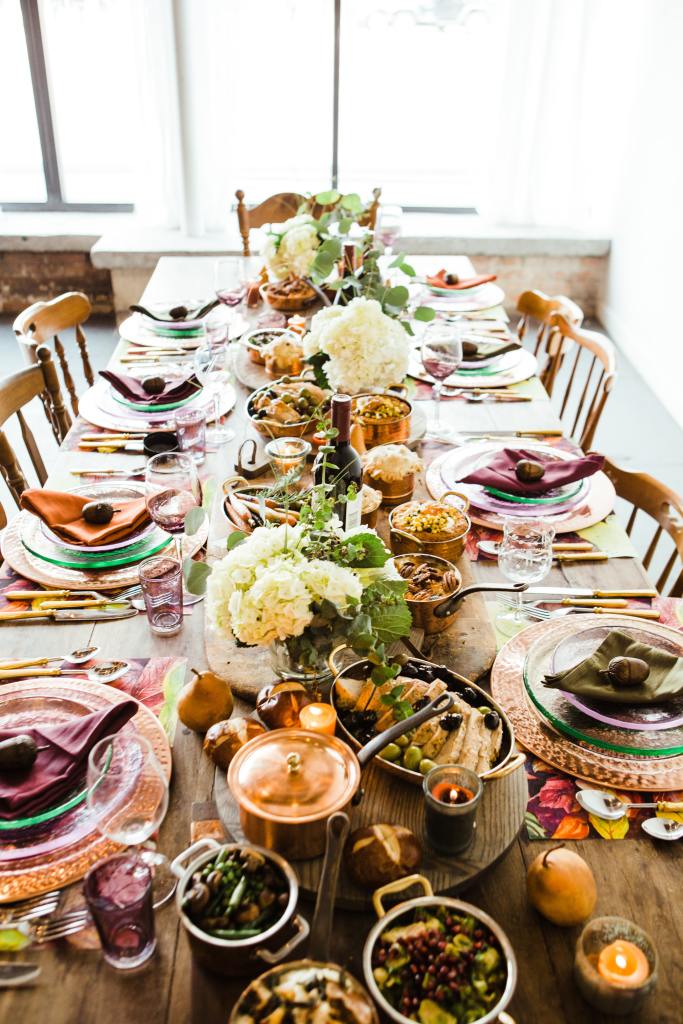
Jesus and feasting go together! Jesus frequently gathered with people around the table to enjoy good food and wine. The conversations around the table led to lessons by Jesus that would reveal truths about himself or human nature. Jesus’ first recorded miracle was at a wedding feast. He revealed his compassion and his power for the guests at that table. Jesus multiplied bread and fish for feasts that fed thousands of people. At one of those feasts, he declared that his body is the bread of heaven, and all who eat it are welcome at the table in God’s Kingdom. The last night with his disciples before his arrest, was spent around a table where they celebrated the Passover Feast–Lamb, bread, and wine. He instituted the Feast of the Eucharist when he broke bread with them and shared the wine:

While they were eating, Jesus took a loaf of bread, and after blessing it he broke it, gave it to the disciples, and said, “Take, eat; this is my body.” Then he took a cup, and after giving thanks he gave it to them, saying, “Drink from it, all of you;  for this is my blood of the covenant, which is poured out for many for the forgiveness of sins. I tell you, I will never again drink of this fruit of the vine until that day when I drink it new with you in my Father’s kingdom.”

The Gospel according to St. Matthew 26:26-29

On the evening of the day of his resurrection, he revealed himself to two of his followers at their table while breaking the bread; he blessed the bread and gave it to them. They immediately recognized Jesus as he broke the bread and blessed it!

They urged him strongly, saying, “Stay with us, because it is almost evening and the day is now nearly over.” So he went in to stay with them.  When he was at the table with them, he took bread, blessed and broke it, and gave it to them.  Then their eyes were opened, and they recognized him…

The Gospel according to St. Luke 24: 29-31a

After his Ascension into heaven, his holy Spirit descended on his followers while they celebrated the Feast of Pentecost!

When the day of Pentecost had come, they were all together in one place. And suddenly from heaven, there came a sound like the rush of a violent wind, and it filled the entire house where they were sitting. Divided tongues, as of fire, appeared among them, and a tongue rested on each of them. All of them were filled with the Holy Spirit

The Acts of the Apostles 2:1-4a

The book of The Revelation to St. John includes a vision that reveals Jesus feasting around a table with his followers. St. John is instructed by the angel that accompanied him to write these words, Blessed are those who are invited to the marriage supper of the Lamb.

“Hallelujah!
For the Lord our God
    the Almighty reigns.
Let us rejoice and exult
    and give him the glory,
for the marriage of the Lamb has come,
    and his bride has made herself ready;
to her, it has been granted to be clothed
    with fine linen, bright and pure”—

for the fine linen is the righteous deeds of the saints.

And the angel said to me, “Write this: Blessed are those who are invited to the marriage supper of the Lamb.” 

The Revelation to St.John 19:6b-9a

What is Jesus up to with all that feasting? Is it the food, or is it the event? Well, it’s both. It was just like him to use the stuff familiar to us to reveal how God’s Kingdom may “come on earth as it is in heaven.” St. Luke draws our attention to a few feast conversations in his gospel (14:7-24), and considered together they foreshadow the eternal feast of heaven: The Marriage Supper of the Lamb. It seems that Jesus wants us to rehearse feasting with the proper attitude and understanding so that we may be allowed through the doors of heaven to take our place at the table of that feast.

Rehearsal includes three things necessary for receiving an invitation to the Marriage Supper of the Lamb. We are to practice humility and hospitality, and finally, we are to practice readiness.

The way Jesus wants us to rehearse humility and hospitality is evident in the first lesson (St. Luke 14:7-14): obey his command to love our neighbor as ourselves. The last lesson is known as the Parable of the Great Banquet; a festal feast (St. Luke 14:15-24). Festal feasts have extraordinary religious symmetry; they symbolize covenant communion with God and others. In the parable, Jesus describes himself at once as the host of the feast, and as the servant sent to gather everyone in for the covenant communion around his table.

The Great Banquet foreshadows the worship of the Mass as a celebration of covenantal communion. The worship of God in the Mass is quite literally a rehearsal for The Marriage Supper of The Lamb in eternity. We join the great multitude of the faithful who have departed this earthly kingdom. We enter into the conversation around The Table of Christ’s Sacrifice, listening to his Word and humbly responding through prayer, confession of our sins against God and others, and receiving Christ’s body and blood, soul and divinity in The Eucharistic Feast! The worship of The Mass on earth is where we receive Christ as Host and Suffering Servant

[Christ Jesus] emptied himself,
taking the form of a slave,
being born in human likeness.
And being found in human form,
he humbled himself
and became obedient to the point of death—
even death on a cross.

Therefore God also highly exalted him
and gave him the name
that is above every name,
so that at the name of Jesus
every knee should bend,
in heaven and on earth and under the earth,
and every tongue should confess
that Jesus Christ is Lord,
to the glory of God the Father.

St. Paul’s letter to the Philippians 2:7-11

All of life is sacramental in that everything that happens to us and around us becomes an offering of thanksgiving when we offer it to our Lord. The mundane and ordinary is a rehearsal of humility and hospitality where we reveal Christ to others in our attitudes and actions. We are practicing readiness before God through obedience to his command to love others as we love ourselves. How is rehearsal going for you, friend? Do you faithfully worship God in The Mass, or are you skipping out for the fast and easy worship of this earthly kingdom? The Good and Gentle Host and Servant invites us to come to him, to eat and drink of him as he is made present in the worship of the Mass. He paid the price for our seat at this table with his body and blood. Will you accept the invitation?