The Table

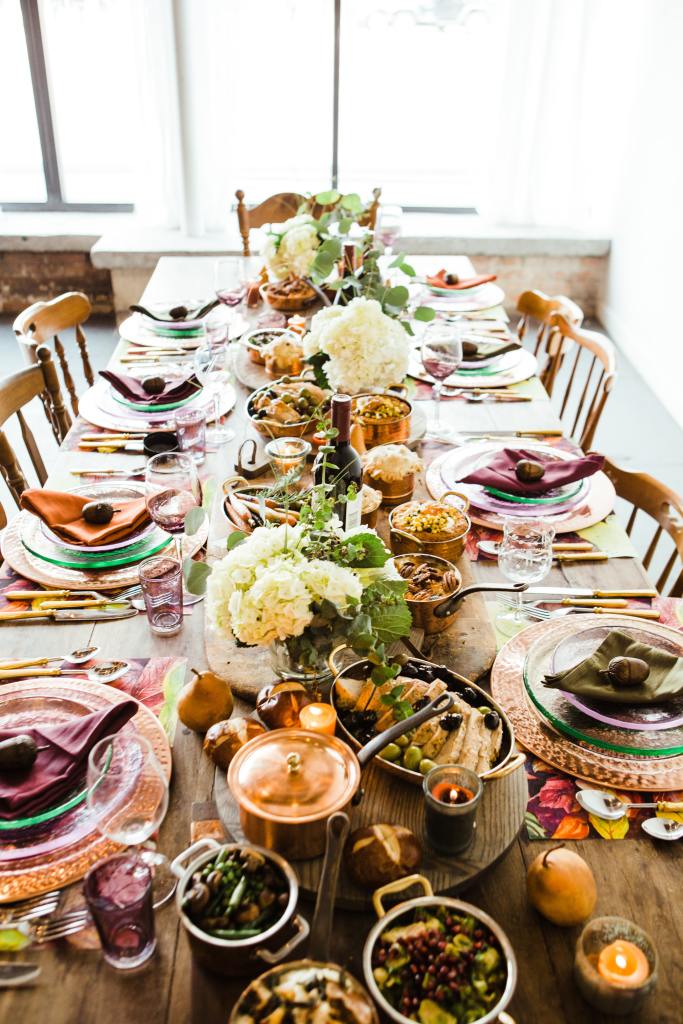
Jesus and feasting go together! Jesus frequently gathered with people around the table to enjoy good food and wine. The conversations around the table led to lessons by Jesus that would reveal truths about himself or human nature. Jesus’ first recorded miracle was at a wedding feast. He revealed his compassion and his power for the guests at that table. Jesus multiplied bread and fish for feasts that fed thousands of people. At one of those feasts, he declared that his body is the bread of heaven, and all who eat it are welcome at the table in God’s Kingdom. The last night with his disciples before his arrest, was spent around a table where they celebrated the Passover Feast–Lamb, bread, and wine. He instituted the Feast of the Eucharist when he broke bread with them and shared the wine:

While they were eating, Jesus took a loaf of bread, and after blessing it he broke it, gave it to the disciples, and said, “Take, eat; this is my body.” Then he took a cup, and after giving thanks he gave it to them, saying, “Drink from it, all of you;  for this is my blood of the covenant, which is poured out for many for the forgiveness of sins. I tell you, I will never again drink of this fruit of the vine until that day when I drink it new with you in my Father’s kingdom.”

The Gospel according to St. Matthew 26:26-29

On the evening of the day of his resurrection, he revealed himself to two of his followers at their table while breaking the bread; he blessed the bread and gave it to them. They immediately recognized Jesus as he broke the bread and blessed it!

They urged him strongly, saying, “Stay with us, because it is almost evening and the day is now nearly over.” So he went in to stay with them.  When he was at the table with them, he took bread, blessed and broke it, and gave it to them.  Then their eyes were opened, and they recognized him…

The Gospel according to St. Luke 24: 29-31a

After his Ascension into heaven, his holy Spirit descended on his followers while they celebrated the Feast of Pentecost!

When the day of Pentecost had come, they were all together in one place. And suddenly from heaven, there came a sound like the rush of a violent wind, and it filled the entire house where they were sitting. Divided tongues, as of fire, appeared among them, and a tongue rested on each of them. All of them were filled with the Holy Spirit

The Acts of the Apostles 2:1-4a

The book of The Revelation to St. John includes a vision that reveals Jesus feasting around a table with his followers. St. John is instructed by the angel that accompanied him to write these words, Blessed are those who are invited to the marriage supper of the Lamb.

“Hallelujah!
For the Lord our God
    the Almighty reigns.
Let us rejoice and exult
    and give him the glory,
for the marriage of the Lamb has come,
    and his bride has made herself ready;
to her, it has been granted to be clothed
    with fine linen, bright and pure”—

for the fine linen is the righteous deeds of the saints.

And the angel said to me, “Write this: Blessed are those who are invited to the marriage supper of the Lamb.” 

The Revelation to St.John 19:6b-9a

What is Jesus up to with all that feasting? Is it the food, or is it the event? Well, it’s both. It was just like him to use the stuff familiar to us to reveal how God’s Kingdom may “come on earth as it is in heaven.” St. Luke draws our attention to a few feast conversations in his gospel (14:7-24), and considered together they foreshadow the eternal feast of heaven: The Marriage Supper of the Lamb. It seems that Jesus wants us to rehearse feasting with the proper attitude and understanding so that we may be allowed through the doors of heaven to take our place at the table of that feast.

Rehearsal includes three things necessary for receiving an invitation to the Marriage Supper of the Lamb. We are to practice humility and hospitality, and finally, we are to practice readiness.

The way Jesus wants us to rehearse humility and hospitality is evident in the first lesson (St. Luke 14:7-14): obey his command to love our neighbor as ourselves. The last lesson is known as the Parable of the Great Banquet; a festal feast (St. Luke 14:15-24). Festal feasts have extraordinary religious symmetry; they symbolize covenant communion with God and others. In the parable, Jesus describes himself at once as the host of the feast, and as the servant sent to gather everyone in for the covenant communion around his table.

The Great Banquet foreshadows the worship of the Mass as a celebration of covenantal communion. The worship of God in the Mass is quite literally a rehearsal for The Marriage Supper of The Lamb in eternity. We join the great multitude of the faithful who have departed this earthly kingdom. We enter into the conversation around The Table of Christ’s Sacrifice, listening to his Word and humbly responding through prayer, confession of our sins against God and others, and receiving Christ’s body and blood, soul and divinity in The Eucharistic Feast! The worship of The Mass on earth is where we receive Christ as Host and Suffering Servant

[Christ Jesus] emptied himself,
taking the form of a slave,
being born in human likeness.
And being found in human form,
he humbled himself
and became obedient to the point of death—
even death on a cross.

Therefore God also highly exalted him
and gave him the name
that is above every name,
so that at the name of Jesus
every knee should bend,
in heaven and on earth and under the earth,
and every tongue should confess
that Jesus Christ is Lord,
to the glory of God the Father.

St. Paul’s letter to the Philippians 2:7-11

All of life is sacramental in that everything that happens to us and around us becomes an offering of thanksgiving when we offer it to our Lord. The mundane and ordinary is a rehearsal of humility and hospitality where we reveal Christ to others in our attitudes and actions. We are practicing readiness before God through obedience to his command to love others as we love ourselves. How is rehearsal going for you, friend? Do you faithfully worship God in The Mass, or are you skipping out for the fast and easy worship of this earthly kingdom? The Good and Gentle Host and Servant invites us to come to him, to eat and drink of him as he is made present in the worship of the Mass. He paid the price for our seat at this table with his body and blood. Will you accept the invitation?


Co-Creators

Happy Labor Day to readers in the United States! The holiday was initiated with noble intentions in the late 1900s to “recognize the many contributions workers have made to the United States’ strength, prosperity, and well-being.” However, over time it’s turned into a 3-day weekend for the last chance to enjoy the relaxed days of summer before the school year begins.

I’d like to consider with you on this Labor Day the entrance and the communion antiphons for today’s celebration of the Mass. I believe they guide us in how the LORD desires for us to respond to the labor we have been given to do.

May the favor of the Lord our God be upon us,
    and prosper for us the work of our hands—
    O prosper the work of our hands!

Psalm 90:17

God looks upon all his creation as good, and he looks at us as very good co-creators with him. To be fruitful and multiply applies to more than procreation. He has instilled within us a desire to re-create and innovate. There’s not an animal alive that finds a cave to live in and immediately thinks, Now, what can I do to improve the place?

Where are you right now? Is your environment in need of improvement? Are you looking at the 4 walls of your office, harvesting a field, or holding your child? Whether at work, play, or rest God has given us the work of re-creation. This truth helps to widen my perspective on every task of my hand as an extension of God’s re-creation of the world! The psalmist declares,

One generation shall laud your works to another,
    and shall declare your mighty acts…

All your works shall give thanks to you, O Lord,
    and all your faithful shall bless you.
They shall speak of the glory of your kingdom,
    and tell of your power,
 to make known to all people your mighty deeds,
    and the glorious splendor of your kingdom.

Psalm 145

When we live as co-creators with our Creator, we move toward pursuing all of life with the inspiration of the Holy Spirit to declare the LORD’s abundance, freedom, love, and grace. Sounds noble enough, doesn’t it? But, the re-creation of a broken world is challenging. The environment of the workplace–office, factory line, field, or home–doesn’t necessarily make co-creating with Christ easy. It can be the hardest place to re-create!

St. Benedict, in his Rule, refers to the “Work of God” as liturgy. In the Sacred Tradition of our Faith, the work of God includes all of life–all of life is sacramental! We worship in the liturgy of the Mass, celebrating Christ, our Redeemer, and High Priest. There, our response to our salvation is the liturgy of praise and thanksgiving. The last words of the prayer of the Mass are “Go forth, the Mass is ended” which, interpreted means, “Go, in peace, glorifying the Lord by your life.”

Are we able to step through the doors of our parishes into the liturgy of our lives responding with praise and thanksgiving? Are we able to see every moment of our work as the work of God? Can we begin to give great attentiveness to the movement of God in our attitudes and actions as we work alongside others? St. Paul wrote to the Colossians,

Whatever you do, in word or deed, do everything in the name of the Lord Jesus, giving thanks to God the Father through him.

Colossians 3:17

Creator God, the heavens declare the work of your hands! May the words of our mouth, the meditation of our heart, and the work of our hands declare you to our corner of the world. May we moment-by-moment bring joy and pleasure to you as we co-create with you. May we love you in the best way we know how in all our relationships.


Forgive us when we stumble along with missteps caused by our forgetfulness that your love for us is to be displayed before everyone, even obnoxious and slothful fellow workers. Guard us and defend us from back-biting and slander, murmuring, and gossiping that destroy relationships.

May we give thanks to you in all things, rejoice always, and pray without ceasing!

In the name of the Father, and the Son, and the Holy Spirit.

As it was in the beginning, it is now, and ever shall be world without end.

Amen.

The Rhythm of Creation

I revel in the rhythm of the seasons each year, and we are in one right now here in South Dakota. Summer is waning: the evening air is crisp, and the sunlight is a deeper gold. I’ve been pondering the seasons of life during my morning walks as I observe summer slowly tiptoeing into autumn. I’m keenly aware of how the rhythm of my life is changing as well; there is a certain adagio, a slowing in my spirit. The kind of slowing that is welcomed, setting a new time scale, as it were, to the song my life. My appreciation to the LORD for this is described in today’s Mass reading from Psalm 96!

O sing to the Lord a new song;
    sing to the Lord, all the earth.
Sing to the Lord, bless his name;
    tell of his salvation from day to day.
Declare his glory among the nations,
    his marvelous works among all the peoples.
 For great is the Lord, and greatly to be praised;
    he is to be revered above all gods.
For all the gods of the peoples are idols,
    but the Lord made the heavens.
Honor and majesty are before him;
    strength and beauty are in his sanctuary.

Psalm 96

The theme of the daily liturgy over this last week or so culminates in the poetry of this psalm. You may remember what we read from the book of the prophet, Ezekiel. The LORD promised, “O, my people! A new heart I will give you, and a new spirit I will put within you…” This scripture reminded me of the familiar scripture from the Book of Revelation, “Behold. I make all things new!” All this has me wondering how the song I sing sounds to the LORD in this season of my life. My song to the LORD has many verses inspired by the passages of time and circumstances. I bet yours does, too. Recently, I wondered if the song I’m currently singing to the LORD causes him to want to hum along. And then I asked myself if the sound of my song makes others want to hum along.

Some words from Peter Kreeft came to mind as I’ve been contemplating the Scriptures this last week, “Speech not only reveals the soul; it also conditions the soul. The more you say something, the more you believe it. The more you praise something, the more you love it. The more you rail against something, the more you hate it.” Read that again. Do those few sentences cause you to pause as it has me? The saying goes, what’s down in the well comes up in the bucket. The new song I’m singing is composed of a season of spiritual healing and the release of long-held resentments and pride. I feel a lighter touch in the sound welling up within me. And I do believe the LORD and others appreciate this new song as much as I do!

What season of life do you find yourself in? What does the music of your life sound like to the LORD and to others?

The LORD wants us to sing a new song, not for the sake of change, but for the sake of increasing our awareness that his mercies are new every morning! Do you feel that your song is getting tired and sounding a bit out of tune? I feel you. Sometimes it seems too hard to do the soul work of rewriting our song, so we get accustomed to singing out of tune, so to speak. The harmony comes when we set the upbeats and downbeats of the seasons of life with the rhythm of the LORD’s song. The notes on his scale are love, joy, peace, patience, kindness, generosity, faithfulness, gentleness, and self-control. And in his beautiful way, he takes the crescendos and decrescendos of life to compose a new melody for us to sing. Can you hear it? Don’t you want it?

The timbre of my song comes through a little differently than it did in my 30s, 40s, and 50s. There’s a deeper texture and form because of what each season of life has given to me as it passed. What season are you in? What needs tuning in your spirit so that you can sing a new song to the LORD?

I’ve been singing this to myself lately,

My life flows on in endless song,
above earth’s lamentation.
I catch the sweet, though far-off hymn
that hails a new creation.

No storm can shake my inmost calm
while to that Rock I’m clinging.
Since the Lord is lord of heav’n and earth,
how can I keep from singing?

Through all the tumult and the strife,
I hear that music ringing.
It finds an echo in my soul.
How can I keep from singing?

The peace of Christ makes fresh my heart,
a fountain ever springing!
All things are mine since I am his!
How can I keep from singing?

LORD and Maestro of my life, poco a poco, little by little, I’m learning your new song for me, and, you know, I like the sound of it! Thank you for your Symphony of Love that rings ever and true!

In the name of the Father, and the Son, and the Holy Spirit.

As it was in the beginning, it is now, and ever shall be,

Song without end!

Amen

A Willing Sacrifice

Greetings, friend.

Over the past week, I picked up on the theme of sacrifice that wove through the daily Mass readings. It was like looking at the picturebook, Where in the World is Waldo? Sacrifice popped into focus in several of the Sacred Scriptures. The timing of this theme has caused me to stop and meditate many times; it seems the Holy Spirit is up to something with me as I anticipate stepping into a circumstance I would just as soon avoid if left to my own emotional leanings. Avoiding something or someone(s) that causes me discomfort is too often the default setting for me–the sacrifice seems too great! Do you ever do that?

The Mass reading from the Old Testament today is the culmination of a week-long consideration of what it means to live sacrificially. The LORD’s message to the prophet, Micah, tells us that he requires mercy not sacrifice. What would that look like in my life? I sense that my notion of sacrifice needs to realign with God’s way. Does worshipping the LORD at Mass and immersing my spirit in the Daily readings qualify as a sacrifice? They are acts of love, yet try as I might I couldn’t reconcile these, my preferred choices of demonstrating my love to our LORD, with what the prophet told his people was an acceptable sacrifice.

He has told you, O mortal, what is good;

    and what does the Lord require of you

but to do justice, and to love kindness,

    and to walk humbly with your God?

The Book of the Prophet Micah 6:8

Other questions came to my mind this past week when I read what the psalmist declared I will sacrifice to you with a willing heart… What qualifies as a willing heartIs my willingness to love on those who I prefer to be around sacrificial enough? How deep does my willingness to sacrifice my time and attention to others go? Do I have to actually make time for those whom I would just as soon avoid? Those questions made me a little uneasy as I examined the content of my thoughts about some relationships in my life. I felt the press of the Holy Spirit on my conscience.

Then, if that’s not enough, I read of the whole Martha/Mary thing! It was as though the Spirit of God pulled up a stool in front of me and looked me straight in the eyes! Has that ever happened to you? I could almost hear God laugh as I said to myself, I’ll just skim over this part. Never a good choice when reading God’s Word to us! St. Luke’s gospel places the encounter Jesus had with the dutiful young lawyer who questioned what he had to DO to inherit eternal life right before Jesus’ visit with Martha and Mary. Jesus tells the infamous parable of The Good Samaritan to show what it takes to enter into eternity. He ended by telling him the one who showed mercy to the outcast had what it takes to abide with God forever. Then Jesus visits Martha (who seemed to have the same problem as the young lawyer) and Mary. Martha, so busy sacrificing her time and energy to make everything just perfect for a dinner party, confronts Jesus, of all things, complaining about her sister’s lack of busyness. I imagine she looks over her sister sitting at Jesus’ feet, snuggled as close to him as she could be. Mary is simply sitting there loving Jesus and hanging on his every word; she does not seem bothered by Martha’s accusation. Her posture leans toward Jesus, her eyes fixed on him. Jesus listens to Martha, then looks at Mary, then looks straight into Martha’s eyes to tell her that the one thing he needed from her is simply, love. Yikes! Does he mean that all my activity and sense of duty are not enough to show my love for him? Lord, have mercy on me!

A letter St. Maximilian Kolbe wrote came to mind as I struggled to make sense of all my unease about sacrificial love. Kolbe, who was martyred in the place of a young Jewish cellmate at Auschwitz, wrote:

“Let us remember that love lives through sacrifice and is nourished by giving. Let’s remember that not everything which is good and beautiful pertains to genuine, essential love because even without those other things love can be present, indeed a perfected love. Without sacrifice, there is no love. Sacrifice the senses, taste, hearing, and above all, the mind and the will in holy obedience. I wish for you and for myself the best appreciation of sacrifice which is the unconditional willingness to sacrifice.

Pray with me, friend.

LORD, unconditional willingness to sacrifice my desires for you enables me to love the way you want me to love others. It is a struggle sometimes.

I am not always willing to be fair in my thoughts and actions toward those in my life who are not easy to love…I hear you say to me from your cross, Without sacrifice, there is no love.

You never withhold your love from me, but sometimes I am unwilling in how I love others because of my resentments and assumptions…I hear you say to me from your cross, Without sacrifice, there is no love.

It is easier to be close-minded about differences with others than to be willing to open my heart to them, yet your mind is wide open to everyone…I hear you say to me from your cross, Without sacrifice, there is no love.

My love for others can sometimes be conditional because I am unwilling to be vulnerable to the pain they might cause me…I hear you say to me from your cross, Without sacrifice, there is no love.

LORD, have mercy on me when I take two steps forward and three steps back in being willing to offer myself as a sacrifice of love to everyone around me!

In the name of the Father, and the Son, and the Holy Spirit.

As it was in the beginning, it is now, and ever shall be, world without end.

Amen.

A Living Sacrifice

Yesterday we celebrated the descent of the Holy Spirit upon the Early Church at Pentecost, and now we enter Ordinary Time in the Liturgical calendar. The Church has prepared us through the extraordinary days of Lent and Eastertide for the coming of the Holy Spirit. Holy days, sacramental days, sanctified and set apart for us to enter into the eternal mysteries of our salvation. Ordinary Time is sacramental as well, but the eternal mysteries are revealed as we live and move and have our being in the unfathomable Truths of The Faith. Who can understand how this steadfast hope we have transforms us into the image of Christ? Just as day gives way to night and then day again, our lives rhythmically turn toward a beauty that surpasses our understanding. We are like bees to flowers–ever pursuing the truth in God’s ways and means so that we may taste and see the goodness of our LORD.

How can this unfold in our daily lives? I believe St. Paul says it best when he refers to us as living sacrifices that we offer every moment to our LORD; our very existence is an altar before our Triune God. That altar stands in the varied landscapes of life as we ascend into the fulfillment of who we are as God’s beloved. Sometimes it requires a lot of rock picking to build the altar of sacrifice; we approach with reluctant steps. Yet other times, we run to the altar with a skip toward all that is good, beautiful, and true.

Living sacramentally in every moment imparts these good favors from The Lover of our soul; the stuff of our existence suffuses with sacred significance. In effect, living the quotidian is kneeling before an altar where our humanity meets the divine, and we transform as we allow Christ to incarnate our flesh-soul, mind, and body.

Our Blessed Mother, the saint of all saints, whom we venerate today as The Mother of The Church, was the vessel of this mystery; she knew a thing or two about how the ordinary can become extraordinary. Let’s consider the disposition of Mary’s heart and learn how to kneel at the altar of sacrifice in all the happenstances of our lives. Artist, Fra Angelico, depicts Mary in a garden when the Archangel Gabriel appeared to her; I can imagine she may have been washing clothes or grinding wheat for bread or any other mundane task of a given day. So too, for us, what each day holds is not a vague or general mercy from a far-off God. God’s flesh sees each day as good, and with delight and wisdom, he comes to us in the monotony of our daily round and asks us to be his living sacrifice. How our Blessed Mother responded to the LORD’s coming into her ordinary moment is the exemplar for us,

The angel said to her, “The Holy Spirit will come upon you, and the power of the Most High will overshadow you; therefore the child to be born will be holy; he will be called Son of God…Then Mary said, “Here am I, the servant of the Lord; let it be with me according to your word.”

This same Holy Spirit comes to us in every passage of time inspiring us through the written Word, which is Jesus. Go figure that mystery out! The more we say, Here I am by immersing ourselves in the worship of the Mass and the written Word of God, the more our flesh is filled with his wisdom, understanding, counsel, fortitude, piety, and reverence. This is how we build the altar of our life, this is how our lives transform into living sacrifices! The LORD Jesus comes to each of us according to our natures–the good, the bad, the ugly–and he waits for us to bow before him to echo Our Blessed Mother; the first receiver of Christ’s flesh, responded, “Here am I, the servant of the Lord; let it be with me according to your word.”

So how does this play out for us, only the LORD knows, but I have an inkling. By praying the Word of God, we gather the courage to not only kneel at the altar of our life but also lay ourselves down on the altar. The humility of our Blessed Mother mirrors to us how to do that, My soul magnifies the LORD, and my spirit rejoices in God, my Saviour. As we treasure reading and meditating on the Sacred Scriptures each day, we magnify the LORD rather than the distractions and fascinations around us. Let’s do that together by praying with the Word.

LORD, I magnify you in this confusing circumstance, I know that You, O LORD, are my lamp, my God who lightens my darkness. With you I can break through any barrier, with my God I can scale a wall. (Psalm 18)

LORD, I magnify you in my motivations that would cause me to use words as weapons against this difficult person; change my mind so that the words of my mouth and the meditation of my heart are acceptable to you, O Lord, my rock and my redeemer. (Psalm 19)

LORD, I magnify you in this relationship that requires more of me than I want to give. Search me, and know my heart; test me and know my thoughts. Reveal any wicked way in me, and lead me in the way everlasting. (Psalm 139)

LORD, I magnify you in this decision I need to make, help me to be attentive to wisdom and incline my heart to understanding; then I will understand how to reverence you in this decision…[You alone I desire to honor] (Proverbs 2)

LORD, I present my body as a living sacrifice, holy and acceptable to You, which is my spiritual worship. Train me in not being conformed to this world, so that I may be transformed by the renewing of my minds, so that I may discern what is Your will for my life—what is good and acceptable and perfect. [Romans 12]

In the name of the Father, and the Son, and the Holy Spirit.

As it was in the beginning, it is now, and ever shall be, world without end.

Amen

A Waste of Time?

How’s the lenten journey going for you, fellow pilgrim? Do you ever wonder if you’re wasting your time on your lenten vows? It’s a question I asked myself recently; it’s a question I ask myself all the time, not just during Lent. I got to thinking about if Jesus ever wondered if he was wasting time being the Savior of the World? A quick survey of the gospel readings reveal that Jesus seemed to always be on his way to somewhere or leaving somewhere; entering and departing the circumstances of the human condition. A familiar phrase from the gospels goes something like this, “While they were on their way…” We know Jesus got tired; he wearied of people’s refusal to see things the way he saw them; got angry with hypocrites; and wept over people’s suffering. And we know Jesus often parted company with people to retreat into prayer. I wonder what he and our Heavenly Father conversed about during those prayer retreats; we can only imagine.

When questioned by the spectators of his life, he would reply that he was doing the will of the Heavenly Father. It follows that Jesus would never have doubted how he spent his time. It was the Father’s will to incarnate himself into our humanity; therefore, it was the Father’s will that he invested the entirety of his mind, body, and spirit in us! That just blows my mind! Every word that came out of Jesus’ mouth was motivated by the Father’s will! Perhaps when I stop questioning if I’m wasting my time, I will live all of my life as Jesus lived his life, and every word I speak or don’t speak will invest in God’s will. Rather than thinking interruptions and delays are a nuisance, I would see them as opportunities for investing in every little movement of my life. The here and there and to-and-fro of my life would become an investment of thanksgiving. Wouldn’t that be something?! To live and move and have my being in the will of my Beloved Father!

There are some questions I’ve started asking the LORD lately about doing his will as I’ve been meditating on the Sacred Scripture readings for our Lenten season.

When I fret or get angry over circumstances beyond my scope as your beloved daughter; am I wasting my time rather than investing trust in Your will? You answer, “Love righteousness…think of [my] goodness and seek me with integrity of heart.” (Wisdom 1:1)

When I insert myself beyond my rightful place as a child of God; am I wasting my time rather than investing obedience to Your will? You answer, “A jealous ear hearkens to everything, and discordant grumblings are not secret. Therefore guard against profitless grumbling, and from scoundrel mongering withhold your tongue.” (Wisdom 1:10-11)

What do I invite into my mind, body, and spirit when I waste energy on pursuits other than investing in Your wisdom? You answer, ‘Learn wisdom…for when you revere the holy precepts, you will find holiness…desire my Word; long for it, and you will be instructed.”

Who do I think is a waste of time? Do they need my emotional investment? You answer, “Beloved daughter, regard the life of the poor [in spirit]; do not keep needy eyes waiting. Do not grieve the hungry [in spirit]….do not turn your face from the helpless…in their pain, they cry out bitterly…listen to them for me.” (Ben Sira 4:1-4)

Am I wasting emotional energy on this relationship; it wears me down. They don’t care about what I have to say; why bother? You answer, “Beloved, ..let no one intimidate you…do not refrain from speaking at the proper time, and do not hide your wisdom…even to death, fight for what is right, and I will do battle for you…Do not let your hand be open to receive, but clenched when its time to give.” (Ben Sira 4: 23-31)

LORD, your very presence invests peace, love, acceptance, forgiveness, mercy, grace! You were always inviting us to join you on the way of abundant life here and in eternity. Every person, every circumstance, every suffering you encountered was an investment on our behalf! Jesus, you are still investing us with your Holy Spirit’s power to go and do likewise. Grant us new eyes to see, new ears to hear, and new hearts to love.

In the name of the Father, and the Son, and the Holy Spirit.

As it was in the beginning, it is now, and ever shall be, world without end.

Amen

The Way of the Desert

I recently spent time in the desert Southwest where I admired the unique beauty of the desert landscape, not unlike the desert terrain that Jesus entered in the Judean wilderness in his 40-day temptation from the enemy. My visit to the desert at the beginning of this Lenten season was timely in that the Holy Spirit revealed to me that the desert is necessary for the certain beauty that grows there.

Our Catholic Faith refers to our growth in holiness as the Purgative Way where we cast from our lives the stuff our spirit accumulates when we do not guard our hearts. During the Lenten season, purgation becomes what we refer to as the journey of humiliation, but here’s the thing, it’s the journey of love for the LORD first and foremost. Recognizing this, we see the LORD as the Lover of our Soul rather than a leering judge waiting for us to fail; our perspective on the purpose of humbling ourselves in honor of him transforms into the response of love.

The common question we ask of others at the beginning of Lent is, “What are you offering up for Lent? Perhaps a better question would be, “What are you offering to the LORD for his love for you during Lent?” Consider why Christ journeyed into the desert; his motivation was and always is love for us. Love led him to the desert, he didn’t need to prove who he was by conquering the temptations common to us, but we do; and so he went to show us the way through the desert into the abundance of the love-life in him.

One of the very first scriptures in the daily liturgy this past week was from St. John 13:34:

I give you a new commandment: love one another As I have loved you, so you also should love one another.”

I’ve been meditating on Jesus’ words as I enter into the Lenten season this year because I desire to choose the practice I offer the LORD as a response of love, for I am overwhelmed by the grace he has poured into my life. We are all familiar with John 3:16, “For God so loved the world that he gave…..” I’m taking the liberty to pray, “For Lois so loves God that she gives…..” And you know what? The Holy Spirit has given me a new perspective; the Lenten Fast can be a Feast as well. I desire to feast on this Lover of my Soul and respond as the beloved. I believe that he will faithfully reveal to me the attitudes of heart that need purging from my life as I remain with him feasting at his table.

I came across this litany recently and now I am praying it these days of the Lenten season:

The Fast Life

Fast from judging others;
Feast on Christ dwelling in them.
Fast from fear of illness;
Feast on the healing power of God.
Fast from words that pollute;
Feast on speech that purifies.
Fast from discontent;
Feast on gratitude.
Fast from anger;
Feast on patience.

Fast from pessimism;
Feast on hope.
Fast from negatives;
Feast on encouragement.
Fast from bitterness;
Feast on forgiveness.
Fast from self-concern;
Feast on compassion.
Fast from suspicion;
Feast on truth.
Fast from gossip;
Feast on purposeful silence.
Fast from problems that overwhelm;
Feast on prayer that sustains.
Fast from anxiety;
Feast on faith.

– Author Unknown

LORD Jesus, deepen our love for you that fosters an eagerness to rid our lives of whatever habit or disposition that robs us of the feast you set before us.

In the name of the Father, and the Son, and the Holy Spirit.

As it was in the beginning, it is now, and ever shall be, world without end.

Amen

To Everything There is a Season

The change of season from Summer to Autumn never fails to remind me of the words in the Book of Ecclesiastes that there is a season for everything; it’s the natural order. The changes of seasons are also a glimpse of the LORD’s faithfulness to us in the natural cycles of life. We used to have a perennial garden before we became apartment dwellers; observing the array of flowers from the early Spring bloom to Autumn dormancy gave me pleasure.

During the autumn of each year, we would harvest hundreds of bulbs from the original 7 Asiatic and Oriental Lilies we planted when we planted the garden. We would spread those bulbs throughout the garden and wait for them to trumpet their glory under the summer’s sky in symphony with the other bloomers throughout our garden. Seeds and bulbs; re-recreation at its best! And so the cycle would go each year. The plants never failed to perpetually glorify the Creator in just being what they were created to be. Throughout Scripture, gardens are the metaphorical image of our life with the LORD. I kindle to the glimpse of this that we are given in the book of Isaiah.

“For as the rain and the snow come down from heaven,
    and return not thither but water the earth,
making it bring forth and sprout,
    giving seed to the sower and bread to the eater,
 so shall my word be that goes forth from my mouth;
    it shall not return to me empty,
but it shall accomplish that which I purpose,
    and prosper in the thing for which I sent it.

  “For you shall go out in joy,
    and be led forth in peace;
the mountains and the hills before you
    shall break forth into singing,
    and all the trees of the field shall clap their hands.
Instead of the thorn shall come up the cypress;
    instead of the brier shall come up the myrtle;
and it shall be to the Lord for a memorial,
     for an everlasting sign which shall not be cut off.”

–Isaiah 55:10-13

In the New Testament, Jesus uses the image of a mustard seed for the perpetual propagation of God’s Kingdom here on earth. Mustard is similar to kudzu in that it is invasive, wildly winding its way through the soil. It quietly invaded the land. Interestingly, Jesus was speaking to Jews who valued order and had strict rules about keeping a tidy garden; they even had laws against planting mustard seed–it messed with their system! Jesus had the chutzpah to compare the kingdom of God to an invasive plant.

The problem was that many of the listeners and even some of his followers had lofty ideas about what the Kingdom of God should look like and how it should grow. In their minds, a militant order was foremost, that, and size. They probably envisioned the tall cedars of Lebanon rather than some untamed bush from a mustard seed, spreading wherever it pleased, messy, difficult to keep under control. What they couldn’t imagine is God’s Kingdom subtly and subversively taking over their well-ordered world.

Their vision of God’s Kingdom included a conquering hero, in the stature of the cedars of Lebanon. There vision of God’s Kingdom included a frontal attack on the empires and governments of the world. Power to the People! Their vision of God’s Kingdom did not include a small act of faith like a mustard seed. Their vision didn’t kindle to the idea of a subtle contagion spreading through one little beautiful life, one little act of hospitality, one little act of mercy, one little act of grace, one little act of forgiveness, one little act of trust at a time.

I wonder what this world’s kingdom would look like if our corners of God’s garden grew like mustard plants. Methinks that the Kingdom of God would invade the world with every seed of love, mercy, forgiveness, long-suffering, gentleness, peace, hope, and grace that we allowed the LORD to plant in the soil of our corner of the garden. And little by little, garden would unite with another’s garden, and then another’s and then, happy day, the trees of the field would clap their hands!

I wonder what the LORD may be up to in our gardens. He, the Master Gardener, wants to tend us, pruning, fertilizing, and watering. He desires to cover us for necessary dormancy or expose us in due season to warmth and light. To everything, there is a season.

Holy Spirit of God, would you grant us the fortitude to remain in the soil of your everlasting love for us? Help us to sow seeds of your love with a patient and joyful spirit in our corners of your Garden.

Holy Spirit of God, would you grant us insight about the corners of our garden that are dark and untended? Help us sow seeds of hope and love where weeds threaten to choke us and crowd out your light.

Holy Spirit of God, would you re-create in the empty spaces or our gardens something of your beauty and goodness? Help us to cultivate your beauty for others to behold.

In the name of the Father, and the Son, and the Holy Spirit. As it was in the beginning, it is now, and ever shall be world without end.

Amen

Labor Day

“I will give each of you what your work deserves.”

–Revelation 2:23

We celebrate Labor Day here in the United States today. Did you know that the words liturgy and labor are akin to each other? Liturgy is multi-layered in its definition; the Greeks defined it as “the work of the people.” As Christians, we understand that the work we do is meant to be sanctified labor in our worship of the Creator in the daily round of our lives. Practicing Catholics understand another sense of liturgy; celebrating the Mass is our collected worship of the LORD through the Liturgy of the Word and the Liturgy of the Eucharist. We give God correct worship in assigning worth (worth-ship) to the celebration of the Mass. The Early Church Fathers understood and emphasized that the continuity of both senses of the word, liturgy, must be retained in our hearts and minds if we are to live the good life of our Faith. Somewhere along the way, humanity lost its sense of labor as worship of Almighty God. The Liturgy of the Church continually helps us recognize the Sacred Scripture’s emphasis of this in the last act of our worship in the celebration of the Mass, as a reminder to continue our worship of God in the labor we do.

The very last action in the celebration of the Mass is the blessing we receive from our priest. Do you remember how the liturgy unfolds in this final action? We bow our heads as we trace the sign of the cross over our mind, soul, and body while the priest asks God to pour out His blessing on us. This Sacred Tradition harkens back to the blessings that are found throughout the Scriptures. Usually, the blessing is given when someone is taking leave of another. In the liturgy of the Mass, we remember Christ’s blessing of his disciples.

“Then he [Jesus] led them out as far as Bethany and lifting up his hands he blessed them. While he blessed them, he parted from them and was carried up into heaven.” –Luke 24:50-51

This is the intentional communication of this last action in our worship: The Lord has come into our lives, and in the same way that the Lord sent out His disciples, He is sending us out, too. The Mass ends with the Latin phrase that means “Go, you are sent.” We hear it as, “Go forth, the Mass has ended.” to which we respond, “Thanks be to God.”

Sent to do what? We are sent on the mission of all ages; we are sent in peace to bring peace into our corners of the world. We cooperate with the LORD to redeem our corner of the world through our labor. Our question today is, how will we take the good news of Christ into the quotidian labor of our lives? How can the labor of our lives bring worship to our LORD and Creator, and salvation to our corner of the world? The Daily readings this week have been drawing our minds to consider labor as worship; this is how St. Paul puts it in the letter to Colossians chapter 3:17:

And whatever you do, in word or deed, do everything in the name of the Lord Jesus, giving thanks to God the Father through him.

If we worship the Lord through our labor, then we will look at everything we do, doing it in the name of Jesus. How is your offering looking these days? Consider the most mundane and boorish part of your labor; how would it change if our mind ascended to the LORD in worship every moment of that labor?

If we worship the Lord through our labor, then what do our words sound like to him and to others? Do our words assign Beauty, Goodness, and Truth to the Name of Jesus? Do our words reflect his beauty, goodness, and truth to those who labor beside us?

Here’s a thought, what about those who labor before us? Do we speak our gratitude to others for their labor, as we do to our Creator? Let’s get down and dirty with this one? In your workplace, who takes care of your lawn? Who serves you in the IT department? Who serves you by keeping the bathroom clean? Who supplies the kitchen? Who serves you in making your workplace an enjoyable place? Who serves you at the window or table when you dine out? We can give thanksgiving to them through our words of gratitude thereby, we give thanks to God.

If we worship the Lord through our labor, then what should our deeds look like to him and others? Do we join in on gossip and backbiting? Or do we elevate conversations by stopping gossip and backbiting in its track by finding the good in others? Staying silent can be an act of worship to our LORD, but acting on that silence by walking away from those conversations is an act of worship that may leave a greater impact on working out salvation in our corner of the world. Someone wisely advised me to use the “3-strikes and your out” approach to circumstances like this? If after you try three times to elevate the conversation by deflection with your words, walk away. The workplace could do with a little more exercise of the “3-strikes and your out” approach, don’t you think?

If we worship the Lord through our labor, then we take our cues from the actions of Jesus. Today’s gospel account reveals his labor in healing! That is, at the very heart, what salvation is; the salve of God’s grace and mercy pours over our lives, healing us, and that healing is also for all the people we encounter; it’s intended so. Do our words pour healing salve over another’s life? Do our deeds pour healing salve into another’s brokenness?

Jesus, we offer you worship through how we labor when we reveal your goodness in our work, help us to see our labor with the eyes of worship.

Jesus, we offer our words in our labor as offerings of your beauty to others, tame our tongues, help us as we offer our worship to you in the way we speak.

Jesus, we offer the deeds of our labor in sacrifice of worship, thanking you for the ability and privilege we have to use our bodies to glorify you, sanctify every deed we do. May our every action worship you our Creator God.

May the words of our mouth and the meditation of our heart be acceptable to you, our LORD, our Rock, and Redeemer.

In the name of the Father, and the Son, and the Holy Spirit.

Amen.

Glory Be

My bet is if I say, “Glory be to the Father,” to you as a practicing Catholic, the remainder of the prayer would roll off your tongue back to me, “…and to the Son, and the Holy Spirit. As it was, in the beginning, it is now and ever shall be world without end.” To say that the Glory Be is embedded in our Catholic identity would be an accurate conclusion. We have prayed The Gloria, and extended Glory Be, in chant or song when we celebrate the Mass since about 380 A.D. I counted up how many times we pray the Glory Be each day as a response in the Liturgy of the Hours: we pray it at least 38 times starting with Morning Prayer and concluding with Night Prayer. So, why does the liturgy of the Church train our minds to weave this sacred tradition of prayer into our daily lives?

We, in our finite existence, recognize the LORD’s infinite existence, we bow our minds to that truth when we pray the Glory Be. It takes time and not just a little bit of effort, on our part, for our hearts to believe what we pray, doesn’t it? To entirely abandon our desire for control is no small undertaking so The Church, in her wisdom, inches our minds closer and closer to detachment from the world’s ways and means through a habit of prayer.

I kindle to something St. Irenaeus wrote, “The glory of God is man fully alive”, we can stretch that truth a bit to read, “When I live fully alive to God I give him glory.” We can conclude that when we die to the world we are more fully alive to God’s glory. Praying the truth of the Glory Be with this understanding trains us in wisdom; it becomes a prayer of detachment from the sways of the culture. We may get to the place where we appreciate the beauty of God’s creation and the goods it provides for us without depending on them for our joy and peace of mind. I can imagine the LORD smiling as we pray the Glory Be because we ascend to him each time and with baby steps, we gain his Spirit’s wisdom. That gives him glory!

So how does praying, “As it was, in the beginning, it is now and ever shall be, world without end.” train us in the Spirit’s wisdom? It anchors us. I don’t know your life; however, I know mine. I NEED anchoring. Elsewise, I’m tossed to and fro by what is happening around me in the world. I remind myself through this prayer that the constancy of God from the beginning remains because He never changes. His faithfulness is new every morning, as the prophet Jeremiah wrote. When I stop my runaway thoughts to pray instead of wallow in distress, I glorify this constancy of our Triune God, and his Spirit grants me understanding and wisdom. Do you ever get carried away with angst or despair at what you see happening around you? Then pray, “Glory to the Father, and the Son, and the Holy Spirit. As it was in the beginning, it is now and ever shall be world without end.”

Knowing and believing that the love of God that spoke this world into existence and remains faithful through all time, enfolding us here and now and into the future liberates us from counting on this life to give us a security that only comes from God alone. Praying the Glory Be is a clarifying prayer in that believing what we are praying moves our eyes off the tide of changing history. We learn to give glory to God when we enjoy his blessings, remembering that he is the Giver of all good things. And then when the tide changes and we feel unsettled, God faithfully clarifies for us the way through that tide until we gain our equilibrium once more.

Praying the Glory Be is a calming prayer in that the weight of God’s glory settles down on us, enfolding us in the secure knowledge that “All is well, and all manner of things will be well.”* Much like a weighted blanket calms anxiety for a body that is agitated, the LORD in his goodness rests down upon us the glorious weight of the splendor of his eternal presence. It is a Presence that endures through all times and events (Psalm 145). We aren’t created to be hand-wringers, tossed to and fro by every possible change that comes along. No, we are created for eternal life with God here and now, we are created for peace. When we fix our gaze on the Kingdom of God knowing that “as it was in the beginning, is now, and ever shall be world without end,” the weight of this truth presses our disordered reactions into responses secured in the knowledge and understanding that “Eternal life is [knowing God].” (St. John 17:3)

Father, you are near to all who call upon you. The more we call upon you, the more we learn to know ourselves. Transform us as we give glory to you.

Jesus, your Word tells us, “Blessed are those who are pure in heart for they shall see God.” You wouldn’t promise that if you didn’t mean it! With every upward surge of our heart, we glorify you, enlighten our darkened understanding of who you are.

Holy Spirit, foster in us a spirit of indifference toward the world. Train our desires to always give glory to you, and you alone.

Glory be to the Father, and to the Son, and to the Holy Spirit. As it was in the beginning is now and ever shall be, world without end. Amen