Home Improvement

By wisdom a house is built,
    and by understanding it is established;
by knowledge the rooms are filled
    with all precious and pleasant riches.

Proverbs 24:3-4

Today The Church honors the parents of Our Blessed Mother, Mary. The oral tradition of the early Church conveyed their names as Joachim and Anne and they are honored by The Church for their faith in the Covenant with God. They represent the entire quiet remnant that for generations faithfully lived their lives following the Shema. We know that they practiced their faith and established in their home an atmosphere for the coming of the Messiah.

The fruit of their faithfulness to God’s Covenant was Mary then ultimately the long-awaited Messiah Jesus. What we know of Mary is her humble and obedient spirit, her knowledge of God’s promises fulfilled in the Messiah, her charity toward others and most importantly the hope she put in God’s promise fulfilled in Jesus. These I believe is what we desire for ourselves and for our families.

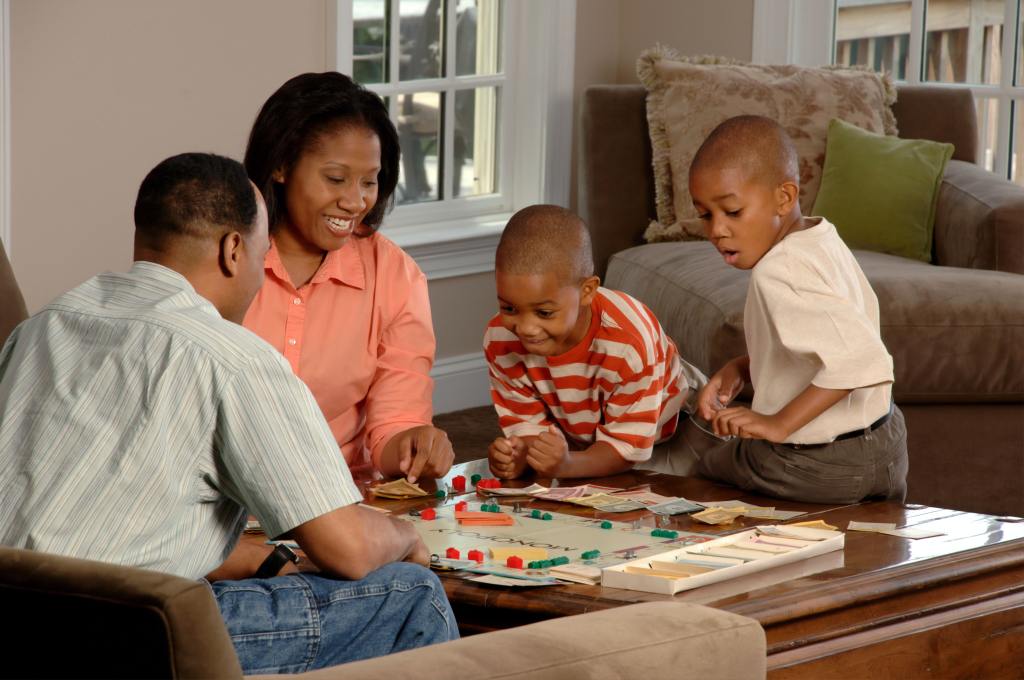
The Shema that Sts. Joachim and Anne surely lived by remains a map of life for us here and now as we raise our families in The Catholic Faith.

“Hear (Shema), O Israel: The Lord our God, the Lord is one. You shall love the Lord your God with all your heart and with all your soul and with all your might.  And these words that I command you today shall be on your heart. You shall teach them diligently to your children, and shall talk of them when you sit in your house, and when you walk by the way, and when you lie down, and when you rise. You shall bind them as a sign on your hand, and they shall be as frontlets between your eyes. You shall write them on the doorposts of your house and on your gates.”

The Shema is a sort of checklist for us as we live each day inclined to the LORD and listening to Him. The following quote by James Clear came to my mind as I was writing my thoughts down about the practice of the Shema. “Goals are good for setting a direction, but systems are best for making progress.” So what is our goal as Christians that sets the direction of our lives? “To love the Lord God with all our heart, soul, and might.” What is the system that will lead us to this goal? The Shema offers the atomic habits, so to say, that will compound our growth and progress in reaching our goal for ourselves and our families.

How do we then achieve our goal in our family life? The daily habit of reading the Sacred Scripture writes on our hearts the truth, goodness and, beauty of our Faith; it embeds in our mind who we are and what we are to be about. Mary knew the prophecies of the Old Testament about the Messiah. She didn’t pick them up by accident. Her faithful parents’ practice of the daily reading of the Sacred Scripture and worship of the LORD in the synagogue formed in Mary wisdom, understanding and, knowledge.

Do we arrange the priorities of life below our priority to teach our children to love and honor God above all things? Stop and think about that. Do we consider building our family’s foundation of faith our ultimate purpose. The habit of daily prayer together and the reading of God’s Word must be the foundation of wisdom, understanding and, knowledge for our children to build their lives on.

It is our sacred responsibility and privilege to magnify the LORD before our children. Talking about our Faith when we “sit in our house” is a tall order. Fewer and fewer families have the habit of “family time” let alone “family worship”. The burden of responsibility relies on our parental stick-to-itivness. Remember the goal? It is up to us to practice atomic habits to achieve that goal. You may be thinking how can we do this? I’m glad you asked!

Incorporating our faith in God a little here and a little there as you “walk by the way…when you lie down….when you rise” wins the day. The habit of arrow prayers throughout the day can stay with a child for a lifetime. My mother would pray the psalm, “Weeping may last for the night, but joy comes in the morning.” over me when I struggled against melancholia. That prayer has come from my own lips many times for myself and as I parented our children. I now have opportunity with some of my melancholy grandchildren to pray that over them.

The priority of keeping Covenant with the LORD through the Sacraments of our Faith builds the foundation of faith in God for the next generation. Weekly worship at Mass isn’t just a duty, it’s a privilege; we, with our families, gather together to show our gratitude to God for becoming our LORD and Savior, Jesus Christ. Foster an atmosphere of anticipation about worshipping at Mass. If we feel that way, our children will follow. Living our life of faith in the LORD is a frontlet before the eyes of our children, so to speak. Our habits imprint on the doorposts of our children’s lives. The consistency of our practice of The Faith is paramount and with the Holy Spirit’s leadership we are given the fortitude we need.

LORD, you promise us in your Word that if we raise our children up in the habits of our Faith they will not depart from them. Help us to Shema you; to hear and obey you as we strive toward the goal of our children and grandchildren knowing You and loving you with all their heart, mind, body and soul! Sts. Joachim and Anne, pray for us. Blessed Mother intercede for us.

In the name of the Father, Son, and Holy Spirit.

Amen


I’ll Be Happy When….

I chuckled this week when a podcaster described a “new” problem referred to as the “I’ll be Happy When…” syndrome. The podcaster must not realize that it’s the human condition that has been with us from the beginning: always striving after the world’s empty promises only to be left empty and wanting more. What began with Adam and Eve’s deceived assumption that they would be happy when they tasted the forbidden fruit continues to this day with our preoccupation with what we can acquire through our efforts. Just like our ancestors we discover that happiness eludes us because it is always moving according to the measure of our dissatisfaction. This dissatisfaction with the present drives our striving after new ideas, new concepts, new things, new remedies. Granted it is within us to discover and innovate but when it is disordered it can consume us and suck the life out of us.

Consider today’s reading from Psalm 13 which begins with a question we may often find ourselves asking if we suffer from the “I’ll Be Happy When” syndrome. The psalmist pleads, “How long, O LORD?” and then proceeds to reveal his heart to the LORD, eventually concluding by remembering:

…I have trusted in your steadfast love;
    my heart shall rejoice in your salvation.
I will sing to the Lord,
    because he has dealt bountifully with me.

The psalmist offers us a remedy for our discontent; when we recollect the LORD’s sufficiency, our minds shift our attention to our generous LORD. I, like the psalmist, sometimes find myself thinking about all the ifs and buts we are prone to place upon the LORD, ourselves, and those around us; it can take a lifetime to release our will to God. I grew up in an environment that inadvertently fostered a discontent with the present moment. The drive for the next thing to look forward to was consuming in those who influenced my life; it was an ill-fit for me. Happiness seemed to need to be scheduled with a whole lot of contingencies that drove contentment and peace into the future. The result was the restlessness that discontent fosters. Over the years I’ve witnessed up close the side-effects of the “I’ll Be Happy When” syndrome. Have you? Perhaps you even suffer from it yourself? Let’s consider today’s Gospel reading from Matthew and the other readings from Sacred Scripture and look for the remedy the LORD offers for this human condition we fight against.

The account of an altercation the temple tax collectors had with Christ’s disciples recorded in St. Matthew 17 is almost humorous to me. I kindle to the way Jesus flippantly instructs Peter to “go to the sea, drop in a hook, and take the first fish that comes up. Open its mouth and you will find a coin worth twice the temple tax. Give that to them for me and you.” There was a duty that needed attention, instead of Christ allowing the disciples to fret about it, he gave an off-handed instruction as if to say “Meh, it’s not a problem, I got this.” Those twelve men suffered in varying degrees from the “I’ll be happy when…” syndrome just like we do.

What about you, friend? Do you wring your hands and murmur, “I will be happy when” I can get my taxes paid? I’ll be happy when life goes how I’ve scheduled it? I’ll be happy when this pandemic is over? I’ll be happy when all my social media friends press “like” on my posts? I’ll be happy when I make more money? Ohhh….there are so many ways that we undermine our peace in Christ by our thoughts and motivations, isn’t there? Mine is unique to me, yours are unique to you, but we both have the same problem. We do not trust God’s word to us just like Adam and Eve did not trust God’s word to them. We like to say we do, but when it comes down to it, do we? Can we release the death grip we have on our expectations? More often than not, I think we entrust ourselves to ourselves, pursuing ways to satisfy our own fearful and prideful pursuit of happiness.

Despite our disordered thinking, Jesus still says to us, “Let anyone who thirsts come to me and drink.” (John 7:37) He is the definition of true happiness. As the Psalms declare in varying ways, God is the fulfillment of all our longings. He is what the prophets refer to when they say, “On that day….” Now, there’s the only contingency we should focus on because that day the prophets refer to is the beautiful realization that God is present here and now, in the only moment we are promised. How he must laugh at our striving! How he must grieve over our useless pursuits. Isaiah prophesies, I am paraphrasing a bit:

“I will lead those who are blinded by pride, fear, anger in a way that they do not know, in paths they have not known. I will guide them. I will turn the darkness of their “I’ll Be Happy When” thinking into light, I will make their rough paths that they think leads to happiness into level ground. These are the things I do and I do not forsake them.”

–Isaiah 42

As for me, I find it helpful to prayerfully my disordered “I’ll be happy when…” drives. Sitting with the LORD and allowing him to light my darkened thinking always brings light. I ask our Blessed Mother to intercede for me as I unpack the motivations behind each statement. She is the perfect example of contentment. I ask the Holy Spirit to fill me with His wisdom and discernment.

Making a habit of reading through the anthologies of Proverbs, Ecclesiastes, Wisdom, and Ben Sira in the Old Testament exposes us to all the human struggle to relinquish control to the LORD. What we discover are treasures that satisfy every longing of our hearts. They do not fade or become stale; in fact, they increase in satisfaction the more we pursue them. To get a foretaste of the books, I encourage you to read Proverbs 2.

LORD Jesus, You are our Alpha and Omega. You are our Sufficiency. You are our Happiness. Holy Spirit, help us to order our thoughts and actions as we pursue the treasures that give abundant life. Holy God, may we live and move and have our being in You!

In the name of the Father, and the Son, and the Holy Spirit.

Amen

Signs of Life

“[The righteous person] is like a tree
    planted by streams of water
that yields its fruit in its season,
    and its leaf does not wither.
In all that he does, he prospers.”

–Psalm 1

One of the favorite things I liked to receive as a child was a connect the dot coloring book. Every page of the book was a new adventure as I traced my way, one dot at a time, to solving the picture puzzle. I would occasionally decide to start with the mid-point and trace forward or backward just to shake things up a bit. Connecting dots is still satisfying for me and I do it every day as I pray the Daily Office of prayers and readings of The Church. The practice of it connects me to the central point of the panorama of Salvation History: Jesus and His Church. Through Jesus and The Church, we connect the Old Covenant with the New Covenant lived out in the history and letters of Early Church.

There is a prevalent theme revealed in today’s readings, or should I say connect the dot picture, as we consider the Gospel in Matthew 12 as well as the Old Testament readings. In reading them we are able to trace our finger to the answer Jesus gives to the skeptical scribes and Pharisees who demanded a sign that Jesus was the expected Messiah.

 “Then some of the scribes and Pharisees answered him, saying, “Teacher, we wish to see a sign from you.”  But he answered them, “An evil and adulterous generation seeks for a sign, but no sign will be given to it except the sign of the prophet Jonah.  For just as Jonah was three days and three nights in the belly of the great fish, so will the Son of Man be three days and three nights in the heart of the earth. The men of Nineveh will rise up at the judgment with this generation and condemn it, for they repented at the preaching of Jonah, and behold, something greater than Jonah is here.  The queen of the South will rise up at the judgment with this generation and condemn it, for she came from the ends of the earth to hear the wisdom of Solomon, and behold, something greater than Solomon is here.

The scribes and Pharisees not only knew what the Old Covenant proclaimed about the promised Messiah, they had memorized much of it. And why? So that they would recognize the fulfillment of the Old Covenant when the Messiah Jesus entered history and established His Church in The New Covenant. Here they were speaking face-to-face with the promised Messiah standing before their eyes; they could touch him, see him, hear him, they even dined with him! Yet they still wanted a sign, their doubt and skepticism and their dislike of what Jesus had to say messed with their own connect the dot picture about God and His Covenant.

How does Jesus respond? He begins with a sign named Jonah and connects himself to him declaring, “Something greater than Jonah is here.” He then connects to another sign named Solomon then repeats, “Something greater than Solomon is here.” I can’t image how exasperated Jesus must have been! A concrete wall comes to mind.

Let’s consider something else about the signs of God’s faithfulness that is recalled in the readings today. The psalmist sings about the righteous person, the person who keeps covenant with the LORD, comparing their life to a tree:

“The righteous person is like a tree
    planted by streams of water
that yields its fruit in its season,
    and its leaf does not wither.
In all that he does, he prospers
.”

The prophet Isaiah describes it another sign by declaring how the streams of living water flows over those who keep covenant with the LORD:

For I will pour water on the thirsty land,
    and streams on the dry ground;
I will pour my Spirit upon your offspring,
    and my blessing on your descendants.
They shall spring up among the grass
    like willows by flowing streams.

Here the Creator is offering up the signs of the fidelity of his creation to usher us into the reality of eternal truths. The sign of the TRUTH’s arrival in humanity, fulfilled in the WORD made flesh and living among us–Jesus. A sign revealed in Christ’s Church, the New Covenant and its Sacramental Tradition in the practice of worship of The Most High God.

When we begin to understand that Jesus is the Living Water of The Covenant fulfilled, we can envision ourselves as trees in the soil by streams of water. We open ourselves to planting our life in the soil of the Word and the celebrations of The Sacraments as we keep covenant with Christ. And as a tree innately thrives when water is abundant, we see how the fruit of the Holy Spirit grows in us as we drink from the Word and receive the Sacraments of His Covenant with us. The word sacrament itself means “a sign of the spiritual reality”. To avoid The Sacraments is to deny the reality of The New Covenant, in fact, it is to deny that Christ is the Son of God (sounds like the scribes and Pharisees, doesn’t it?)

So we’ve come back to Jesus’s response to them in today’s Gospel. “Something greater than [Jonah, Solomon, trees, water and fruit] is here.” In other words fellow Pharisees, we cannot choose what we like about what Jesus teaches and ignore the parts of the His New Covenant that mess with our own connect the dot pictures. Furthermore, if we disregard the conditions of the Covenant as practiced in our Sacramental Faith we ignore the central point of our salvation which leaves us all scribbles and no picture.

How about you? Are you so tangled up in your skepticism about the truth of Jesus and His Covenant that you are all scribbles?

Do you ever ask yourself, “What’s the point of my life?” or “What’s the point of keeping covenant with God in the Sacraments when the stuff around me brings me more pleasure?” 

Heres’s another question many decide not to answer. “What’s the point of weekly worship at Mass or the Sacrament of Confession?” Oh, friends, we are on our way to withering away by all our skepticism about Christ and His Church when we forego the life-giving waters in the practice of the Sacraments of our Faith. Something greater than our skepticism is here among us, it is Christ’s presence in the reading of Sacred Scripture and the receiving of The Church’s Sacraments.

Jesus, in you we live and move and have our being. Place your hand upon ours so that we would allow you to connect the scribble we’ve made of our lives in the signs you have given us through The New Covenant, Jesus in your Church.

In the name of the Father, Son, and the Holy Spirit.

Amen.

In A Word….”Selah”

Today’s readings from the psalms and oracles of the prophets serve as a soundtrack, as it were, for us as we have been considering the beginnings of God’s chosen people, the Israelites, recorded in Genesis. It’s not hard to recognize the same soundtrack plays as a backdrop for our own lives as we grow into our identity as God’s child. In fact, I believe that is why the psalms and oracles are so prevalent in The Liturgy of the Church, the words unite our spirit with the Spirit of God’s voice throughout the ages.

There is a certain word that is often sung or implied as a theme and by heeding it I may receive the LORD’s help as I walk the path of salvation. The word acts as a pop-up reminder to us to remember who we are and to whom we belong as we tread our own way through the high and low places of our journey of salvation. Consider this paraphrase of Psalm 46.

God is [my] refuge and strength,
    a very present help in trouble.  Therefore [I] will not fear …… Selah

…God is in [my] midst; [I] shall not be moved;
God will help ….
 Selah

….“Be still, and know that I am God.
    I will be exalted among the nations,
    I will be exalted in the earth!”….
 Selah

The words of the psalmist convey the ever-present help of the LORD to us as the way to mindfulness of the LORD’s quiet presence to us. The psalmist ends each phrase with the word “Selah”, which means “forever” or “to lift up; exalt”, its presence in the psalm is a cue for us to pause or to take a breath allowing our minds to take in what the psalmist has proclaimed. It serves as a sacred and silent interlude for us to receive the LORD’s truth. Within this particular psalm, there is the implication of the “if/then” of the fullness of God’s Covenant with us. He calls the people to “Be still and know that I am God,” to consider what the LORD in his mercy is trying to teach us as we live out our salvation: If you will remain silent, listen and linger with me, then you will know I am your fortress; I will be your salvation! Sounds easy enough, doesn’t it? Yet in practice, it can take a colossal effort to remain silent. I am sometimes tempted to rely on my own judgment to quickly plow through the interruptions of life or become so enamored by the shiny parts of life that I’m distracted from the reality of the LORD’s Covenant with me.

We see this evidenced in what we’ve been reading about the history of God’s people; how fear and pride dogged their path, how they allowed the so-called gods of the culture around them to lose sight of the LORD’s Covenant. Eventually, fatigue from their striving to fit in with the culture wears them down. What I have observed in my own life is that if fear and pride don’t drive me to my knees before the LORD, fatigue certainly will. I need “Selah” for I weary of the tug of war between my own will and the LORD’s will…..that’s just like him, isn’t it? He allows us to come to the end of ourselves where we finally cease striving. It’s as if the LORD says, “Lois, I finally have you where I need you…..now, let’s consider how you are striving to achieve and acquire what comes from Me alone.”

Two other passages from the psalms and the prophet are included in the Liturgy today that draws our spirit into a “Selah”. From Isaiah 30:15, “By waiting and by calm you shall be saved. In quiet and in trust your strength lies.” And again in Psalm 124 we can imagine the psalmist seated on a mountainside of the rugged terrain of Israel. As he sits there, he is pondering all the “what ifs” of life and remembers the faithfulness of the LORD as his rock and refuge. In that “Selah” a song formulates in his mind and he begins to sing,

If it had not been the Lord who was on my side
    when people rose up against me,
then they would have swallowed me up alive,
    when their anger was kindled against me;
then the flood would have swept me away,
    the torrent would have gone over me;
then over me would have gone
    the raging waters.”

Friend, are there “what ifs” in your life? Do you sit still before the LORD as you ponder them?…. Selah

Have you come through a time of celebration and are left with a sense of satisfaction and gratitude?… Selah

Were you following a path set before you when circumstances went sideways for you? …Selah

Has someone you trusted betrayed you? ….Selah

Has the pandemic brought about a financial reversal in your life?… Selah

Do you tend to focus on what the LORD hasn’t done for you?… Selah

When you scurry after pleasures that are passing, do you…Selah?

The joy of our salvation comes through our own willingness to Selah; to be still and know that the LORD is forever faithful and true. Only He can truly satisfy.

LORD God, remind us that nothing is new under the sun. You never change and your responses to our own choices are the same as they were to our ancestors in the faith. LORD, you are faithful and true even when we are not. Slow us down, train us to embrace “Selah” in our posture before you.

In the name of the Father and the Son and the Holy Spirit. Amen