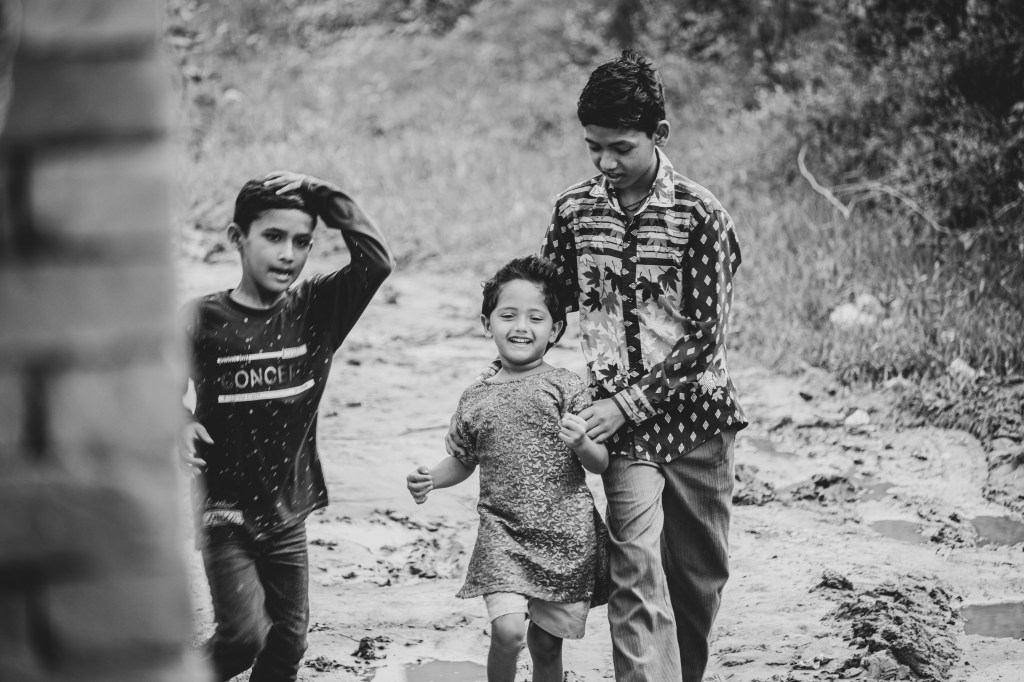
Children are more likely to absorb the Beatitudes of merciful and peaceful spirits when we adopt them as attitudes in our own hearts, display them in our actions, and weave them into the fabric of our lives. Jesus taught us, as parents, to be the salt of the earth and the light of the world in our corner of his world. Let’s explore how we can do that more effectively.
Blessed are the merciful,
for they will be shown mercy …
Blessed are the peacemakers,
for they will be called children of God. ~St. Matthew 5:7, 9
Like seeds, we must cultivate mercy and peace by nurturing empathy in our children. It’s probably no surprise that not all children are biddable and selfless. Kindness doesn’t come naturally for all children, but that doesn’t mean a child can’t make it a habit of the heart. Some children seem to thrive on conflict, but that doesn’t mean they can’t learn to be peaceable. So, how do we instill these dispositions of the heart in our children?
Jesus doesn’t give us a list of do’s and don’ts for peace or mercy, but the 100 verses in St. Matthew’s Gospel that follow the Beatitudes Jesus taught on living a virtuous life demonstrate them. Jesus gives this lesson that we can apply to how mercy and peace can transform our children’s lives.
You are the salt of the earth. But if salt loses its taste, with what can it be seasoned? It is no longer good for anything but to be thrown out and trampled underfoot. You are the light of the world. A city set on a mountain cannot be hidden. Nor do they light a lamp and then put it under a bushel basket; it is set on a lamp stand, where it gives light to all in the house. Just so, your light must shine before others, that they may see your good deeds and glorify your heavenly Father.
~St. Matthew 5:13-16
Just as salt is meant to season food and light to brighten the darkness, we want to help our children understand that their dispositions of heart can season and brighten their corner of the world. Our children deal with the same unsavory relationships and darkened thinking that we do. We can begin early and often to emphasize the attitudes and actions of mercy and peace.
It is impossible to achieve virtue without love. For each virtue
is made secure through love and humility,
with the aid of experience, time, and grace.
~St. Euthymius
Mercy and Peace
Experience, time and grace are the instruments for teaching our children the value of mercy and peace. Additionally, when combined with our love and humility toward others, we model compassionate behavior toward them. When we demonstrate kindness, empathy and forgiveness in our interactions, they rub off on our children. It’s pretty easy to be merciful to the world’s marginalized peoples; however, Jesus teaches that if we withhold mercy from those closest to us, how can we expect God to be merciful to us?
Let’s bring that closer to home. When we gossip and backbite about extended family members, fellow parishioners, priests, neighbors, work associates, teachers and each other, we are eroding peace and mercy. That rubs off on our children, who will surely imitate our patterns. An excellent Scripture to make our personal and family mantra is:
[Make] the words of my mouth and the meditation of my heart
be acceptable in your sight,
O Lord, my rock and my redeemer.
~Psalm 19:14
Wouldn’t it be refreshing for our culture to learn how to disagree without angry retaliations? Jesus expects us to lead the way and be the salt and light of virtue, and it is in our homes where we begin to change the world. We want our children to have a spiritual and emotional backbone to get along with everyone, rather than drawing lines in the sand to show who is in and who is out. We have various opportunities for this within our homes. We can help them learn to resolve conflicts with us and their siblings peacefully by discussing their feelings, finding common ground, and working together to compromise. When they reach the age of reason, we can proactively expose them to opposing worldviews to help them develop a robust faith. Working together as a family to learn about the significant differences between people prepares them for encountering opposition. (See links below.)
When we practice active listening by having eye-to-eye conversations with our children, we model how to pay attention to others’ feelings. Validating others’ emotions is an act of mercy in itself. I don’t quite understand what you are saying. Could you tell me more about how you are feeling? What can I do for you? How can I help you? What do you want me to do differently?
We model humility when we apologize and show remorse for any unkind words or insensitive actions we have done to others. We want our children to develop empathy for others; we can engage in “perspective-taking,” where we help them understand how their words and actions affect others. How would you feel if someone took your favorite toy …your place in line …your homework …your friend.
We teach our children how to recognize their actions and how they affect others. Help them learn how to apologize for their actions. Saying sorry isn’t enough most of the time; instead, say, I did wrong to you, and I apologize. Will you forgive me?
There are excellent books and movies with virtuous themes that we can read or watch with our children, pausing to reflect on passages and scenes. Discuss the characters’ actions and how they impacted others, encouraging your children to consider the consequences of their choices, both positive and negative. (See links below.)
Encouraging our family to engage in “I Spy” for virtuous behavior can be a fun competition that motivates us to choose virtue consistently. I noticed how angry you felt when … bless you for controlling your anger toward … So and so mistreated you, but I was glad to see you choose to ignore it, just like Jesus would. The Lord has created you with the unique ability to encourage others; you are like a light in the darkness… I enjoy observing how your zest for life brings happiness to others!
Family prayer
Lord God, your Word tells us that steadfast love and faithfulness meet when we dwell with you. Holy Spirit, would you teach us these virtues? We desire to choose goodness and to be peacemakers in all circumstances. Your love for us amazes us, and your goodness toward us is a blessing. Help us always seek to do good for others.
~Amen
(Adapted Psalm 85:10,12-13)
Resources
How to practice peace and mercy when you disagree with someone:
catholicmom.com/articles/2014/01/28/learning-to-argue-well-and-teaching-our-kids-to-do-the-same
catholictt.org/2021/02/02/teaching-children-conflict-resolution/
Family movie lists:
media.benedictine.edu/movies-for-future-men
media.benedictine.edu/movies-for-future-women
~I am a freelance writer. This post first appeared in a periodical.

 The Maiden Warrior