Friends, it’s been a minute since I have regularly posted. Our lives over the last year and a half have included a cancer diagnosis for my husband, his retirement, and our move from our home of 31 years to a small town in Indiana where one of our children and her family live. Recently we were interviewed on the Journey Home broadcast, which was an honor.
Author: The Maiden Warrior
Greetings, friend.
"In silence and rest is your salvation" are words from the prophet Isaiah that echo the desire of my life. I've been following that desire my entire life as I seek to live and move and have my being in what the LORD desires for me. I'm still learning the beauty of silence and rest as my salvation, it's a long obedience in the right direction. This is my journey.
Pray It Forward: The Virtue of Temperance

Temperance, otherwise known as moderation or self-restraint, is often relegated to the appetite, but it’s a necessary virtue for all our actions, thoughts, and feelings. One of the definitions of temperance is to know a calmness of mind, so this month, we will explore how to train our children to gain and maintain calmness of mind. St. Agustine defined virtue as “rightly ordered loves.” Aristotle said virtue is, in the mean, the middle between two extremes: excess and deficiency. Developing calmness of mind in our actions, thoughts, and feelings requires vigilance in reordering our loves; our children rely on us to model this before them.
The intemperate child struggles to restrain their passions; if you have passionate children who struggle to restrain their tongue, control their emotions, overcommit, and go to extremes in their pursuits and expectations of themselves and others, they need to be strengthened to moderate their motives and calm their minds. They tend to be high achievers who find it impossible to let themselves off the proverbial hook of their expectations. Passion is a beautiful strength, but as in all strengths, there’s an underbelly–a disordered passion that gives rise to disordered thinking and behavior. Consider the Holy Spirit’s counsel to us in the letter of St. James (4:1): “Where do the wars and where do the conflicts among you come? Is it not from your passions that make war within your members?” Unbridled passion becomes vice when it conflicts with others, eroding goodwill. That’s easy enough to recognize in our children’s conflicts with us and their siblings, but let’s take it further. James refers to the war among your members because he wrote to fellow believers. However, look at it this way: we as individuals have interior “members’ that war with each other: mind, body, and spirit. St. Paul put that war in this way: “…take heed to yourselves, lest at any time your hearts be overcharged [with untamed] behavior.” (KJV I Cor. 10:12) Let the taming begin!
Inordinate love of the flesh is cruelty because, under the appearance of pleasing the body, we kill the soul. ~St. Bernard of Clairvaux
Tame the Actions
Self-discipline is especially difficult for intemperate children because their passion drives them; this may manifest in impetuous behavior. “Take a beat” may be an excellent cue to use with your impetuous child. Learning to slow down their reaction time by teaching them to wait to speak or do whatever has gotten into their head is good practice for them. You can train them to moderate in that beat by asking provocative questions while reinforcing their passion and teaching them to be circumspect. I know how exciting it seems to you to do … let’s think about it for a few hours/days and talk to the Lord about your heart’s desire. What do you hope to learn from your desire? Are you ready to commit to the responsibilities the desire requires? Do you want to spend your money on this desire, or do you want to keep saving it…? Do you want to eat it all now, or do you want to save some to enjoy later?
Tame the Thoughts
Learning to recognize negative thought patterns and restrain extreme emotional responses is a lifelong challenge for all of us. The thought pattern most likely manifested in our childhood, but we may not trained to recognize our emotions were out of control. Children susceptible to fear or anger are susceptible to irrationality. We can help them moderate the irrationality by teaching them to face the fear or anger and learn to cope with it. Through consistent reflective exposure to their fear or anger, we will help them self-moderate. You may want to relate your own stories of struggle and how the Lord helped you through it. There is nowhere you can go or nothing that can happen to you that our Lord doesn’t know about before you do. Isn’t that comforting? Let’s talk about this fear/anger. What made you afraid/angry? What do you think will happen because of this fear/anger? What do you need from Jesus most to help you with this circumstance?
Tame the Feelings
A highly sensitive child is more sensitive to outside influences and is easily overcome by intense emotions and overwhelming responses to those emotions. We can recognize this in their inability to control their emotions, which drives them to overreact–physical or verbal reactions with others or within themselves. They need firm boundaries that are secure as they experience their feelings. Rather than blaming their sensitivity for their physical and verbal reactions or sending them into isolation when their emotions flare, we must help them face what they have done to others or themselves during their response. I understand you are frustrated; let’s talk about how you feel. Why do you feel this way? How do you think so-and-so feels when you act like that toward them? This is an excellent time to remind our children what the gifts of the Holy Spirit and the fruits of virtue are by comparing their chosen behavior with the attributes that will strengthen them. The Lord has given you a passionate spirit, and we desire that you learn to discern if your strong desire has tempted you to forget how so-and-so may feel when you don’t control your [anger, frustration, sadness, impatience] towards them.
Prayer for Temperance
Temper my desires, O Lord,
and turn my focus towards you.
Deliver me from the tendency to go to extremes
that strain both body and soul.
Help me to be content with what I have
instead of constantly seeking more.
May I come to recognize the grace of moderation
that brings both contentment and
appreciation.
Let temperance grow in me
and lead me to discover other virtues
that bring deeper union with you.
In your sacred name, I pray.
~Amen
Seedtime and Harvest

All the days of the earth,
seedtime and harvest,
cold and heat,
Summer and winter,
and day and night
shall not cease…
Six days you may labor, but on the seventh day, you shall rest; even during the seasons of plowing and harvesting, you must rest.
~Genesis 8:22; Exodus 34:21
Consider
To everything, there is a season, the ancient sage writes, a time to plant and a time to uproot the plant. (Ecclesiastes 3:1,2) God has set in his divine order the perennial seasons, but there’s a caveat to that rhythm that our ancestors who lived close to the land understood–the sabbath rest, a fifth season of sorts. A season on which the other seasons rely. The Torah required a sabbath rest for the land–six years they worked the land, on the 7th year, the ground rested, laying fallow … “you must rest.” Just as the fallowing law’s purpose was to restore soil fertility, God ordained the seventh day every week as a day of rest.
This is worth our consideration as we work the land of our existence; there needs to be a quieting time that ushers us into the stillness of God’s grace, a time of anticipation, of awaiting the new mercies He showers us every morning. It’s God’s prescriptive wisdom for a life well-lived; it is only when we cease our striving that His sacred instruction bears the fruit of sabbath rest. It’s what is necessary for what the psalmist was getting at when he said, “The Lord will indeed give what is good, and our land will yield its harvest.” (Psalm 85:12)
This may surprise you, but most people in the United States do not rest on the Sabbath, let alone join others to worship the Lord! We have forgotten what our ancestors innately knew across the ages; unless their ground lay fallow on a day in the week, fertility couldn’t be restored in the soil of their souls. It is one of the most challenging practices for postmoderns.
Pray
Lord, restore my soul, guide me along the right paths to receive your rest, and take measures to protect the Sabbath from interruptions.
Restore unto me the gladness of your salvation; uphold me with a willing spirit to allow you control of my time.
I choose to cease to be enslaved to the tyranny of the urgent!
Help me to desire to dwell with You and take refreshment from Your Word to me.
Guard me against wasting the Sabbath on this world’s “stupid and unintelligent” distractions lest I become wearied by the senselessness in temporal things.
Spirit of the Lord, rest upon me and give me a spirit of wisdom and understanding, counsel and strength, knowledge and reverence for You.
~Amen
(Adapted Psalm 23:3; Psalm 51:4, 80:20, 132:14; Ben Sira 22:13; Isaiah 11:12)
Pray It Forward: The Virtue of Justice

That’s not fair! It isn’t just the exclamation of a child who lost a game anymore; it’s the catchphrase of a self-absorbed society constantly looking for Justice for causes they’ve adopted as their identity. In this article, we will empower ourselves as parents and grandparents by clarifying the virtue of Justice and how we can help our children learn to be just in their relationships inside and outside the home.
Let’s begin by defining the virtue of Justice as St. Thomas Aquinas did: [moral] Justice is a habit that makes us “capable of doing what is just, and of being just in action and in intention.” The Catechism of the Catholic Church expands on the definition of a just person as the constant and firm will to give their due to God and neighbor and establish harmony in human relationships that promote equity with others. CCC1807
How good and pleasant it is when we dwell together in unity! ~Psalm 133:1
One of our highest goals for our home environment is harmony, another word for unity because we learn to come together in mutual respect. Building a harmonious home goes beyond a fundamental desire to hear no quarreling or devouring of one another (Galatians 5:15); it is habituating our family in equity to each other and for the common good of the family. Where do we start?
And Justice For All
Love and truth will meet; Justice and peace will kiss. ~Psalm85:11
The entire narrative of the Story of Salvation is where love and truth meet, and justice and peace kiss. We can utilize appropriate Bible storybooks and Bibles as guides for teaching the attributes God desires for us by using the “Where in the World is Waldo?” theme, looking for examples of God’s Justice and man’s injustice in every story. The parables of Christ are particularly helpful since they are short and simple but packed with a moral lesson. Jesus told more than 50 parables to teach us how to live in the Kingdom of God here on earth; at least 11 parables were about Justice according to God’s way of doing things.
The term “ethics” is from a Greek word that means “habits,” among other things. What we want to model for our children is a familial relationship where we delight in each other, are dear to one another and promote each other’s welfare by serving one another–this is the foundation of Justice. When we make just treatment of each other a habit in our homes, our children learn to be just to others. When we establish a pattern of a virtuous life in our homes, our children live that pattern with those around them. Wouldn’t that be refreshing to our culture?
You have been told, O mortal, what is good,
You have been told, O mortal, what is good,
and what the Lord requires of you:
Only to do Justice and to love goodness,
and to walk humbly with your God.
~Micah 6:8
When we, as a family, approach reality from the vantage of goodness, defined as mercy, we fortify the virtue of Justice in our lives. Let’s do this! Below are some ideas for you:
Teach your children to be grateful. Learning to say “thank you” trains our children in gratitude. How does that teach the virtue of Justice? They are learning to be fair to others by recognizing what others do for them. A thankful heart recognizes that everything is a gift.
Teach your children to be respectful. Consider that they are regularly exposed to unjust behavior like bullying, interrupting people, laughing at others, or harming others. Teach them to see Jesus in others through your example–refuse to allow gossip, complaining, and backbiting in your own life, and it will rub off on your children’s lives.
Model prayer as a conversation with God where we thank him for all the good graces he favors us. We learn to tell him about our frustrations about the “unfair” things in our lives but ask him to help us treat others how we would want to be treated. Make a habit of praying on a daily examen with your children; they learn to have conversations with Jesus as they review their day, and confessing to the Lord their unjust actions toward others helps build their spiritual muscle.*
Prayer for Justice
Lord, I want to be a just person. You told us to love you above all else and love our neighbor. Help me practice the virtue of Justice by being patient with others and grateful for their lives. Please grant me the ability to treat everyone justly and love them by being generous, respectful, honest, and kind.
~Amen.
*https://www.dsj.org/wp-content/uploads/2016/10/STF-Daily-Examen-for-Families.pdf
Pray It Forward: Fostering the Virtues in our Homes

When we become parents, we choose a vocation as old as time and still the most challenging in history! Snazzy books and curricula line library shelves on how to“raise good humans,” but most of those books predominately dress up Aristotle’s philosophy on cultivating good character for souls to flourish. What’s old has always been what’s new, just with more flashing lights!
Let’s return to the roots of Aristotle’s philosophy by examining the moral and human virtues described in the Catechism of the Catholic Church (CCC) and implicit throughout the Sacred Scriptures.
“Human virtues are firm attitudes, stable dispositions, habitual perfections of intellect and will that govern our actions, order our passions, and guide our conduct according to reason and faith. They make possible ease, self-mastery, and joy in leading a morally good life. The virtuous [person] is [one] who freely practices the good.”
“The moral virtues are acquired by human effort. They are the fruit and seed of morally good acts; they dispose all the powers of the human being for communion with divine love.”
(CCC 1804)
Being a good human requires stability of disposition and purposefulness in efforts, and we are responsible for teaching that as we nurture our children. We do that by stabilizing our children’s emotional and spiritual foundation through the daily practice of virtue.
We often say children look or act just like their parents. It stands to reason since parents passively and actively imprint their image on their children. Just think what can happen in our vocation when we allow our heavenly Father to imprint HIS image first on us! We then bear witness to the Lord’s desires for our children in our motivations and behaviors. We impress upon our children godly character: a flourishing human, stabilized in who they are, who knows why they are here, and who knows their purpose.
God created man in orderly fashion, so must he
also restore him in orderly fashion… An example [of virtue] is all-efficacious when
it both invites to the summit of virtue and shows the way there.
~St. Bonaventure
Over the next several posts, we will consider training our children in virtue by effectively modeling and teaching it daily in family life. By way of reminder, let’s recall the four cardinal virtues (cardinal because the human virtue hinges on the pursuit of them). Like the roots of a tree, prudence, justice, fortitude, and temperance anchor our soul in a good moral conscience. As the soul strengthens, the human virtues of chastity, moderation, charity, diligence, patience, kindness, and humility form our behavior.
Learning to make good decisions in relationships sets our children up for the inevitable truckload of bad choices they’ll be exposed to in life. We can strengthen their prudence by guiding them in self-reflection when a wrong choice has been made. What do you think you could do differently in that conflict? Let’s consider some other actions you can take next time?
First, let’s consider prudence. The Sacred Scriptures teach, “By wisdom, a house is built, and by understanding it is established” (Proverbs 24:3). Prudence is the ability to perceive the right course of action as we prove our soul in virtue. Let’s consider some bricks to build prudence in our children’s souls.
If your child has a problematic relationship with a sibling or friend, help them to consider the other’s viewpoint instead of running off the rails with their emotions. Learning to think before we speak is just a good life skill for all of us! Here are some helpful questions to ask.
Let’s think of all the stuff you like about so and so. What don’t you like about so and so? Is the relationship important enough to you to change the way you play/relate with them?
What we are teaching our children to do is to be circumspect (a virtue closely related to prudence) rather than inconsiderate of others. Future friends and spouses will rise up and bless you for modeling this to them!
Common sense is another meaning for prudence; it helps to keep life in order (prudence and proper order are kin to each other). Good activities for us to engage in with them are playing games that require decision-making and learning to be good sports, which a prudent person always strives to be. Working on projects together that require following instructions teaches them to seek knowledge to do a job well; this trains them in humility to accept authority and instruction. Future teachers and employers will rise up and bless you for teaching this to them.
One other way to teach prudence is to let our children fail when it is safe to do so; helicopter parenting short circuits learning virtue because we always run interference. Allowing our children to make a decision we know isn’t the best one opens up a real-life lesson plan for us to help our children progress in the forethought and contemplation required for wise decision-making.
Heavenly Father, endow us with your virtue as we train our children to be good humans!
Pray It Forward: How to Speak Our Child’s Love Language of Gifts and Acts of Service

This month, we delve into the two remaining love languages some children respond to best. These two love languages–gifts and acts of service–build upon the foundation of the first three love languages: physical touch, words of affirmation, and quality time. Understanding and speaking these languages to our children requires thought, planning, and energy, and sometimes we just don’t feel up to the task, but take heart. Initially, it is challenging, but we can express our love more effectively once we grasp the principle of gifts and service. Let’s start by exploring the concept of a gift.
The word gift has its roots in the Greek word charis, which means grace or an undeserved gift. This connection to grace is significant, as it reminds us that a gift is not just a material expression but a way to extend love and grace to our children. We can do that through gift-giving and acts of service for our children.
Lest we worry we’ll turn into a Daddy Warbucks or a simpering servant at the beckon of a child, let’s remember that our parental and grandparental ultimate purpose is to nurture children to emerge as beloved children of God who live securely in their identity as well-formed individuals. To prevent our children from greed and laziness, we must remember that a payment gift for a job well done is not a love language; it’s a fair exchange for services rendered. An act of service for our children because they’re lazy is not a love language; it’s enablement.
A gift given as unmerited grace is a genuine expression of love that will serve our children well as they mature. An act of service given as unmerited grace for our children fills their “love tank” as they become independent. So, let’s consider how we, as parents/grandparents, may create lasting memories of our love for our children and magnify their sense of worth and God’s love for them:
Gift-Giving
–Write a note with affirmation about your child and send it by post. Most kids think it’s a big deal to get their own mail, and a gift-loving child will be extra pleased to receive the note.
–Write some personal coupons (you can find a template online) good for redemption on any of the following:
- Go to Adoration with Mom or Dad
- A small treat when we go grocery shopping together (a cookie from the bakery is always a hit)
- Play a game of your choice
- Read your favorite book
- Do your favorite activity
–Collect a small cache of gifts your child would appreciate–a shell, stickers, a bookmark, a pressed leaf, something that sparkles, etc. Save them for times you need to encourage your child’s sense of worth with a surprise. I’ve kept this for you since I went on a walk because it made me think of you and how much you enjoy…
–Often, gift-loving children are collectors, so you may want to help them create a keepsake box to store their found treasures. Give them the first found treasure to put in the box: something from your childhood, something from a grandparent, or a favorite photo of the child.
Acts of Service in the Home
–Sitting at a child’s bedside, placing your hand on them to gently awaken them in the morning may not seem like an act of service, but it can be! Children of all ages reckon this as kind attention (though your teenager might grumble about it; stay the course!) We can give words of affirmation by saying a prayer of entrustment to God for their day: Loving God, I entrust [ ] to your care today, bless [ ] in all they do today. Amen. You can do the same at bedtime, thanking God for what has happened in the day and entrusting the child’s concerns to him.
–Ask your child to list favorite things you do for them, and occasionally do the act of service when they least expect it! Speak words of affirmation by saying, I’m so happy I can serve you in this way today; you are special to me.
When your child is sick, stay with them and pray with them, asking God to help them feel better. You may want to choose a video to watch together or a book to read to them. Serving them in this way communicates that they are more important than your career.
There are many more ideas that space does not allow; again, we recommend Gary Chapman’s book on The 5 Love Languages. Next month, we will consider how our homes are where we learn true friendship and how we can teach our children to be true friends to others.
Catholic Living: The Sacrament of Marriage

The Church honors Sacramental Marriage this month by remembering and honoring saints Jochim and Anne, the parents of Mary, and saints Louis and Zelle Martin, parents of St. Therese of Lisieux. And, of course, always St. Joseph and Mary. Their marriages, marked by their unwavering faith and commitment to God’s Covenant, are inspiring examples of sacramental marriage and a source of motivation and encouragement for us all.
Let’s consider what a Sacramental Marriage is; to do this, we will turn to some of the liturgical phrases of the nuptial mass to consider a few words and strands of thought inherent in the biblical understanding of the Sacrament of Marriage laid out for us in the wedding liturgy.
COVENANT
When our priests pray that our union with God and each other will be “sealed”–set apart, sanctified–with God’s blessing, he refers to a covenant. It is assumed we have laid down our life to Him and that we are entering into marriage willing to lay down our lives for our spouse, as Jesus laid down his life for The Church in the New Covenant. It is assumed that we desire to set the trajectory of our marriage toward union with Our Lord. It is assumed there will be borders in our relationship that will hold fast our union with the Lord in the Covenant of Marriage.
It works this way: When we envision our marriage as sacramental and sacrificial, we strive toward that vision. Our union’s apex is the Lord Jesus, and we stand together in a holy trinity of marriage When we stand at the altar on our wedding day, the Lord’s Spirit grants us strength to fulfill the marital covenant and seals us to him, providing us with His virtue for a loving marriage. Isn’t it reassuring to know we don’t have to rely solely on our own strength to love our spouse and keep faith in our covenant? The third member of our holy trinity trumps all our weaknesses!
In the virtues, we receive the gift of wisdom, understanding, counsel, fortitude, knowledge, piety, and reverence for the Lord. Like any gift, the receiver has to open it to be enjoyed, and once we do that, the Lord enables us to exercise it and grow strong in our relationship. Here’s the lovely thing: As virtue puts down roots in our hearts and minds, virtue grows, and we bear the fruits of God’s Spirit in our relationship: love, joy, peace, forbearance, kindness, goodness, faithfulness, gentleness, and self-control.
Is the seal of our covenant being weakened or strengthened by my attitudes and actions?
What virtue do I need to practice to honor my covenant with God and my spouse better?
Are my attitudes and actions toward my spouse gentle, patient, good, and self-controlled?
ENDOWED
Our priests ask the Lord to bless our companionship. God desires to order our marriage to its proper place–union with Him—so He endows us with the grace to nurture companionship. We cooperate with Him by what St. Thomas Aquinas described as “willing the good of the other.”
One definition of grace that gets at that definition of love is “courteous goodwill” toward another. In the life cycle of holy marriage, God endows us with grace; we receive it as a gift, and we open the gift by practicing courteous goodwill toward our spouse in all things.
But here’s the sticky wicket for us: when we fixate on the wounds and resentments in the life cycle of marriage and allow the grievances to fill the space between us, the space tends to widen. Why? When wounds fester, they infect our relationship! All those little irritations and significant differences of opinion hardened into scar tissue between us to force our union apart. You know what I’m talking about!
When we come to our senses and remember that, we must strive toward union with the Lord first. We lift our eyes to him and ask for the GRACE He has endowed us with. He releases the power of His holy Spirit to help us forgive and repair the boundaries of our marriage.
What resentments have I harbored that are driving us farther apart?
How can I work towards restoring the relationship with my spouse?
The regular practice of the Sacrament of Healing through Confession is endowed with that grace of healing, not just for us but for all our relationships. The sacrament of healing is a gift the Lord has given us, and we can receive it as often as needed….. Sometimes, friends, we just need to camp outside the confessional!
KEEP
Our priests pray that our marriage will “be held and kept” in the marriage covenant. Here’s a helpful image: Another way to think of the word “keep” is in its noun form: the stronghold in a castle’s most fortified enclosure. It serves as a refuge against siege or attack from the enemy. We fortify our marriage as we hold and keep ourselves in union with the Lord, and our borders strengthen against the attacks of the enemy of our souls.
Where are the vulnerable areas in my area that weaken our marriage?
ABIDE
Our priests pray we will “abide in mutual love and peace.” Oh, I love this part! I kindle to the word, “abide!” What our priest is asking of the Lord is the state of harmony and understanding that is the hallmark of a Sacramental Marriage. In a culture that would rather “cut and run” than do the hard work of sacrifice, we are summoned to choose to remain faithful to the marital covenant.
Jesus told his disciples, “Abide in me as I abide in you.” (John 15:4) He, the founding partner in our marriage, has endowed us with the ability to remain faithful! He remains with us; we choose to remain with him within its fortified walls. He is present to us here; we choose to be present to Him and one another within this sacred union.
Am I allowing social media, career, friends, recreation, or hobbies to satisfy me instead of my companionship with my spouse?
Let me leave you with something I read recently that helps me as I love my husband: “True love goes beyond the cold exactitude of dry duty; true love gives with a smile, a flourish, and a delicacy that not only meets the beloved’s needs but also meets them in a lovely, pleasing way.” That’s what the Lord desires for us, friends; he has lavished his love on us, and He beckons us to lavish our love on our spouse.
Saints Jochim, Anne, Joseph, Mary, Louis, and Zelle pray for us.
Pray It Forward: Redeeming Our Time with Our Family

We’ve been examining how we receive love from others through five love languages and how we can reflect God’s love for our children in the way we love them with their love language. Let’s consider quality time and how to speak love to our children and grandchildren this month. When we think of God’s love for us, he is always present, listening and responding. We become an extension of his love as we do the same for our children. Isn’t that a beautiful truth? And when we connect our time and conversation to Him, our children learn to understand him as a benevolent and faithful God.
Quality time is the one love language that every human responds to; it crosses the language barrier, so to speak. We crave undivided attention from those we cherish, but we live in a culture that suffers from attention deficit! Protecting the environment of our home life requires much more discipline than just a few decades ago; focused parental attention is essential. Time is the commodity we all have to learn to use well because there are no do-overs with it. The Holy Spirit will come alongside us and train us to be emotionally and spiritually present to our children; all we need to do is ask.
Gary Chapman writes, “The most important factor in quality time is not the event itself but that you are doing something together, being together.” How can we improve our family’s daily cadence and optimize time as love for our children? Purposefully doing life together can redeem what might be wasted time. Running errands together without the interruption of technology is a great place to start. Consider beginning your errands by inviting God to accompany you with the traveler’s prayer from Psalm 121 when you leave.
Lord, preserve our going out and coming in from this time forth and forever. Preserve our life and get us to our destination and back home safely. ~Amen (Psalm 121:8)
Keep a jar of conversation starters on slips of paper, and allow your child to choose the question to get the car conversation going as you leave the driveway. One question can lead each of you on a path of discovery about the Lord and each other. The internet is your friend for ideas for incorporating the Lord in conversations. Search “Spiritual Questions to Get Your Kids Thinking about God.” Your undivided attention and questions about God are a double-hitter for nurturing holy children.
We can quickly become victims of the urgent rather than protectors of what is essential. Whatever appears urgent to us (a text, a news thread, an online conversation) is not crucial in light of eternity. Make a family policy that all cell phones, technology, and current reading material are silenced and put away in a bin for a determined length of family-only time each day.
Plan your weeks together by first writing down the most important activities–Mass, CCD, and Family-Only time. When your children observe what is important to you, it communicates that life’s priorities are the Lord and the family.
Doing nothing special together is quality time! Walks together after the school day, hanging out in the same room, sorting laundry together, eating together, and cleaning up the kitchen are all opportunities for uninterrupted intentional conversation. As you work together, asking each other what the day’s highlights and lowlights were gives insight into your children’s emotions. A natural segue would be to express our feelings to the Lord. Jesus, thank you for [the highlight]; it made me happy. Or, I had a lousy day, Jesus. Would you help me feel better? Our children will learn intimacy with God when we include him in our quality time.
If your family takes photos of family life, consider assembling a yearly photobook (Shutterfly and Snapfish are easy to do). Have a specific time each month when you look at the photos together, sharing memories of that photo as you work together on that month’s layout.
Working on homework at the same table each evening provides an atmosphere of cooperation as older children might join you in helping younger children. A simple prayer before study heightens the effect of your quality time around the table. Lord, give us peace of mind as we complete our homework. Give us insight so that we might understand what we are studying and helps us remember it. ~Amen (Adapted Salesian Prayer)
Take pilgrimages together, pray novenas together, pray the Rosary together. When we choose quality time with the Lord, he will abundantly bless our lives for generations to come.
Prayer:
Lord Jesus, You have given us so much—life, friends, and family. Help us share Your love with our family through the gift of quality time together. May our children catch a glimpse of Your goodness and grace through us as we parent them. Teach us as a family to reflect You more in our presence to others and our words and deeds. St. Joseph and Mary, pray for us.
~Amen.
The Solemnity/Feast of Corpus Christi: The Body and Blood of Christ
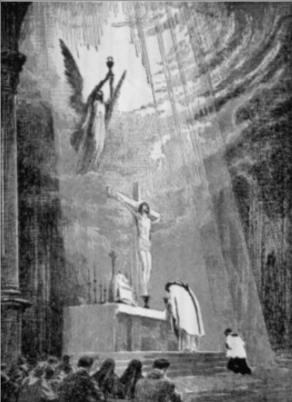
Greetings, friends. These little talks are intended to be short and pedestrian in content; they do not do justice to the gravity of the theological truth contained in the Sacramental Faith of The Catholic Church. I refer you to the esteemed theologians of Church History for more on them. If you are a new reader of the blog or a follower of the Sioux Falls Diocese where this talk was posted (https://youtu.be/eRrPltaAp7I?si=vhx3255vaqrzF3wj), you may desire to read about my journey into The Catholic Church. You may find that in the site menu below my photo to the left of this post (Category: My Journey into the Catholic Church).
This Sunday, we celebrate The Solemnity/Feast of Corpus Christi or The Feast of the Body and Blood of Christ. On this specific day, we display our belief and gratitude for what we do every day at Mass, but with more pomp and circumstance, hence the designation Solemnity and Feast. We solemnly remember Christ’s Passion for us while we feast on the food of our salvation–His Word to us in the Liturgy of the Word and His Body in the Liturgy of the Eucharist–his Body and Blood, Soul and Divinity-the Whole Grain Bread of Life, so to speak. That is how The Church has done it since its establishment by Christ 2,000 years ago.
Dress Rehearsal:
The best description I have heard of Mass worship is that it is the dress rehearsal for heaven. So why are so many people skipping out on rehearsal? I wonder. I delayed participating in this dress rehearsal for 56 years, 133 days, and 20 hours! You see, my husband and I converted to The Roman Catholic Church, but we are zealous Johnny-come-lately, true neophytes in all things Catholic.
Journey:
We were committed to Christ and his church as we knew it as Protestant Christians; we even served as “pastor and wife” for 34 years. We knew the Sacred Scriptures inside and out because they were the sole source of our doctrine of belief. Therefore, we thought we knew the whole of the Theology of God passed down from our particular 500-year-old protestant movement, which seemed solid enough then. We didn’t know what we didn’t know! We didn’t know that we hadn’t received the entirety of the Truth of Christ and His Church was held intact since Christ instituted His Church in her 2,000+ years of history. But that’s another story for another time.
On my long intellectual journey from 1996 to Easter Vigil 2015, I worked hard to wrap my brain around the Early Church theology I had not been taught. At first, I relied on the writings of the Saints and The Early Church Fathers–what integrity! And how mind-blowing and life-giving it was to read Church History as it was rather than how I was trained to read it. It wasn’t long before my questions about what I had been taught and what I was observing in the Protestant movement demanded answers, so I studied the Catholic Church’s Catechism over and over again. I recognized the theology that the protestant movement took with it when it left home and departed from our Mother Church’s teachings, but I discovered there was so much that was left behind.
Grappling:
In particular, I grappled with The Real Presence of Christ in the Eucharist, The Four Dogmas of Our Blessed Mother, and The Sacrament of Reconciliation. I often felt like I had been thrown down on a wrestling mat, and the only way to stand back up again was to surrender my misunderstanding and ignorance to the authority of God and His Church. I can’t tell you all about that today right now. Today, I would like to share how the Holy Spirit guided my thinking to surrender to the entire truth of The Eucharist. Suffice it to say that I slowly moved from Communion with Christ as an excellent idea wrapped in a symbol to the firm understanding that the entirety of my mind, soul, and spirit depends on the Real Presence of Christ in The Eucharist in the Worship of the Mass.
******
Faith is the realization of what is hoped for and evidence of things not seen. Because of it the ancients were well attested.
Hebrews 11:1-2
We look not to what is seen but to what is unseen, for what is seen is transitory, but what is unseen is eternal.
II Corinthians 4:18
The Big Questions:
I’m an “If/Then” thinker, so I explored the teachings of the Eucharist by asking myself many questions.
- If I put my faith in and believed God’s Word created the cosmos, and then his Word descended in the miracle of The Incarnation of Jesus–a virgin and the Spirit of God make the Son of God. Say, what?… If I put my faith in and I believed that Jesus, The Word Made Flesh, was the once and for-all fulfillment of God’s plan for our atonement from sin. Christ was dead, then he was alive—stone-cold DEAD, THEN ALIVE!!!
- Then why couldn’t I put my faith in and believe that the sacrificial teachings of Salvation History in the Sacred Scriptures were exactly fulfilled in Christ’s Passion and Sacrifice on The Cross?
- Why couldn’t I accept that what appears to me as bread and wine miraculously become Christ’s Flesh, Blood, Soul, and Divinity in the Liturgy of The Eucharist through the Holy Spirit’s power in the Prayer of Consecration said by a priest? I didn’t argue with any other of Christ’s words when He said, “Be healed!” or when he took a meager amount of bread and fish from a boy, blessed it with His words, and distributed it to thousands of hungry people. I didn’t argue that at His Word, “Come,” Peter could walk on water where He was standing ON WATER!
- Over 163 miraculous events are recorded in the Old and New Testaments of the Sacred Scriptures. Why did I come to a full stop about this miracle that Christ’s words declared about his flesh and blood? (St. John 6) Why couldn’t I accept that what appears to me as bread and wine miraculously become Christ’s actual flesh and blood, soul, and divinity in the Liturgy of The Eucharist through the Prayer of Consecration? I didn’t argue with anything else Christ said. Why this miracle in particular? One reason is that I had been taught one thing about this particular miracle that opposed the truth of the matter for 2,000 years.
- That led me to this question: Would God still be God if I could comprehend the ways and means of God? What would I be worshipping? The answer finally came with a loud bang—God is God, and I am not. His ways and means are beyond my human understanding; Faith is a mystery that is intended to be beyond my human limitations,
I Get It, Kind Of:
Doctor of The Church, St. Anselm, wrote, “I do not seek to understand in order that I may believe; I believe in order to understand.… I believe that unless I believe, I shall not understand.” I began to pray, I believe, Lord, but help my unbelief. And sure enough, he did! Then, I asked myself another question. If I believe that the entire purpose of my life is to be transformed into the image of Christ and live with him forever, then why am I relying on the boundaries of human understanding to limit my progress?
Flesh and Blood:
The Holy Spirit reminded me of a reality in my life to grant me insight and understanding into the power of blood. My mother was born with a chronic disease that eventually led to her untimely death. The lifelong disease preceded her eventual death, but because of many, many blood transfusions over the years, it kept her alive and prolonged our years with her. Now, the hematologist could explain how the thrombocytes acted on her blood platelets and make promises based on that scientific knowledge; they could tell her that the transfusions would save the life of her flesh. The transfusions would work whether or not my mother believed in the doctors’ promises; the cure wasn’t dependent on my mother’s understanding of the process. The truth the doctors spoke only depended on one thing: my mother’s permission to receive the life-giving blood.
Spiritual Transfusion:
We are all born with a disease named Original Sin, and if not treated, we slowly die a spiritual death that deteriorates into eternal death. Consider what God said to his people in the Old Testament, “…The life of the flesh is in the blood, and I have given it to you to make atonement on the altar for yourselves because it is the blood that makes atonement [for one’s life].” (Leviticus 17:11) Friends, our lives depend on the transfusion of Christ’s Body and Blood, Soul, and Divinity! His sacrifice atones for us forever, like the transfusions atoned for my mother’s life temporarily. His Body and Blood—his essence, the cells of his being—infuse us and heal us completely; it is the spiritual transfusion for abundant life here on earth and in eternity, whether or not we understand or believe it doesn’t matter, but what matters is that we must humble our humanity and receive Him to have this life.
What Difference Does it Make?:
When we regularly worship Christ in the Mass, we are transfused with life through Christ’s very lifeblood, his very essence, in The Eucharist! His Body and Blood infuse us with his very nature, and we are transformed into his image in part and finally perfected in eternity. Worshipping in the Mass is not about how well the priest delivers the homily or the appeal of the music. It’s not about how I feel during worship. It is solely about Christ’s Sacrifice on the Cross and His Resurrection from the dead. I can go elsewhere to hear self-improvement tips. I can go elsewhere to listen to the music I prefer. But when I worship in the Mass, I enter Heaven here on earth to participate in the eternal Mass of Heaven. It takes a lifetime of dress rehearsals to prepare for The Wedding Feast of The Lamb, Christ himself, in eternity. Regular worship in The Mass keeps my wedding clothes clean, without spots or wrinkles, and I keep oil in my lamp! (Ephesians 5:27; Matthew 25:1-13)
Conclusion:
Moses said to God’s Chosen People; I have set before you today life and prosperity, death and adversity… Choose life so that you and your descendants may live, loving the Lord your God, obeying him, and holding fast to him, for that means life to you and length of days… Friends, our very lives–quality and quantity–depend on us choosing life! Why wouldn’t we worship Christ in the Mass? Why wouldn’t we crawl to the altar in humble adoration to consume LIFE?!
Pray It Forward: Revealing our Love for our Children and Grandchildren with the Love Language of Words of Affirmation

In the last Pray It Forward series, we began considering the five love languages: physical touch, words of affirmation, quality time, gifts, and acts of love. We explored communicating the Lord’s love using the Shema (Deuteronomy 6) template: repeat, recite, bind, and write. Today, we explore the love language of words of affirmation.
The best way to speak words of affirmation and love, especially to younger children, is to unite our words with affectionate feelings and physical closeness. When we connect our words of encouragement with warmth and affection, we train them to know our love and God’s love for them.
There is a precious conversation in the book “The Help” by Kathyrn Stockett where Abileen, the maid, holds Mae Mobley, the 3-year-old daughter of her employers. She is face to face with Mae Mobley; as she rocks her, she repeats to the child, “You is kind, you is smart, you is important.” And Mae Mobley recites them back to her. Mae Mobley, ignored by her parents, only had Abileen to nurture her. She loved Mae Mobley and knew she needed verbal affirmation to counter her mother’s intolerance of her. Encourage means to instill courage; Abileen instilled courage into Mae Mobley; those words of affection and endearment communicated to Mae Mobley: I care about you. They nurtured her inner sense of worth and security, which she would never forget.
Gary Chapman writes that “affection and love mean expressing appreciation for a child’s very being, for those characteristics and abilities that are part of the person’s total package.” This is different from praising a child for what they do, such as achievements and conscious attitudes. When we recognize their character, we affirm who they are and how God created them uniquely. We instill courage and envision a unique future for them when we bless them with our words. How can we do that?
The Holy Spirit, our Counselor, comes through with good counsel as we meditate on the Word of God. The Books of Wisdom are timeless with counsel. The Spirit also uses others’ knowledge and insight to guide us; Gary Chapman is a reliable voice to listen to.
Affirmation
When you observe a characteristic you want to affirm in your child, say, “God created us in his own image; you are God’s masterpiece!” (Gn 1:27; Eph 2:10). I can see the image of Jesus in you when you … Or I feel like I’m looking at Jesus when you act … do … (mention their acts of mercy, service, and sacrifice).
Highlight your child’s natural inclinations: I appreciated how you showed kindness to … or I liked your positive attitude during … Your choice reminded me of something God tells us to do: Say what helps build others so that you make them feel better about themselves (Eph 4:29).
Leaning toward your child when you listen to them communicates interest. Holding them as you plan your day communicates camaraderie. Keeping your eyes fixed on them (instead of media) while you talk with each other communicates, you are more important to me than anything else; I enjoy you, I like listening to you, I love you!
Affirm your child’s being when you are running errands or doing chores together: You are so refreshing to be around; it makes me smile, and I bet God smiles, too, as we hang out with him! (Prv 11:25).
Regular conversations with our older children about the future can help to assuage any fearful or doubtful mindset they have about themselves. Dream with them and verbally affirm what they enjoy doing. Encourage them in ways that allow them to pursue their dreams. You can text them regularly or leave a note, where they will see it, about their dreams. A possible script: “I enjoy observing what you are becoming because I know the Lord has plans to make you happy and others happy.” You may want to jot down a personalized scripture for them: “For I know the plans I have for [name],” declares the LORD, “plans to prosper you and not to harm you, plans to give you hope and a future” (Jer 29:11).
*Recommended reading: “The 5 Love Languages of Children” and/or “The 5 Love Languages of Teens” by Gary Chapman
 The Maiden Warrior