“Woe to you, scribes and Pharisees, hypocrites! For you clean the outside of the cup and of the plate, but inside they are full of greed and self-indulgence.You blind Pharisee! First clean the inside of the cup, so that the outside also may become clean.” –Matthew 23:25-26
As I’ve meditated this week on the gospel reading from Matthew 23 for today, I’ve been more curious about the Pharisees that seem to lurk around every encounter Jesus has with the people. They had it out for Jesus, always looking for a way to trap him or discredit him. The strong language Jesus uses against them causes me to sit up and take notice since, I’m sorry to say, there are vestiges of the pharisaical attitude in me sometimes. I like to place myself in the gospel scenes in my imagination in an effort to learn from other’s mistakes. That’s not always comforting, praying today’s passage being one example.
The scribes and Pharisees were a zealous lot; their intentions were noble. Their concern for what the Roman occupation was doing to their culture and religious beliefs propelled them in driving everyone to follow the letter of God’s law as a national agenda. Enter God, with skin on, whose law is love, peace, grace, and mercy. This Jesus, who emphasizes the spirit of the law with unmatched zeal, is a threat to the rigid beliefs of the scribes and Pharisees.
Jesus speaks to us today.
Like the Pharisees, when we pretend to be someone or something we aren’t and become obsessed with how we appear to others, we crowd our minds and heart with thoughts of comparison and competition, and even resentment. You say to us: you’ve missed the simplicity of my love for you with your thousand qualifications. You trouble your soul at the expense of those from whom you seek approval. Be the beautiful human I’ve created you to be. Stand down from proving yourself, dear one, become as a servant whose only thought is to keep your eyes on your Master.
Like the Pharisees, when we hide our insecurities behind our hubris, more concerned with what don’t do, we lose focus on what matters. Jesus says to us, don’t block the road of holiness with the debris of your shoulds and musts. Take my hand and allow me to lead you with love and understanding, learn to walk my way.
Like the Pharisees, when we keep a tight grip on our possessions and time, parsimoniously extending ourselves for others by measuring out just enough to appear holy before others. Jesus says to us, don’t nickel and dime your way before others and stop nitpicking other’s acts of generosity. Do you remember how I generously gave my life up for you? It never occurred to me to keep score because it is not in me. I’m the Eternal Giver of all good things you do likewise.
Like the Pharisees, when we strive to appear squeaky clean to others yet practice secret vices and sins, Jesus says to us you forget that I’m more concerned about what you look like on the inside so let’s do some heart-cleaning. Unlock and open wide to me the closets you think I can’t see. Allow my Holy Spirit to light your darkness and sweep away those tattered rags you like to wear when you are alone.
Like the Pharisees, when we attempt to look good by making others look bad, it always comes back to bite us. When we shove our sense of what’s right and wrong with no regard for love, peace, mercy, and grace, we cut ourselves off from the LORD’s presence in our lives. Jesus says to us, come to me, lay down your arms, and allow me to enfold you in my goodness, you’ll start seeing others differently the closer to me you stay.
LORD Jesus Christ, your Law is love, and your gospel is peace. You created us to live and move and have our being in your reality, not the ones we conjure out of our pharisaical motivations. Holy Spirit, grant us the understanding we each need to reflect your love and peace in all we think, say, and do.
In the name of the Father, and the Son, and the Holy Spirit,
Take, Lord, and receive all my liberty, my memory, my understanding, my entire will – all that I have and call my own. You have given it all to me. To you, Lord, I return it. Everything is yours: do with it what you will. Give me only your love and your grace. That is enough for me. —St. Ignatius of Loyola
Salvation History is at the very heart a love story. God, the tremendous Lover of our Soul, created us to love him, not as the world loves (with strings attached) but as he loves. In God’s eyes, the covenant of love he made with us in creating us is not negotiable for it is perfect love. In our eyes, well……we are prone to wander from the Lover of our Soul. We, like the Israelites, forget to remember Who this lover is–and we are worse for the wear, are we not?
The biblical language of God’s love and his beloved communicates through the imagery of the covenant of marriage. What kind of marriage would we have with our spouse if all we were concerned with was ticking off the duties that accompany the covenant of marriage? The Israelites as well as the young man in the gospel reading for today seemed to measure their love God according to their adherence to the law of the covenant rather than giving themselves in complete union. What a stale and and unfulfilling understanding of God. I, too, can be carried away with that kind of mindset. Quite a while ago I began praying for the LORD to heal me from the thinking that I had to earn his love. As time passed, the Holy Spirit opened my eyes to who I am to the LORD. I am the beloved daughter of the Most High God. I am united with Him through Jesus Christ and His Church–I am counted among the beloved Bride of Christ. His holy Spirit counsels me in the way of this love. When I receive the Sacrament of the Eucharist in the worship of the Mass, I’m not just ticking off a duty. I am loving Christ in receiving his body and blood in the understanding of the consummation of the covenant of marriage. Why would I ever want to neglect the Lover of my Soul?
With this in mind, let’s consider the readings from the Old Testament books of Judges 2 and Psalm 106 that are the antecedents to the gospel reading from St. Matthew 9 . The writers describes the all-too familiar pattern of God’s people. They offended the LOVER of their soul over and over by abandoning Him for the “shiny things”, as I like to say, of the cultures they were immersed in. The young man in the gospel account was very much set on keeping the Covenant with the LORD by following the law of the Covenant. Here we see the two extremes of misconceptions of who we are in the eyes of the Lover of our Soul. In common language, the Israelites disrespected the Covenant in their lust after the created goods and the young man respected the duty in performance to the Covenant absent of complete union with the LORD. Either extreme, in essence, leaves the LORD as the jilted lover.
Let’s put ourselves in the young man’s encounter with Jesus in Matthew 9:
A young man approached Jesus and said, “Teacher, what good must I do to gain eternal life?” He answered him, “Why do you ask me about the good? There is only One who is good. If you wish to enter into life, keep the commandments.” He asked him, “Which ones?” And Jesus replied, “You shall not kill; you shall not commit adultery; you shall not steal; you shall not bear false witness; honor your father and your mother; and you shall love your neighbor as yourself.” The young man said to him, “All of these I have observed. What do I still lack?” Jesus said to him, “If you wish to be perfect, go, sell what you have and give to the poor, and you will have treasure in heaven. Then come, follow me.” When the young man heard this statement, he went away sad, for he had many possessions.
Christ knew the young man better than he knew himself. The young man’s question, “Which ones?” reveals his heart. He was saying to Christ, “What do I have to do to love you?” rather than “How may I love you completely?” Jesus knew the young man kept the Commandments, but when it came to the essence of the commandments he was more concerned with what he loved rather than who he loved. And so, Jesus hones in on the heart of the matter, “If you wish to be perfect, go, sell what you have and give to the poor, and you will have treasure in heaven. Then come, follow me.” Jesus knew of the man’s divided loyalty.
How’s it with you today? Is your loyalty to the Lover of our Soul divided? Perhaps you find yourself performing for God in keeping the commandments but you hold back in complete union with the Lover of our Soul?
As we pray the Suscipe of St. Ignatius of Loyola, may we allow the Holy Spirit to nurture in us complete love for the Lover of our Soul:
Take, Lord, and receive all my liberty, my memory, my understanding, my entire will – all that I have and call my own. You have given it all to me. To you, Lord, I return it. Everything is yours: do with it what you will. Give me only your love and your grace. That is enough for me.
In the name of the Father, and the Son, and the Holy Spirit.
I chuckled this week when a podcaster described a “new” problem referred to as the “I’ll be Happy When…” syndrome. The podcaster must not realize that it’s the human condition that has been with us from the beginning: always striving after the world’s empty promises only to be left empty and wanting more. What began with Adam and Eve’s deceived assumption that they would be happy when they tasted the forbidden fruit continues to this day with our preoccupation with what we can acquire through our efforts. Just like our ancestors we discover that happiness eludes us because it is always moving according to the measure of our dissatisfaction. This dissatisfaction with the present drives our striving after new ideas, new concepts, new things, new remedies. Granted it is within us to discover and innovate but when it is disordered it can consume us and suck the life out of us.
Consider today’s reading from Psalm 13 which begins with a question we may often find ourselves asking if we suffer from the “I’ll Be Happy When” syndrome. The psalmist pleads, “How long, O LORD?” and then proceeds to reveal his heart to the LORD, eventually concluding by remembering:
“…I have trusted in your steadfast love; my heart shall rejoice in your salvation. I will sing to the Lord, because he has dealt bountifully with me.“
The psalmist offers us a remedy for our discontent; when we recollect the LORD’s sufficiency, our minds shift our attention to our generous LORD. I, like the psalmist, sometimes find myself thinking about all the ifs and buts we are prone to place upon the LORD, ourselves, and those around us; it can take a lifetime to release our will to God. I grew up in an environment that inadvertently fostered a discontent with the present moment. The drive for the next thing to look forward to was consuming in those who influenced my life; it was an ill-fit for me. Happiness seemed to need to be scheduled with a whole lot of contingencies that drove contentment and peace into the future. The result was the restlessness that discontent fosters. Over the years I’ve witnessed up close the side-effects of the “I’ll Be Happy When” syndrome. Have you? Perhaps you even suffer from it yourself? Let’s consider today’s Gospel reading from Matthew and the other readings from Sacred Scripture and look for the remedy the LORD offers for this human condition we fight against.
The account of an altercation the temple tax collectors had with Christ’s disciples recorded in St. Matthew 17 is almost humorous to me. I kindle to the way Jesus flippantly instructs Peter to “go to the sea, drop in a hook, and take the first fish that comes up. Open its mouth and you will find a coin worth twice the temple tax. Give that to them for me and you.” There was a duty that needed attention, instead of Christ allowing the disciples to fret about it, he gave an off-handed instruction as if to say “Meh, it’s not a problem, I got this.” Those twelve men suffered in varying degrees from the “I’ll be happy when…” syndrome just like we do.
What about you, friend? Do you wring your hands and murmur, “I will be happy when” I can get my taxes paid? I’ll be happy when life goes how I’ve scheduled it? I’ll be happy when this pandemic is over? I’ll be happy when all my social media friends press “like” on my posts? I’ll be happy when I make more money? Ohhh….there are so many ways that we undermine our peace in Christ by our thoughts and motivations, isn’t there? Mine is unique to me, yours are unique to you, but we both have the same problem. We do not trust God’s word to us just like Adam and Eve did not trust God’s word to them. We like to say we do, but when it comes down to it, do we? Can we release the death grip we have on our expectations? More often than not, I think we entrust ourselves to ourselves, pursuing ways to satisfy our own fearful and prideful pursuit of happiness.
Despite our disordered thinking, Jesus still says to us, “Let anyone who thirsts come to me and drink.” (John 7:37) He is the definition of true happiness. As the Psalms declare in varying ways, God is the fulfillment of all our longings. He is what the prophets refer to when they say, “On that day….” Now, there’s the only contingency we should focus on because that day the prophets refer to is the beautiful realization that God is present here and now, in the only moment we are promised. How he must laugh at our striving! How he must grieve over our useless pursuits. Isaiah prophesies, I am paraphrasing a bit:
“I will lead those who are blinded by pride, fear, anger in a way that they do not know, in paths they have not known. I will guide them. I will turn the darkness of their “I’ll Be Happy When” thinking into light, I will make their rough paths that they think leads to happiness into level ground. These are the things I do and I do not forsake them.”
–Isaiah 42
As for me, I find it helpful to prayerfully my disordered “I’ll be happy when…” drives. Sitting with the LORD and allowing him to light my darkened thinking always brings light. I ask our Blessed Mother to intercede for me as I unpack the motivations behind each statement. She is the perfect example of contentment. I ask the Holy Spirit to fill me with His wisdom and discernment.
Making a habit of reading through the anthologies of Proverbs, Ecclesiastes, Wisdom, and Ben Sira in the Old Testament exposes us to all the human struggle to relinquish control to the LORD. What we discover are treasures that satisfy every longing of our hearts. They do not fade or become stale; in fact, they increase in satisfaction the more we pursue them. To get a foretaste of the books, I encourage you to read Proverbs 2.
LORD Jesus, You are our Alpha and Omega. You are our Sufficiency. You are our Happiness. Holy Spirit, help us to order our thoughts and actions as we pursue the treasures that give abundant life. Holy God, may we live and move and have our being in You!
In the name of the Father, and the Son, and the Holy Spirit.
“One does not live on bread alone, but on every word that comes forth from the mouth of God.”
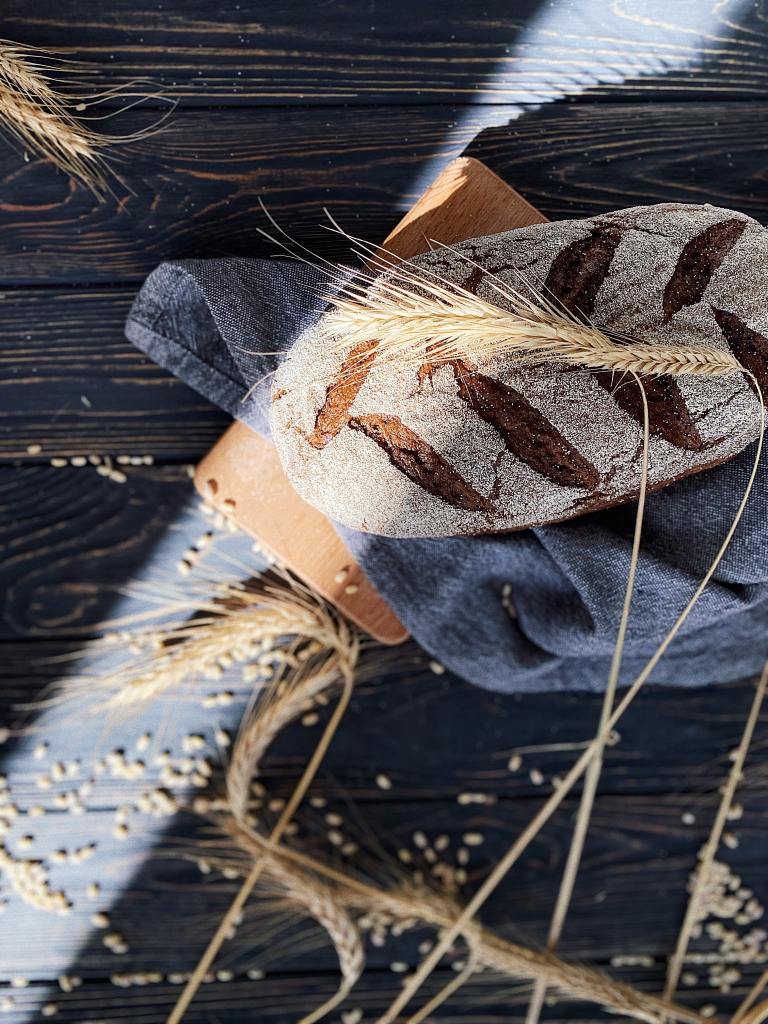
The timing of my weekly bread baking and the reading of the Gospel for today couldn’t be more apropos. While I’m writing these thoughts, the aroma of the loaf of sourdough bread baking in my oven has awakened my appetite; I wasn’t hungry before the bread started baking, but now….now I am anticipating the taste of butter on freshly baked bread. I’m counting the minutes until I can remove the bread from the oven, then I’ll count the minutes until the bread will cool enough for me to slice into it. My mouth waters at the thought of it! I’m consumed with a yearning for that bread in my oven, and no slice of store-bought bread is going to satisfy that need!
I wonder if the people who listened to Christ’s teachings on hunger and thirst for bread and water knew something of what I am feeling just now as my bread is baking? I wonder if they allowed their minds to go beyond their physical hunger and thirst into the appetite of the soul Jesus was awakening in them? They were familiar with the Old Testament’s scriptures that foreshadowed The Bread of Life that would be fulfilled in the New Covenant. They would have known the psalms and oracles from the Old Testament that we are reminded of in today’s readings. Let’s consider how, from the beginning, the LORD has whetted humanity’s appetite for the fulfillment of His promise in the body and blood of our Savior Jesus Christ.
The psalmist describes the faithfulness of the LORD in Psalm 145 by saying, “The hand of the Lord feeds us; he answers all our needs.” The LORD prepared his people for the ultimate Bread from Heaven that would satisfy the hunger and thirst of their souls. The writer recalls what the ancient Israelites had learned about this heavenly food through the physical hunger they had in the desert after escaping slavery in Egypt. The LORD poured forth manna from the heavens to satisfy their desires. He brought forth springs of fresh water from the rock to slake their thirst. In delivering them from slavery, He blessed them with the created bounty of bread and water to draw their minds beyond reality to the freedom that comes from the LORD alone.
“The eyes of all look hopefully to you, and you give them their food in due season; you open your hand and satisfy the desire of every living thing.“
Psalm 145
Then, through his holy prophet Isaiah, he beckoned His people to Himself as their Source of Life—a life lived in covenant with Him—the covenant that made satisfaction between God and humanity for all of time. He drew them through their physical hunger to consider the everlasting covenant that would be fulfilled in the coming of the Messiah. This God/Man would be THE Bread of Life, and the grace would be that we would recognize that our soul’s deepest hunger is satiated in Him.
Why spend your money for what is not bread; your wages for what fails to satisfy? Heed me, and you shall eat well, you shall delight in rich fare. Come to me heedfully, listen, that you may have life. I will renew with you the everlasting covenant, the benefits assured to David.
Isaiah 55:13
Something our priest said to my husband and me near the completion of our journey to The Roman Catholic Church has come to mind as I have meditated upon the Gospel readings during these days that surround the Bread of Life Discourse that we read yesterday at Sunday’s Mass. Father Fitzpatrick said to us, “You have been hungry seeking bread, and now you have found The Bread who has sought your hunger for all these years.” You see, we had never been fully satisfied with the “store-bought bread,” so to speak, that we had hoped it would satisfy our deepest longings. We were left weary and malnourished, our hunger drove us to the transcendent Mystery (“to shut the mouth”) of the Triune God present in the holy sacrifice of The Mass and the Truth, Beauty and Goodness of The Faith.
Has it been that way for you, friend? Have you been trying and trying to feast on the goods of God’s creation and the distractions of this life but still find yourself hungry? I like how Bishop Barron describes how the satisfaction in things and experiences fade away. It is like a fireworks show, bursting before us as we ooh and ahh, but fading away, leaving the sky empty. Leaving us wanting more. We are created for perfect happiness with God, and that is ultimately given through the receiving of Christ’s body and blood in The Eucharist. Why settle for eating the stale bread of this life? In the celebration of the Mass, the heavens open with God’s bounty of grace through the memorial of Christ Jesus’ sacrifice for us–pouring into our hunger, filling us with the food that lasts forever.
We still eagerly anticipate the celebration of the Mass? Do you? Do you recognize it as the source and summit of your life? Do you believe it is the only feast that will heal your malnourished soul? Do you prioritize celebrating the Mass above all the things and distractions you enjoy?
Does your spiritual appetite make your mouth water when you hear the priest pray over us the words of Christ,
“Take, eat: this is my body…Drink [from my cup] this is my blood of the covenant, which is poured out for many for the forgiveness of sins.”
Matthew 26:27, 28
We are hunger seeking Bread, Jesus Christ is the Bread seeking our hunger!
Oh, LORD Jesus Christ, you are our salvation, the source and sustenance of our lives. In consuming you we receive the peace that passes all our understanding.
We are infused with your love, mercy, and faithfulness, and you feed us with the fruit of your Spirit.
May we hunger and thirst for you in the holy sacrifice of the Mass!
In the name of the Father, and the Son, and the Holy Spirit.
“[The righteous person] is like a tree planted by streams of water that yields its fruit in its season, and its leaf does not wither. In all that he does, he prospers.”
–Psalm 1
One of the favorite things I liked to receive as a child was a connect the dot coloring book. Every page of the book was a new adventure as I traced my way, one dot at a time, to solving the picture puzzle. I would occasionally decide to start with the mid-point and trace forward or backward just to shake things up a bit. Connecting dots is still satisfying for me and I do it every day as I pray the Daily Office of prayers and readings of The Church. The practice of it connects me to the central point of the panorama of Salvation History: Jesus and His Church. Through Jesus and The Church, we connect the Old Covenant with the New Covenant lived out in the history and letters of Early Church.
There is a prevalent theme revealed in today’s readings, or should I say connect the dot picture, as we consider the Gospel in Matthew 12 as well as the Old Testament readings. In reading them we are able to trace our finger to the answer Jesus gives to the skeptical scribes and Pharisees who demanded a sign that Jesus was the expected Messiah.
“Then some of the scribes and Pharisees answered him, saying, “Teacher, we wish to see a sign from you.” But he answered them, “An evil and adulterous generation seeks for a sign, but no sign will be given to it except the sign of the prophet Jonah. For just as Jonah was three days and three nights in the belly of the great fish, so will the Son of Man be three days and three nights in the heart of the earth. The men of Nineveh will rise up at the judgment with this generation and condemn it, for they repented at the preaching of Jonah, and behold, something greater than Jonah is here. The queen of the South will rise up at the judgment with this generation and condemn it, for she came from the ends of the earth to hear the wisdom of Solomon, and behold, something greater than Solomon is here.“
The scribes and Pharisees not only knew what the Old Covenant proclaimed about the promised Messiah, they had memorized much of it. And why? So that they would recognize the fulfillment of the Old Covenant when the Messiah Jesus entered history and established His Church in The New Covenant. Here they were speaking face-to-face with the promised Messiah standing before their eyes; they could touch him, see him, hear him, they even dined with him! Yet they still wanted a sign, their doubt and skepticism and their dislike of what Jesus had to say messed with their own connect the dot picture about God and His Covenant.
How does Jesus respond? He begins with a sign named Jonah and connects himself to him declaring, “Something greater than Jonah is here.” He then connects to another sign named Solomon then repeats, “Something greater than Solomon is here.” I can’t image how exasperated Jesus must have been! A concrete wall comes to mind.
Let’s consider something else about the signs of God’s faithfulness that is recalled in the readings today. The psalmist sings about the righteous person, the person who keeps covenant with the LORD, comparing their life to a tree:
“The righteous person is like a tree planted by streams of water that yields its fruit in its season, and its leaf does not wither. In all that he does, he prospers.”
The prophet Isaiah describes it another sign by declaring how the streams of living water flows over those who keep covenant with the LORD:
For I will pour water on the thirsty land, and streams on the dry ground; I will pour my Spirit upon your offspring, and my blessing on your descendants. They shall spring up among the grass like willows by flowing streams.
Here the Creator is offering up the signs of the fidelity of his creation to usher us into the reality of eternal truths. The sign of the TRUTH’s arrival in humanity, fulfilled in the WORD made flesh and living among us–Jesus. A sign revealed in Christ’s Church, the New Covenant and its Sacramental Tradition in the practice of worship of The Most High God.
When we begin to understand that Jesus is the Living Water of The Covenant fulfilled, we can envision ourselves as trees in the soil by streams of water. We open ourselves to planting our life in the soil of the Word and the celebrations of The Sacraments as we keep covenant with Christ. And as a tree innately thrives when water is abundant, we see how the fruit of the Holy Spirit grows in us as we drink from the Word and receive the Sacraments of His Covenant with us. The word sacrament itself means “a sign of the spiritual reality”. To avoid The Sacraments is to deny the reality of The New Covenant, in fact, it is to deny that Christ is the Son of God (sounds like the scribes and Pharisees, doesn’t it?)
So we’ve come back to Jesus’s response to them in today’s Gospel. “Something greater than [Jonah, Solomon, trees, water and fruit] is here.” In other words fellow Pharisees, we cannot choose what we like about what Jesus teaches and ignore the parts of the His New Covenant that mess with our own connect the dot pictures. Furthermore, if we disregard the conditions of the Covenant as practiced in our Sacramental Faith we ignore the central point of our salvation which leaves us all scribbles and no picture.
How about you? Are you so tangled up in your skepticism about the truth of Jesus and His Covenant that you are all scribbles?
Do you ever ask yourself, “What’s the point of my life?” or “What’s the point of keeping covenant with God in the Sacraments when the stuff around me brings me more pleasure?”
Heres’s another question many decide not to answer. “What’s the point of weekly worship at Mass or the Sacrament of Confession?” Oh, friends, we are on our way to withering away by all our skepticism about Christ and His Church when we forego the life-giving waters in the practice of the Sacraments of our Faith. Something greater than our skepticism is here among us, it is Christ’s presence in the reading of Sacred Scripture and the receiving of The Church’s Sacraments.
Jesus, in you we live and move and have our being. Place your hand upon ours so that we would allow you to connect the scribblewe’ve made of our livesin the signs you have given us through The New Covenant, Jesus in your Church.
In the name of the Father, Son, and the Holy Spirit.
Do you remember from the first chapter why God created the first man and woman? You are right; God created them to enjoy being with him, to look at Him the way He looked at them. We talked about how everything was perfect; God, man, and woman joined together as best friends. What happened that changed the perfect garden that God, the man, and the woman lived in? You are right; the man and the woman decided to look into a creature’s eyes, a serpent who hated God. After that time, bad stuff started to happen when they stopped looking into God’s eyes. They had ugly thoughts about each other; they spoke ugly words to each other. God still loved them very much; he never stopped gazing at them. God knew ugly things would happen because they stopped gazing into His eyes. The first terrible thing, probably the most terrible thing, happened after the man and the woman had their first two sons. What do you imagine is the most terrible thing that can happen? Let me tell you about it.
The man and the woman started a family; their oldest son was named Cain, and he liked to play with the dirt, planting seeds and growing vegetables. He was good at it; God had created him to enjoy caring for the earth’s dirt. The second son was named Abel, and the Sacred Scripture tells us he was a keeper of sheep. Do you know what that means? He enjoyed taking care of sheep; we call that shepherding so we could say Abel was a shepherd. God had created Abel to enjoy taking care of animals. From as long as they could remember the sons regularly prepared an offering with their parents to give to God. What do you suppose their offerings looked like? We can’t be sure, but we can guess. Sometimes they would give God an offering of the grains grown from the ground and sometimes they would offer God a young animal they had shepherded. It was their way of saying thank you to God for creating them and loving them in spite of their decision to look into the serpent’s eyes and think he loved them. We still do what they did today, our offerings of thanksgiving look a little different than they did then, but it still means the same thing.
As the boys grew older, God began asking Cain and Abel to bring offerings of their own to Him to show Him how much they loved Him. The Sacred Scripture tells us Cain would bring the fruit of the ground he enjoyed taking care of and Abel brought the firstborn of the flocks of animals that he enjoyed taking care of. Somewhere along the way, Cain’s attitude changed about giving an offering of thanks to the LORD. We are given clues in Sacred Scripture about how that might have happened. I know you like to play the game Clue when we are together so I know you like clues, too. Professor Mustard will find a clue that could help him solve a mystery. It works the same way in Sacred Scripture, but Sacred Scripture is not a game; it is the Truth. It seems to me that if God wants to give me hints when I read His Sacred Scripture, I better pay attention because it is going to lead me to something important I need to know.
It happened one day that when Cain and Abel offered their gifts to God as a thank you, the LORD had regard for Abel’s offering. Do you know what that means? It’s a word you heard in the first chapter. The other word you can use for regard is gaze! Remember how much God loves to gaze at us; he also likes to gaze at what we enjoy giving to Him. Abel’s offering of a new lamb must have been beautiful to look at. You know what? The Sacred Scripture tells us that God did not regard Cain’s gift to Him. I wonder why? Do you think there was something wrong with the fruit of the ground that Cain brought to give God? Remember about clues. Here’s a clue about why God didn’t gaze on Cain’s offering very long. “Cain was very angry, and his countenance fell.” Hmm? That’s a curious clue. Cain probably was jealous of Abel, and when he realized God gazed at Abel’s offering longer than He did at Cain’s, he got angry. Not only did Cain feel angry, his face; his countenance fell. That means his look changed. I bet you know what this means because I know sometimes you get jealous of your sister or brother; you may even think that your parents love them more than they love you. I remember feeling that way!
You know what I think? God knows everything, even our thoughts, even when we don’t say our thoughts. God looks into our eyes and knows what we are feeling because He created feelings, too! So this clue about Cain’s feelings tells us something God knows that we don’t know because we aren’t God. Here’s what God did when Cain’s anger and jealousy showed on his face. He asked him some questions. The questions give us another clue about how the story may end. God asked Cain, “Why are you angry, and why has your countenance fallen?If you do well, will you not be accepted? And if you do not do well, sin is crouching at the door; its desire is for you, but you must master it.” God looked into Cain’s eyes and saw what He already knew. We use a big word to describe what only God can know, it is omniscience. Omni means “all,” and science means, “knowledge”–God alone has all knowledge, or we can put it this way, God is all-knowing. He knows EVERYTHING about EVERYONE at ANY TIME, ANYWHERE. That makes my brain sweat to even think about it. Doesn’t it do that to you? God is so spectacular that He keeps track of everything and everyone! Would you like to be omniscient? What are some of the things you would like to know?
There are so many words that describe God, but the most important is LOVE. When God saw that Cain was angry and jealous and that Cain assumed that God had rejected his offering, he still loved Cain. Cain was still learning how to love God. We do that sometimes, don’t we? Remember that God is omniscient so He knows what we are thinking and why we are thinking it. And He still loves us! This is a good thing to remember when we read the rest of the story about Cain because he makes the worse choice ever. Can you guess what the worse choice is?
A little while later, Cain tricked his brother. He told Able, “Let’s go out to the field.” Cain didn’t want to go to the field just to play soccer. What happens next is a terrible choice–Cain killed Abel! He killed him because he was jealous of him so he thought the solution to his feelings of jealousy was to get rid of Abel. Does that make sense to you? God had a curious way of handling Cain’s terrible choice; instead of yelling and screaming at him, he asked Cain two questions! “Where is you brother?” and “What have you done?” Remember that God knows everything? So, why do you think he asked Cain that question? This question gives us another clue, and it’s about the way God loves us.
God loves you more than your parents and loves you more than I love you. That’s almost impossible to believe that anyone could love you more than your parents or me. God wants you to choose to love Him just like he wanted Cain to love Him, and so would remind Cain about the most important choices he would need to make in order to have the happy life God had planned for Him. And even though Cain ignored God and got mad at God, God still loved Him. Even though Cain did the worst thing ever, God still wanted to Cain to gaze into His eyes and tell him the truth about what he had done.
Do you remember a time you did something wrong and Dad has you a question about what you had been doing? Then you figured out he already knew what you were doing but wanted you to admit you did it. The word we use for that is “confess.” The Sacred Scripture is full of stories like Cain’s where God shows His love in the same way as He did with Cain and as Dad shows his love to you. God knows that if you confess what you did was wrong, He can help you fix your gaze back on Him. If you don’t confess what you’ve done wrong, it will be very hard to gaze into His eyes. Another thing it will do is it will make it easier for you to keep ignoring God and to keep choosing to do things will eventually cause you to forget how much God loves you.
This leads us to a conversation God had with a man named Abram. Abram was scared of a lot of things, but God taught him how to trust Him and quit being scared. We’ll read about that in the next chapter.
Today’s readings from the psalms and oracles of the prophets serve as a soundtrack, as it were, for us as we have been considering the beginnings of God’s chosen people, the Israelites, recorded in Genesis. It’s not hard to recognize the same soundtrack plays as a backdrop for our own lives as we grow into our identity as God’s child. In fact, I believe that is why the psalms and oracles are so prevalent in The Liturgy of the Church, the words unite our spirit with the Spirit of God’s voice throughout the ages.
There is a certain word that is often sung or implied as a theme and by heeding it I may receive the LORD’s help as I walk the path of salvation. The word acts as a pop-up reminder to us to remember who we are and to whom we belong as we tread our own way through the high and low places of our journey of salvation. Consider this paraphrase of Psalm 46.
God is [my] refuge and strength, a very present help in trouble. Therefore [I] will not fear …… Selah
…God is in [my] midst; [I] shall not be moved; God will help ….Selah
….“Be still, and know that I am God. I will be exalted among the nations, I will be exalted in the earth!”….Selah
The words of the psalmist convey the ever-present help of the LORD to us as the way to mindfulness of the LORD’s quiet presence to us. The psalmist ends each phrase with the word “Selah”, which means “forever” or “to lift up; exalt”, its presence in the psalm is a cue for us to pause or to take a breath allowing our minds to take in what the psalmist has proclaimed. It serves as a sacred and silent interlude for us to receive the LORD’s truth. Within this particular psalm, there is the implication of the “if/then” of the fullness of God’s Covenant with us. He calls the people to “Be still and know that I am God,” to consider what the LORD in his mercy is trying to teach us as we live out our salvation: If you will remain silent, listen and linger with me, then you will know I am your fortress; I will be your salvation! Sounds easy enough, doesn’t it? Yet in practice, it can take a colossal effort to remain silent. I am sometimes tempted to rely on my own judgment to quickly plow through the interruptions of life or become so enamored by the shiny parts of life that I’m distracted from the reality of the LORD’s Covenant with me.
We see this evidenced in what we’ve been reading about the history of God’s people; how fear and pride dogged their path, how they allowed the so-called gods of the culture around them to lose sight of the LORD’s Covenant. Eventually, fatigue from their striving to fit in with the culture wears them down. What I have observed in my own life is that if fear and pride don’t drive me to my knees before the LORD, fatigue certainly will. I need “Selah” for I weary of the tug of war between my own will and the LORD’s will…..that’s just like him, isn’t it? He allows us to come to the end of ourselves where we finally cease striving. It’s as if the LORD says, “Lois, I finally have you where I need you…..now, let’s consider how you are striving to achieve and acquire what comes from Me alone.”
Two other passages from the psalms and the prophet are included in the Liturgy today that draws our spirit into a “Selah”. From Isaiah 30:15, “By waiting and by calm you shall be saved. In quiet and in trust your strength lies.” And again in Psalm 124 we can imagine the psalmist seated on a mountainside of the rugged terrain of Israel. As he sits there, he is pondering all the “what ifs” of life and remembers the faithfulness of the LORD as his rock and refuge. In that “Selah” a song formulates in his mind and he begins to sing,
If it had not been the Lord who was on my side when people rose up against me, then they would have swallowed me up alive, when their anger was kindled against me; then the flood would have swept me away, the torrent would have gone over me; then over me would have gone the raging waters.”
Friend, are there “what ifs” in your life? Do you sit still before the LORD as you ponder them?…. Selah
Have you come through a time of celebration and are left with a sense of satisfaction and gratitude?… Selah
Were you following a path set before you when circumstances went sideways for you? …Selah
Has someone you trusted betrayed you? ….Selah
Has the pandemic brought about a financial reversal in your life?… Selah
Do you tend to focus on what the LORD hasn’t done for you?… Selah
When you scurry after pleasures that are passing, do you…Selah?
The joy of our salvation comes through our own willingness to Selah; to be still and know that the LORD is forever faithful and true. Only He can truly satisfy.
LORD God, remind us that nothing is new under the sun. You never change and your responses to our own choices are the same as they were to our ancestors in the faith. LORD, you are faithful and true even when we are not. Slow us down, train us to embrace “Selah” in our posture before you.
In the name of the Father and the Son and the Holy Spirit. Amen
Awhile back I was actively involved with mentoring refugees who had been resettled here in Sioux Falls by the Office of Refugee Resettlement. It was a privilege to walk alongside an individual or a family as they negotiated the very hard transition from a war-torn nation where genocide was destroying tribes because of long-held resentments that reached back hundreds of years. In my training for the ministry I learned that even though a refugee is freed from the impending threat to their life with their refugee status, they were now in a new kind of refugee status: a stranger who had lost everything–land, culture, family–they held dear to them to live in a new land with a culture and language that is vastly different from what they had escaped. I could spend much more time addressing what I observed over those years, but I would like to share what came back to mind as I read today’s Office of Readings.
In reality we are all refugees to some degree because we are not at home in this world’s culture, or at least we should not feel at home. The language and the mind-set of the culture should feel foreign to us. The values of the culture should feel odd when we try to fully embrace them. We should feel like sojourners rather than denizens. The LORD Jesus Christ emphasized this in so many ways as he taught His disciples and the wanna-be followers who tagged along during his earthly ministry. Today’s passage from Matthew 8 is just one exchange he had that reveals to us how we should then live:
“Teacher, I will follow you wherever you go.” Jesus answered him, “Foxes have dens and birds of the sky have nests, but the Son of Man has nowhere to rest his head.” Another of his disciples said to him, “Lord, let me go first and bury my father.” But Jesus answered him, “Follow me, and let the dead bury their dead.”
Jesus wasn’t conveying to his followers that a home or a dead relative wasn’t important, he knew the heart of the men who were asking the questions and could see the reasons for not following him were excuses to stay in their comfort zone. As I read the passaged I recalled a conversation I had with one of the Lost Boys of Sudan who I was helping tutor in order to get his GED. During that conversation, I asked him how had he and the other Lost Boys had survived as orphans during the years of wandering further and further away from their destroyed villages. He replied with words that are forever etched in my memory. “We had God.“ The gaze of his eyes were set on the horizon and I imagined all the moments of despair and hopelessness he must have felt as he literally ran for his life and how God revealed himself to him. After a few moments of silence I asked Deng if he still held to that truth now as a refugee in America, his answer stunned me. “In Sudan we knew God was all we had and all we needed. Here in America I notice that people have ‘God and…,’ I am afraid I will forget God when I get what you American’s have.” We talked about that for quite a bit because I was the one who needed to learn to live as a refugee in this world and Deng was my sage. I am a better person because of Deng’s influence on my life.
Like the men in today’s gospel I was prone to be more concerned about where I lay my head rather than Who I can rest in. I was prone to allow earthly obligations and societal norms to cloud my eyes and detract me from the values of God’s Kingdom. My “God and….” included loop-holes and self-justification. My “God and….” had the disturbingly familiar image of my SELF. My “God and….” was a trinity of me, myself, and I. I would spend hours fretting over what people thought of me or all the ifs and buts that I used to qualify my faith in God.
I am sure that it is not an accident that The Church offers up an example from Abraham’s life in today’s reading. We do well to remember what the God of the Old Testament required of the great heroes of our Faith. Abraham lived much of his life as a refugee, the LORD intended it so. “Go forth from your land, your relatives, and from your father’s house to a land that I will show you…I will bless you…All the families of the earth will find blessing in you.” We will never know how Salvation History would have looked if all God’s people put their faith in what God said and obeyed accordingly. Because of Abraham’s obedience to the LORD we can see how the Story of Salvation did unfold to reveal what LORD intended through His people: Abraham and his descendants. Like us, the people of God got into a lot of trouble when they chose to worship “God and….” and over and over the LORD drew them back by reminding them of their ultimate purpose. Prophets would regularly hand down a message from God to His people that usually began with, “On that day…..” A vision of the “promised land” would then be told where justice and mercy ruled the day. And then God’s people would forget Him because the distractions of what the culture offered up was seemingly more attractive.
It’s the human condition, we forget to remember who we are, where our true home is and what we are to be about. The LORD, ever-patient, allows history to unfold but He is always calling us back to where we belong. The book of Hebrews in the New Testament is the handbook for refugees! The exhortation to remain faithful to what we have seen and heard about our identity as citizens of the Kingdom of God is strong. Abraham is recalled as the example for us as we sojourn in the kingdom of this world: “By faith Abraham obeyed when he was called to go out to a place that he was to receive as an inheritance; he went out, not knowing where he was to go. By faith he sojourned in the promised land as in a foreign country, dwelling in tents…for he was looking forward to the city with foundations, whose architect and maker is God….” Abraham had struggled with trying to serve “God and….” It didn’t go well for him, but in the end he lived his life worshipping God, life improved! The key to the map of faith was this: “…he went out, not knowing where he was to go. By faith he sojourned in the promised land as in a foreign country,…”
How about you, friend? Do you see this world as a foreign country? Does your faith in God include an “and”? What does your “God and….” look like? Perhaps you worship God and…political party or position or reputation or family obligations, or stuff. “God and….” has many faces!
Heavenly Father, remind us again that your Kingdom is not of this world. In you alone we are truly at home, draw us back to You.
In the name of the Father, and the Son, and the Holy Spirit. Amen.
“Truly, the LORD is in this place and I did not know it…How awesome is this place! This in nothing else than the house of God, the gateway to heaven.”
Genesis 28:16-17
The Church offers up a template for transformation that the LORD desires for all his creation in today’s reading from the Old Testament. In Genesis 28: 11-22, we find Jacob in a place that the LORD will use to initiate His transformation. What is behind him is an angry brother and a disappointed father whom he had deceived. What is before him is a path that will includes pitfalls and pratfalls and the formation of a dysfunctional family that eclipses any reality television. The journey will include deception handed back to him many times over, but in the end Jacob will deserve the title “Patriarch of the Faith” that he is remembered for. The first place of his transformation is at Bethel, a sacred place for his grandfather Abraham. Apparently this knowledge had not been passed down to Jacob. This is a clue about his upbringing and it’s a cautionary tale for us. Moses later records the LORD’s instruction to the people of Israel that was woven into the culture of family life.
““Hear, O Israel: The Lord our God, the Lord is one. You shall love the Lord your God with all your heart and with all your soul and with all your might. And these words that I command you today shall be on your heart. You shall teach them diligently to your children, and shall talk of them when you sit in your house, and when you walk by the way, and when you lie down, and when you rise. You shall bind them as a sign on your hand, and they shall be as frontlets between your eyes. You shall write them on the doorposts of your house and on your gates.”
Deuteronomy 6:4-9
The culture relied on oral tradition and the passing on of the truth depended upon the parents fidelity to this understanding. Perhaps Jacob was forgetful about his family history and the stories that conveyed their faith in God or Isaac had neglected the passing of the baton of faith which included the stories of Abraham’s exemplar trust in the LORD. What we can learn from this is how foundational to a child’s life is the example of faith in the LORD that can be observed in our own lives and in giving examples of the LORD’s faithfulness through the twists and turns of life.
“…And he came to a certain place and stayed there that night, because the sun had set. Taking one of the stones of the place, he put it under his head and lay down in that place to sleep. And he dreamed, and behold, there was a ladder set up on the earth, and the top of it reached to heaven. And behold, the angels of God were ascending and descending on it! And behold, the Lord stood above it and said, “I am the Lord, the God of Abraham your father and the God of Isaac. The land on which you lie I will give to you and to your offspring. Your offspring shall be like the dust of the earth, and you shall spread abroad to the west and to the east and to the north and to the south, and in you and your offspring shall all the families of the earth be blessed. Behold, I am with you and will keep you wherever you go, and will bring you back to this land. For I will not leave you until I have done what I have promised you.” Then Jacob awoke from his sleep and said, “Surely the Lord is in this place, and I did not know it.” And he was afraid and said, “How awesome is this place! This is none other than the house of God, and this is the gate of heaven.
So early in the morning Jacob took the stone that he had put under his head and set it up for a pillar and poured oil on the top of it. He called the name of that place Bethel, but the name of the city was Luz at the first. Then Jacob made a vow, saying, “If God will be with me and will keep me in this way that I go, and will give me bread to eat and clothing to wear, so that I come again to my father’s house in peace, then the Lord shall be my God, and this stone, which I have set up for a pillar, shall be God’s house. And of all that you give me I will give a full tenth to you.”
Genesis 28:11-22
The encounter that ensues between Jacob and the LORD begins with that “certain place” where decades earlier his grandfather, Abraham encountered the LORD (see Genesis 12) and though Jacob seemed to be unaware of that fact, the LORD chose that place to initiate Jacob into the reality of the LORD’S presence. Jacob was between a rock and a hard place, pun intended, and the sooner he recognized the omnipresent God, the sooner his spirit would be reordered into the man God desired him to be. I believe it is the same for us. The LORD is hounding our tracks as the psalmist puts it, the “greyhound of heaven” who is waiting for us to stop ignoring him and see life as it is, not what we delude our minds into believing.
A stone becomes his pillow and then a memorial. Here is another clue for our own transformation–the needed the rest that we often plow past in our striving as human-doings. The prophet Isaiah puts this truth like this, “In returning and rest you shall be saved; in quietness and in trust shall be your strength.” Jacob was on his way toward the humility required for transformation, and rest is what ushered him into the awareness of God’s presence, a dream follows.
The dream that fills his sleep is a magnificent theophany where the divine touches the temporal; where the veil between earth and heaven is pulled back and Jacob’s eyes are opened to the presence of the tremendous Lover of his soul. His response, “Truly the LORD is in this place and I did not know it!” What the LORD did to remind Jacob of who he was, where he was going, and what he was to be about is exactly what our transformational moments are like when we recognize the presence of the LORD; when we are humbled by the reminder that God is God and we are not! Jacob exclaimed that that place was the house of God (Bethel); “the gateway to heaven“. I wonder how many gateways to heaven are never opened by us because we are too busy running away from something or running to something or because our fear and pride saturate our life with busy-ness or self-delusion.
Jacob’s response upon waking from that dream brings to mind the experience of getting my first pair of glasses when I was about 11 years old. I was having trouble in school because of the nearsightedness we soon found out that I had. The optometrist’s office was on the 5th floor of the tallest building on our town square. When the time came for me to put on my new glasses, the wise optometrist led me to the window and instructed me to look down on a very familiar street. He placed my glasses on my head, and my 11 year-old brain was blown away by what I could now see that I could not see before It was the autumn of the year and the maple trees were displaying their brilliance, I had always enjoyed observing the change of seasons but now my joy had been increased because of the detail I could see. What before were watercolor images to me became pristine in their texture and detail!
Jacob’s eye-opening encounter with God at Bethel blew his mind. Jacob, who had seen his world with the distortion of greed and deception, had been taken to the window of reality where God corrected his sight to the beatific vision that is forever at play before the eyes of those who trust in the LORD and by faith realize that “Surely, the LORD is in this place“.
How’s it with you, friend? Are you running from something you regret or running to something you dread? Perhaps running isn’t even involved and it’s more like sloth; the insipid spiritual laziness that mires us in the rut of self-preservation. Either way, the LORD is purposefully hounding our tracks desiring to lead us into the divine life that is ours when we are completely abandoned to His sovereignty in our lives.
Do you rest in the LORD? Do you allow yourself to receive His peace by simply stopping in a cease-fire from the striving and dis-ease that pervades our culture. I’m a strong advocate for purposeful silence where we refuse the distractions of what is happening around us so that we may be fully present to the LORD.
Father, teach us to trust in you by choosing to rest in you. Help us to close our ears and eyes to the clamor of the culture. Lead us through our pitfalls and pratfalls into the confidence of knowing who we are and what we are about as a child of God.
In the name of the Father and the Son and the Holy Spirit. Amen
“When I find myself in times of trouble, Mother Mary comes to me Speaking words of wisdom, let it be. And in my hour of darkness she is standing right in front of me Speaking words of wisdom, let it be.”
–The Beatles
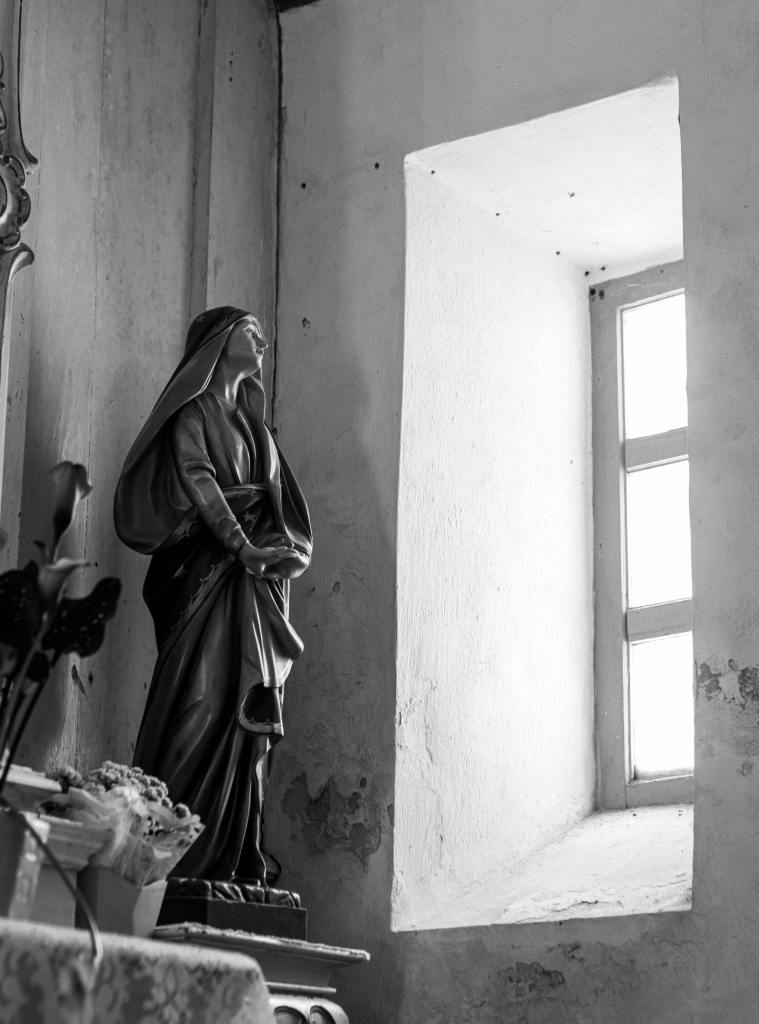
My first encounter with the beauty of our Blessed Mother came through the 1968 release of the popular song, Let it Be, by the Beatles. What the Beatles communicated in that song, though not exactly scriptural, began to draw me to Mary long before I converted to Catholicism decades later. The notion that the mother of Jesus could speak words of wisdom to me intrigued me.
Later in life when I was a tenderfoot Catholic I began contemplating all the words of Our Blessed Mother and I found that praying, “Let it be” could usher me into the grace the LORD has for all who will magnify Him. How so? By observing this grace-filled woman, this perfect mother, we learn how to detach ourselves from our own notions about how life should go. Let’s use the Beatles song to expand on how Mary’s fiat leads us into wisdom.
“When I find myself in times of trouble…” Our Blessed Mother knew times of trouble, she knew what confusion felt like, she knew what rejection felt like, she knew what poverty felt like. Her response to those rugged realities– “And Mary kept all these things, reflecting on them in her heart” reveals her humility. As we learn to respond rather than to react when the unexpected throws us off-kilter we leave room in our soul to reflect on the circumstances from the LORD’s point of view as Mary surely did. In that space of reflection we learn to listen to the Holy Spirit’s wise counsel. Though life may remain rugged, we may more readily accept the pratfalls of life as sacred ground for our spirit to rest in the LORD’s great love for us.
“And in the hour of darkness…” Allow me to use my own experience with “the hour of darkness” to show how our Blessed Mother comes to us speaking words of wisdom. In the years before I officially converted to The Catholic Church, I devoured books written by contemplative Catholics. My spirit kindled to reading about the sacramental life of The Church, especially when the life of Our Blessed Mother was the topic. My spirit opened to belief in her intercession for me. One afternoon in the midst of a collection of grief-filled realities, I was feeling the seer of pain from an unspeakable tragedy our family was enduring. The hours, months, years were filled with dark hours! I cannot say I put Mary to the test but, somewhere deep down I hoped that she would be my Mother as I was being a mother in the midst of loss and grief. A moment came when I dropped to the floor from physical exhaustion of the trauma; I began to pray. Who did I pray to? The LORD of course, but who was there holding me, weeping with me, crying out with me the extreme of my emotions? It was Our Blessed Mother! I cannot articulate the infused comfort and hope my spirit received that day, but I experienced the “lifting up of the lowly” that Mary declared in her Magnificat.
“And when the night is cloudy…” When we are on our last tether and we can’t see our way through a dilemma, if we listen, we hear the echo of Our Blessed Mother say to Jesus, “[She] has no wine.” When our resources don’t measure up to the expectation of others, if we listen we can hear her say, “Whatever He says, do it.” And what do we do when Christ abundantly supplies? We do as Mary, we reflect on God’s goodness and treasure it in our heart.
“I wake up to the sound of music…” As we pray the rosary of our Blessed Mother we join Mary in contemplating the joys of the life of our Saviour. He laughs, he celebrates; when He walks in He literally lights things up! And we can imagine Mary laughing right along; why? For she knew that “He who is mighty has done great things!” We receive the same peace and joy when our mighty Saviour does great things in us!







 The Maiden Warrior