“Children, how hard it is to enter the Kingdom of God! It is easier for a camel to pass through the eye of a needle than for one who is rich to enter the Kingdom of God.”
As Jesus was setting out on a journey, a man ran up, knelt down before him, and asked him, “Good teacher, what must I do to inherit eternal life?” Jesus answered him, “Why do you call me good? No one is good but God alone. You know the commandments: You shall not kill; you shall not commit adultery; you shall not steal; you shall not bear false witness; you shall not defraud; honor your father and your mother.” He replied and said to him, “Teacher, all of these I have observed from my youth.” Jesus, looking at him, loved himand said to him, “You are lacking in one thing. Go, sell what you have, and give to the poor and you will have treasure in heaven; then come, follow me.” At that statement, his face fell, and he went away sad, for he had many possessions.
Jesus looked around and said to his disciples, “How hard it is for those who have wealth to enter the Kingdom of God!” The disciples were amazed at his words. So Jesus again said to them in reply, “Children, how hard it is to enter the Kingdom of God! It is easier for a camel to pass through the eye of a needle than for one who is rich to enter the Kingdom of God.” They were exceedingly astonished and said among themselves, “Then who can be saved?” Jesus looked at them and said, “For men it is impossible, but not for God. All things are possible for God.”
The Gospel according to St. Mark 10:17-21
The gospel reading for today includes a phrase that was understood by the Israelites, but unfamiliar to us. Jesus remarks to the disciples, “It is easier for a camel to pass through the eye of a needle than for one who is rich to enter the Kingdom of God.” What exactly was Jesus getting at? There were actually narrow gates named Needles Eye in the formidable city wall that surrounded Jerusalem. They were used when the city’s main gates were closed at night or during an invasion. They were built as security measures since a person would have to unload his camel of the load it was carrying and then carefully lead his camel through the low and narrow gate. Not an easy feat when you consider the 5-6 foot height of a camel, as well as the 300-1,000 pound load in the panniers, slung on each side of the camel! Not only was the camel too tall for the gate, but its load made it too wide for the gate. It was a slow process to unload the camel and then force the camel to its knees to scootch through the gate. An impossible feat, indeed!
It’s pretty clear that the requisite in receiving the abundant life promised to us by Jesus is detachment from anything that would weigh us down or hinder our progress in salvation and transformation. In effect, when we cooperate with Jesus’ mandate to unload ourselves of what we think defines us to follow him in this earthly kingdom, he is preparing our souls for the final entrance into the divine life with our LORD forever in the heavenly Kingdom.
The young man’s eagerness to get the law of God right is revealed in how he approached Jesus–he ran! Jesus, knowing the young man’s sincerity, looks into his soul; the narrative reads,
“Jesus, looking at him, loved him and said to him, ‘You are lacking in one thing...'”
That “one thing” is a depth of love that seeks to live and move and have our being in Christ alone! And that’s the tipping point, isn’t it? I find myself often running to Jesus wanting to do more out of my love for him while ignoring the load I’m trying to carry that will not fit through the proverbial eye of the needle. What’s in that load? Well, that’s as varied as humanity; the load contains an array of human endeavors unique to each of us. The young man carried the visible wealth of accumulation for that was his attachment. What’s in your load? I know what’s in mine!
Interestingly enough the The Church’s daily liturgy, prayers, and readings have included readings from the book of St. James and the Saints while we’ve been contemplating the gospel readings about following Christ. St. James and the Saints of The Church had to learn what we need to learn. What did they learn? As we lay down the load we’ve acquired from this earthy kingdom, he gives back the weight of his glory! And what makes up that weight? The eternal goods that Jesus speaks to when he said to his disciples, “I came that you may have life, and have it abundantly.” The one thing he asks of us is love of him first and foremost He desires to pour into our life the stable disposition of Prudence, Justice, Fortitude, and Temperance that lead us in the faith, hope, and love of God. Then he gives more of the weight of his joy, peace, and mercy. And then his Holy Spirit pours in wisdom, understanding, counsel, fortitude, knowledge, holiness, and reverence! The Father of all good and perfect gifts then gives the seeds of charity, joy, peace, patience, kindness, goodness, generosity, gentleness, faithfulness, modesty, self-control, and chastity that grow and flourish. And the thing is, we easily carry those through the Eye of the Needle into eternity. What’s not to love about that one thing Jesus asks of us!?!
LORD God, giver of all good gifts, helps us to unload from our lives the other things we replace you with.
We desire the gifts from weight of your glory upon our lives. We want to live in the fullness of the abundant life here and now, and in eternity.
In the name of the Father, and the Son, and the Holy Spirit.
As it was in the beginning, is now, and ever shall be , world without end.
As Jesus came down from the mountain with Peter, James, John and approached the other disciples, they saw a large crowd around them and scribes arguing with them. Immediately upon seeing him, the whole crowd was utterly amazed. They ran up to him and greeted him. He asked them, “What are you arguing about with them?” Someone from the crowd answered him, “Teacher, I have brought to you my son possessed by a mute spirit. Wherever it seizes him, it tears at him; he foams at the mouth, grinds his teeth, and is withered up. I asked your disciples to drive it out, but they were unable to do so.” He said to them in reply, “O faithless generation, how long will I be with you? How long will I endure you? Bring him to me.” They brought the boy to him. And when he saw him, the spirit immediately threw the boy into convulsions. As he fell to the ground, he began to roll around and foam at the mouth. Then he questioned his father, “How long has this been happening to him?” He replied, “Since childhood. It has often thrown him into fire and water to kill him. But if you are able, have compassion on us and help us.” Jesus said to him, “‘If you able!’ All things are possible to one who has faith.” Then the boy’s father cried out, “I do believe, help my unbelief!” Jesus, on seeing a crowd rapidly gathering, rebuked the unclean spirit and said to it, “Mute and deaf spirit, I command you: come out of him, and never again may you enter him!” Shouting and throwing the boy into convulsions, it came out. He became like a corpse, which caused many to say he had died. But Jesus took him by the hand, raised him, and he stood up. When he entered the house, his disciples asked him in private, “Why could we not drive the spirit out?” He said to them, “This kind can only come out through prayer.”
The Gospel According to St. Mark 9:14-29
I’d be hard-pressed to choose a favorite gospel account of Jesus’ healings, but I know this one would be among my top choices. The interaction between the father and Jesus reveals guidance for my prayer life. The truth that “Jesus became flesh and dwelt among us” is in full array in this encounter, and we can receive the same graces through prayer with Jesus as the father and son received from his physical presence to them. Jesus’ life on this side of eternity was a prayer with our heavenly Father, and he consistently invited the observers of his life into the same intimacy. His actions, healings, and teachings, his very flesh, were united with humanity to show us the way back to our created identity of intimacy with our Triune God, and that only comes through the communion of his body and flesh in The Eucharist and the communion of prayer with him.
The father was just another whobody to everyone else, but he was the very reason Jesus approached the folk surrounding him. Long before the father emerged from the crowd, Jesus knew him and how the father had suffered for his son and how the son had suffered because of the presence of an unclean spirit in his life. How life happened to them is not as important to Jesus; no need to connect the dots to cast blame. It had happened to the father and the son, and now Jesus would happen to the father and the son. It is the same for you and me. We are sometimes like father and son, aren’t we? We either suffer on behalf of someone or we are the one who suffers. Jesus sees us just as he saw the father and son long before that encounter. He knows what we silently carry in our hearts and souls.
Jesus comes to us without condemnation, and he sees into our hearts, not our past. He doesn’t see how we may have fumbled; he doesn’t bring up what could have been or what should have been. No, he, the suffering servant of mankind, absorbs our suffering as he did for the father and son, and then, healing transformation unfolds in us. He asks us the same question, “How long have you carried this? Do you want to be made whole…what are you looking for?” He knew the father needed to pour out the pain he had carried before him. The act of speaking our pain before the LORD is a part of healing because it requires humility to confess our need, doesn’t it? The psalmists often prayed, “Hear, O Lord, and be gracious to me! O Lord, be my helper!” (Psalm 30:10) And I can’t help but hear Jesus’ words echoing in the encounter with the father and son,“Come to me, all you that are weary and are carrying heavy burdens, and I will give you rest. Take my yoke upon you, and learn from me; for I am gentle and humble in heart, and you will find rest for your souls.” (St. Matthew 11:28-29)
“If you are able, have compassion on us and help us.” Jesus said to him, “‘If you are able!’ All things are possible to one who has faith.” Then the boy’s father cried out, “I do believe, help my unbelief!”
The scene unfolds in what I imagine to be an intimate conversation between Jesus and the Father. Do you feel the father’s guarded hope as he says to Jesus, “If you are able…” Ever doubted like that? I have. When you’ve tried your best but your best wasn’t good enough, or when you are so attached to a hindrance that you can’t believe it is possible to be free from thinking about it! When you suffer for another who has been seized by a spiritual or emotional disease that has withered them up, tossing them to the ground over and over. Helplessness is too anemic a word to describe that kind of parental anguish. Jesus replies to the father, what he whispers to us, “All things are possible to one who has faith.”
The narrative of the account closes with Jesus’ words to his disciples, “This kind can only come out through prayer.” Interesting conclusion. Something worth remembering when we carry our or another’s struggle to Jesus. We can choose to ignore our pride, fret in our fears, or wallow in our anger, or we can pray, “I believe, help my unbelief.”
“Jesus became flesh and dwelt among us!” to reveal the impossible to those who seek him! He exorcises the evil spirit from the boy and takes him by the hand to raise him to stand. Did Jesus lose any holiness by touching the boy? No, instead, he infused wholeness into the boy so that he and the father and the onlookers could witness the holy compassion of God that saves and heals, restores, and resurrects! How does that come about? What does that mean for us in our life of prayer with Jesus? St. Theresa of Lisieux wrote, “…prayer is a surge of the heart; it is a simple look turned toward heaven, it is a cry of recognition and of love, embracing both trial and joy.” What causes your heart to surge toward God? Joy, Hope, Faith or despair, doubt, and unbelief. It’s all the same to the LORD Jesus because in the surge, the upward glance, he stands ready to reveal himself to us in the embrace of intimate communion with him. How beautiful! How lovely! How mysterious the presence of God is to us, but as we incline toward Jesus, we are saved!
“The whole reason why we pray is to be united into the vision and contemplation of God to whom we pray.”
–Julian of Norwich
LORD Jesus, you took on flesh and dwelt among us to save us from the fear, pride, and anger that cause us to doubt your love!
LORD Jesus, we are flesh of your flesh, restore us to wholeness of life in you!
LORD Jesus, open our eyes to recognize your presence before us!
In the name of the Father, and the Son, and the Holy Spirit.
As it was in the beginning, it is now, and ever shall be, world without end.
The Pharisees came out and began to debate with [Jesus], seeking from him a sign from heaven testing him. He groaned in his spirit and said, “Why does this generation seek a sign? Amen, I say to you, no sign will be given to this generation.” And leaving them, he again he got in the boat and went off to the other shore.
The Gospel of St. Mark 8:11-13
The daily gospel readings these early weeks of Ordinary Time can leave you breathless with the pace of St. Mark’s narrative, yet they have several reoccurring themes that are worth our meditation. One, in particular, is how Jesus responds to the ever-present Pharisees lurking at the edges of many of the beautiful actions of our Savior. The gospel reading for today follows the miracle of Jesus feeding the crowd of 4,000 plus hungry folk who had followed him.
The Pharisees, known to “strain at a gnat but swallow a camel,” floundered in their understanding and acceptance of Jesus. Jesus had just fed the large crowd, the word had spread, and now the Pharisees debated with Jesus’ ability to provide a sign from heaven. What?!? What seems so obvious to us illuded the Pharisees. Why? That is worth pondering because if we are not careful to keep our eyes fixed on Jesus, we can become just as blinded by our pride. Have you ever been in conversation with someone who already had their mind made up about something and they were not interested in your perspective? They just wanted an opportunity to prove their point. In effect, they were saying, “My minds made up, don’t confuse me with the facts.”
Is it any wonder that “Jesus groaned in his spirit?“ He knew the heart of man; he knew the Pharisee’s hardness of heart caused their spiritual blindness. We know he healed some of them of their hardened hearts, but most remained intractable. Jesus’ dismay over humanity’s spiritual blindness wasn’t reserved for the Pharisees, though. A few verses later in the narrative, Jesus has a conversation with the disciples. The scripture doesn’t say it, but I imagine that Jesus once again groaned in his spirit over their lack of understanding.
Now the disciples had forgotten to bring any bread, and they had only one loaf with them in the boat. And he cautioned them, saying, “Watch out—beware of the yeast of the Pharisees and the yeast of Herod.”They said to one another, “It is because we have no bread.” And becoming aware of it, Jesus said to them, “Why are you talking about having no bread? Do you still not perceive or understand? Are your hearts hardened? Do you have eyes, and fail to see? Do you have ears, and fail to hear? And do you not remember? When I broke the five loaves for the five thousand, how many baskets full of broken pieces did you collect?” They said to him, “Twelve.” “And the seven for the four thousand, how many baskets full of broken pieces did you collect?” And they said to him, “Seven.” Then he said to them, “Do you not yet understand?”
The Gospel of St. Mark 8:14-21
The Greek transliteration of Jesus questions to the disciples reads,
“Do you not perceive, nor understand? Do you keep an obdurate heart in you? Having eyes, do you not look? And having ears do you not listen? And do you not remember?”
Yikes, even the disciples (that would be you and me) missed the boat sometimes (pun intended)! It just so happens that as I set out to write my thoughts down about this scripture reading, I had a moment where I was a bit obdurate myself. (There are many synonyms for obdurate: stiff-necked, unrelenting, adamant, pigheaded, etc.) I greeted the LORD as I awakened, thanking him for the day ahead. It was a day I had already planned for prayer, writing, and reading. I thrive on order and stability, but sometimes my eyes are so fixed on how I think a day should go that I suffer from the same sight and hearing problems the disciples had. And, yes, I have to admit that I can become pharisaical in my determination to get righteousness right! Does that sound as funny to you as it does to me?
My day started with a plan in mind, but in the LORD’s mind, he wanted to restore my sight about the limitations of my health that I regularly try to ignore. The matter of my health is beside the point in light of how the LORD got my attention. I sensed him saying to me, “Lois, you are zealous for me, but sometimes you struggle with balance. The sign I’ve given you is clear; your body needs to lay down and rest. You have a choice now. Are you going to ignore the sign I’ve given to you, or are you going to pig-headedly force this day to go according to your big fat ego!” No, kidding, that’s just how the day started. At least on this day, I answered the LORD by remembering that I am his beloved daughter and that he desires holiness as well as wholeness for me.
What would have happened to the stiff-necked Pharisees if they would hadn’t been so hell-bent on proving their points with Jesus? They would have received all the graces of salvation that Jesus desired for them because he loved them. We know that eventually, the disciples learned to see and hear what Jesus was giving to humanity through his flesh in miracles and teachings. The disciples transformed into the freedom of spirit that comes from the humble acceptance that we are not in control and that life is not about us.
“Hardness of the heart” is another description used for obdurance, and that hits too close to home when putting that way, does it not? Jesus comes to us offering his grace and mercy as he did to the Pharisees, the crowds that pursued him, and the disciples that followed him. I ask you what I ask the LORD.
LORD, am I so consumed by concern about what’s happening around me that I don’t leave room to be surprised by your grace? You answer me: I know what you need, be more concerned that my kingdom comes into you. I’ll take care of everything else.
LORD, in my determination to gain the upper hand in this relationship, am I losing sight of your desire for me to humble myself? Even before this person who is a burr under the saddle of my existence? You say to me: Don’t second guess her; that’s my job. Pull out that tangle of thorns under your saddle.
LORD, am I following your commandments and precepts to impress others or to love the others? You answer me: “…without love for Me and others; you can do nothing.”
But what about So and So, LORD? Does she seem to look for opportunities to make me feel insignificant? You answer me: No one can use their words to “revile you and persecute you and utter all kinds of evil against you” without answering to me. Rejoice and take heart, I love you, and that is all that matters!
LORD Jesus, open our eyes and ears so that your kingdom may come into us!
In the name of the Father, and the Son, and the Holy Spirit.
As it was in the beginning, it is now and ever shall be, world without end.
Come and see the works of God, tremendous his deeds among men.He turned the sea into dry land, they passed through the river dry-shod…For you, O God, have tested us, you have tried us as silver is tried:you led us, God, into the snare; you laid a heavy burden on our backs….we went through fire and through waterbut then you brought us relief.
—Psalm 65
Tried and Found Wanting
Quietly, matter-of-factly, we started worshipping at Mass. As we assembled with worshipping believers every Sunday at the Cathedral of St. Joseph, the answers to our most urgent questions began flooding into our hearts and minds. Our nowhere was progressively turning into “now- here.” The Good Shepherd was leading, and we were on a path that would take us home to the ancient Church. The peace of mind that poured over us was so refreshing and life-restoring. There were men and a woman of God who were the vessels of grace placed in Salvation History for many reasons that will never be fully comprehended in this life. Still, we are sure that we are among the recipients of God’s divine favor and mercy flowing from their lives. The Spirit drew us deeper into consideration of the Catholic Church as we learned from our priests and observed the intellectual and theological integrity with which they served God. Worship embodied the integrity and authenticity that we hungered for–every word, action, and moment of the Mass bore the full solemnity of the Christian faith, which profoundly impacted us.
As strange as it may sound, desperation is a good thing in the spiritual life. Desperation causes us to be open to radical solutions and willing to take all manner of risks to find what we are looking for. Desperate ones seek with an all-consuming intensity, for they know their life depends on it. Like the cancer patient who travels to a foreign country in the quest for cures that can’t be found in familiar territory, spiritual seekers embark on a quest for that which cannot be found within the borders of life as we know it. We search for healing not found in all the other cures we have tried. We have run all the way to the edges of our own answers; we have exhausted the possibilities and are now finally ready to admit our powerlessness in the face of the tremendous unfixableness of life.
—Ruth Haley Barton
Tired and Hungry
As the months passed and our perspective clarified as we worshipped at Mass, the season of waiting gave way to understanding. We hadn’t fully comprehended how distorted our vision had become during our service to Protestant ministry. We knew there had to be more depth to the Christian faith than our Protestant denomination’s churchiness. When we were still searching for a Protestant church to worship after we departed from that denomination, one thing became crystal clear: our denomination was not unique in its floundering. And we knew we were tired of all the man-centered maneuvering all done in “the name of God!”
Mary’s magnificent response to God’s grace and mercy on humanity, as recorded in Luke 1, prophetically describes the fallout of rebellion: “He has shown strength with his arm, he has scattered the proud in the imagination of their hearts…” As pride has taken root, entangling every facet of life, humanity has scattered and diffused into all manner of imaginations. We had witnessed how tiring the Protestant movement had become with its preoccupation with what people wanted. We found it increasingly tiring to be associated with all the innovations in the Protestant movement that had scattered over different “imaginations” about what it means to worship the Triune God and live as His Church in the world. We were tired of all the imaginative splitting of hairs. We were tired of motivations centered around attracting people through the consumerism familiar to the current generation rather than the true worship of God. We were tired of topic-driven preaching, performer-driven music, soapbox-driven teaching, and entertainment-driven programming. We tired of all the church splits, division, and multiplication, not to mention all the “affiliations” or movements replacing denominations–new wine in old wineskins!
Our spirits wearied from the futility attachments to the benefits of serving God. We had looked through the neatly packaged boxes God had been put into by customized movements and found them wanting. We had read the formulas and noted the steps laid out by well-meaning evangelical leaders, broadcasters, and writers who relegated faith to methodology and found so many of them self-serving. We had dedicated our time and effort to doing and believing all the right things according to our denomination’s perspective; we still had doubts about its continuity with the historic Church.
We were tired, and we were hungry. Our hunger manifested in what St. Anselm wrote thousands of years ago, “Faith seeks understanding.” Our questions about God and faith had made us uneasy, leading to new questions we could never have anticipated. Our questions were changing, and we found the answers we had previously accepted did not satisfy our desire for security, rest, and peace. We fed our spirits by reading from the Church’s early Church Fathers and Saints. We found satisfaction in their devotion to Christ and their desire to understand what they believed. We were more comfortable with the transcendent Mystery (“to shut the mouth”) of the Triune God than with the domesticated certainties that had fossilized so much of the Protestant movement. We fed our spirits by seeking more understanding and discovered the Mystery of Faith that transcends humanity’s diminutive attempts at definitions of The Faith. The gravitas that accompanied these realizations had led us in the “long obedience in the same direction” toward the threshold of the Catholic Church. The hungering darkness of our past gave way to light!
The eternal Truth that “Christ took on flesh and dwelled among us” is revealed in how Jesus lived in his Creation alongside humanity. He entered into the joy of celebration and the ordinary, as well as the misery of disease and death, hunger and fear, in sum, all facets of the human condition, to unite his flesh with us so that we may unite our flesh with him and receive the fullness of his salvation. It’s a profound truth that inspires and encourages me as I live my faith in the LORD in my corner of the world! Today’s reading is yet another glimpse into this truth and it’s revealed in how Jesus breaks through the darker side of the human condition.
When they had crossed over, they came to land at Gennesaret and moored the boat. When they got out of the boat, people at once recognized him, and rushed about that whole region and began to bring the sick on mats to wherever they heard he was. And wherever he went, into villages or cities or farms, they laid the sick in the marketplaces, and begged him that they might touch even the fringe of his cloak; and all who touched it were healed.
The Gospel according to St. Mark 6:53-56
These healings follow a series of encounters where Jesus revealed the salvation contained in his flesh by healing the sick, feeding the 5,000, and walking on water. The earthiness of Jesus in the narrative is something to ponder; his flesh infuses into the encounters and saves body and soul!
Jesus offers the same touch to us as he did to the sick and lame upon their mats, the isolated outcasts hidden in crowds. He walks up to the unseen boundaries of our lives and touches us. In Gennesaret he didn’t see an anonymous body lying on a mat, he saw his own flesh! The salvation contained within his touch poured into the lives of those sick in body and reached into their souls. His perfect flesh united with diseased flesh and restored what sin and death had stolen from humanity. The instant salvation from disease opened the heart and mind for the fullness of his salvation. That’s amazing grace, isn’t it?
“And all who touched [him] were made whole.” God’s purpose of incarnating the flesh of humanity was to recreate us into the image of himself, to make us whole! Rampant diseases are somewhat controlled by modern medicine, but the human condition of the sick in soul is pandemic; humanity is reaching in all sorts of directions to remedy what can only be remedied through the incarnation of Christ’s salvation poured into our flesh. How does this actually work? We receive insight into the ways of our LORD in this very gospel reading.
We can observe a few details in the encounters at Gennesaret that are required for us in our own day. The narrative reads, “… they rushed about that whole region and began to bring the sick on mats to wherever they heard he was.“ The anonymous “they” reached for their diseased friends and relatives; therefore, they had to touch them in order to bring them into Jesus’ presence. You and I rub shoulders with the sick of soul in our corners of the world. The salvation we know is the salvation they need; it requires of us the use of our own senses to love and understand them, in other words, to pick up their mats and bring them to Jesus. Jesus touches through us, he listens through us and our lives become conduits of his healing to those around us.
What about the diseased lying on their mats? It may be that we are the one on the mat, sick of soul, helpless, and perhaps even in denial of our own need of the healing touch of our Savior. The morning of January 10 of this year I faced a startling realization about my life that I had successfully denied for 62 years! What brought me to that realization? The willingness to face a humiliating encounter with the LORD; in effect, I was laid out on a mat before him. He wasn’t the one humiliating me, he was the one whose touch reached deep into my mind and heart and revealed how my refusal to humble myself was infecting my soul. I felt the humiliation of the mat I had woven beneath me, even around me. And there were trusted individuals who offered the counsel of the Holy Spirit to me by carrying the mat of my existence to our loving and healing Savior through interceding for me in my low estate. A miracle did happen that day, at once I received the healing that could only come from the Incarnated Savior’s touch and I jumped off that mat for good, never to return. That’s the miracle! And like the sick who were healed, I heard Jesus say what he said to the woman who had struggled for 12 years with her disease (St. Mark 5:24-34), “[Lois], your faith has made you well; go in peace, and be healed of your disease.”
Friend, how is it with you today? Do you find yourself carrying the mat for someone or lying on the mat? Have you isolated yourself from hope? Perhaps you recognize you are sick of soul. Jesus sees the flesh of our hearts that is scarred by what has happened to us or by what we do to ourselves. Jesus took on that flesh and dwelled with us so that his perfect flesh would be absorbed and destroyed in his death. And through his resurrection from eternal disease, he offers his perfect flesh back to us so that he may give us wholeness and holiness.
As we incline toward the LORD by receiving his body and blood, his touch reaches into our fear and anger and the pride that hinders our faith to believe and trust that he can heal the hidden disease of our heart; that he can recreate us into his image. It’s a humbling gesture to admit we will die without his flesh and blood, but that is how faith makes us whole!
LORD, Jesus, Savior, and Healer, we bow before you in humble adoration for dwelling with us, absorbing us, recreating us into your image.
In the name of the Father, and the Son, and the Holy Spirit.
As it was in the beginning, it is now, and ever shall be, world without end.
“Night and day among the tombs he was always crying out….“
Jesus and his disciples came to the other side of the sea, to the territory of the Gerasenes. When he got out of the boat, at once a man from the tombs who had an unclean spirit met him. The man had been dwelling among the tombs, and no one could restrain him any longer, even with a chain. In fact, he had frequently been bound with shackles and chains, but the chains had been pulled apart by him and the shackles smashed, and no one was strong enough to subdue him. Night and day among the tombs and on the hillsides he was always crying out and bruising himself with stones. Catching sight of Jesus from a distance, he ran up and prostrated himself before him, crying out in a loud voice, “What have you to do with me, Jesus, Son of the Most High God? I adjure you by God, do not torment me!” (He had been saying to him, “Unclean spirit, come out of the man!”) He asked him, “What is your name?” He replied, “Legion is my name. There are many of us.” And he pleaded earnestly with him not to drive them away from that territory.
Now a large herd of swine was feeding there on the hillside. And they pleaded with him, “Send us into the swine. Let us enter them.” And he let them, and the unclean spirits came out and entered the swine. The herd of about two thousand rushed down a steep bank into the sea, where they were drowned…
“…Go home to your family and announce to them all that the Lord in his pity has done for you.” Then the man went off and began to proclaim in the Decapolis what Jesus had done for him; and all were amazed.
St. Mark 5:1-13; 19b-20
The scripture points out straight away that Jesus and his disciples sailed to the other side of the sea to the city of Gerasa, one of the ten cities of the Decapolis east of the Jordan river (present-day Palestine or The East Bank). It was predominantly Gentile, who were considered unclean by a law-abiding Jew, but Jesus never let conventions stand in the way of his mission to bring the Light of the World to all people. On several occasions recorded in the Gospels, Jesus knowingly hangs out with “other” people: social-misfits; diseased; despised; unclean–the nobodies of lost causes.
An outcast demonic is the welcome party for Jesus and his disciples as they land on the shore of the Decapolis, and he did not waste any time for at once he came from the tombs where he lived. He was among the worst of the worst of all of society–an exemplar of Satan himself. Let’s take that in for a moment. Now, let’s reflect on why this exorcism is included in the Gospels. The Church teaches us that all of Sacred Scripture is written for the purpose of our salvation; with that in mind, I make a habit of placing myself in the sandals of my ancestors in The Faith to understand the depth of the salvation God grants us through Jesus Christ, his only begotten Son. Join me in reflecting.
LORD God, the malignant enemy of my soul, tries to drive me into a dystopia of death in my spirit. He lurks in all the temptations that lead me away from the abundant life you have given me. Sometimes, what attracts me appears shiny and enticing, but they are the enemy’s glittering shackles and chains lying in wait for me as soon as I act on the temptation. A manacle and chain wrench around me and I am dragged toward the tombs. Above the dark path, the gate that reads “Pride…Fear…Anger.” Just beyond, I see them there. I see engraved on tombs “Lust of the Eyes,” a stone’s throw away I see engraved on tombs “Lust of the Flesh,” and over there in the deep shadows, I see engraved on tombs “Boastful Pride of Life.” The further I’m dragged I start to forget who I am as your beloved daughter; I forget my name!
Beloved, I am writing you no new commandment, but an old commandment that you had from the beginning. The old commandment is the word that you have heard. At the same time, it is a new commandment that I am writing to you, which is true in him and in you because the darkness is passing away and the true light is already shining. Whoever says he is in the light and hates his brother is still in darkness. Whoever loves his brother abides in the light, and in him, there is no cause for stumbling. But whoever hates his brother is in the darkness and walks in the darkness, and does not know where he is going, because the darkness has blinded his eyes.
I am writing to you, little children, because your sins are forgiven for his name’s sake. I am writing to you, fathers, because you know him who is from the beginning. I am writing to you, young men, because you have overcome the evil one. I write to you, children because you know the Father. I write to you, fathers because you know him who is from the beginning. I write to you, young men because you are strong, and the word of God abides in you, and you have overcome the evil one.
Do not love the world or the things in the world. If anyone loves the world, the love of the Father is not in him. For all that is in the world—the lust of the flesh and the lust of the eyes and pride in possessions—is not from the Father but is from the world. And the world is passing away along with its desires, but whoever does the will of God abides forever.
I John 2:7-17
I look back from where I came, and I see you coming toward the shore of this dreadful place: something within me starts to remember some truth about me so, I run to you despite these death chains. I fall before you, splayed out in my weariness. You see my bruises, you’ve heard my cries, with incredulity you whisper to me, “I died for you, I’ve already been to those tombs where I conquered death, hell, and the grave. Why did you go looking for your name there? You don’t belong there!” And you say to me, “What is your name?”.
What is my name? As soon as I can remember my name, I’ll be free! It takes a bit; longer than I’d like because I have a legion of voices in my head enticing me to run back to the tombs and climb into one of those graves. But then I dare to look into your eyes! Oh, Jesus, I remember you! You are the Son of the MOST HIGH GOD! I suddenly go limp; something has fallen from me. I look back to see what it could be and see what was once, the glimmering manacle and shiny chains now all rust and decay. They’re scattered into thousands of pieces fleeing back to the tombs!
You take my hand and lift my body, now light as a feather, to stand on the two feet that I’d forgotten how to use! And I gaze into your beautiful eyes to answer you, “I am Lois, your beloved daughter!”
Jesus, Son of the Most High God, help us to never forget our name!
I ask this in the name of the Father, and the Son, and the Holy Spirit.
As it was in the beginning, it is now, and ever shall be, World without end!
Solitude eventually offers a quiet gift of grace, a gift that comes whenever we are able to face ourselves honestly: gifts of acceptance, of compassion, for who we are as we are. As we allow ourselves to be known in solitude, we discover that we are known by Love. Beyond the pain of self-discovery, there is a Love that does not condemn us but calls us to itself. This Love receives us as we are.
–Parker Palmer
Swimming to Shore
During the “quiet gift of grace” we found in the solitude, where our vision cleared, we began a search for a church home. The painful discovery for us was that we could no longer abide by the Protestant notions of worship. What were those disturbing notions that had set the tide of our lives toward the Catholic Church? There is an unspoken, sometimes unintentional, motivation in the evangelical Protestant movement. Beneath the decision to start new churches, known as a church plant, a systemic infirmity pervades the Protestant movement, regardless of denominational affiliation. Authority is fluid. Older established churches are declining in numbers or reclining in entrenchment and apathy. It is a given fact that most established churches struggle with leadership succession. When a new generation desires change that will equal the allure of its age, the old guard often fights to keep their authority over what they believe is suitable for their generation. Because church authority is local and based on a short history of denominational organizations, many churches tend toward solving their perceived problems with man-centered solutions. Solutions that appear to be democratic but are often myopic. Solutions that may appear on the surface as prudent are simply another attempt at plugging the dike of a 500-year-old reservoir of the turbulent waters of rebellion. Rather than pastors and their superiors knocking their heads against the fixed positions of the biggest donors or the loudest detractors in the church, the solution often is to start another church. At other times, the solution is to find new pastoral leadership who can either “lead” or placate the dissenting voices and imagine new ways and means to attract the culture. The decision to start a new church or find a new pastor may have started because of division in the church. Or the decision is made to prevent parishioners from leaving the local church. Either way, the undercurrent of protest is never treated; the leak in the dike is beyond repair.
The present cultural fascination with mega-entertainment churches that attract a consumer-driven society earns the evangelical church’s idiom, “a mile wide and an inch deep.” The innovation seems to incline well to the culture, yet upon closer examination, it reveals that pastors have incredible pressure to balance intriguing sermons and experiences that cater to the culture’s frantic want for distraction from the realities of their lives. Behind some of the motivations in ministry, programming is a desire to engage the congregation in following Christ in a relevant way within the culture. At first glance, this appears commendable. But another motivation lurks around decisions that are made. A pastor and his staff know that the people they serve can find another place to attend on Sunday mornings if they are bored with the smorgasbord of choices their church serves every Sunday. We have even heard pastors referred to as coaches by church leadership. When the coach and his team cease to have “wins” that meet the approval of the “fans,” then it’s time for a new coaching team. A myriad of notions has filled the vacuum of the Protestant movement. Any pastor who pulls back from the busyness he is driven to pursue eventually recognizes he is just one more sincere little boy trying his best to keep the reservoir from giving way around him.
The environment of these rising-star churches can best be described by what one young person told us about a church she had decided to attend. When we queried her why she had chosen that particular church, her answer echoed the culture. “I always have a good time and come away feeling good. That’s what it’s all about, isn’t it?” Is it? Is worship of the Triune God about inclining to the wants of the culture to attract people to attend church to feel good? Is worship something we manage, or is it something we give? Is it something we experience? Or something we do? We knew that the evangelical Protestant answer is touted every Sunday in varying ways. Some are more unsettling than others.
Bagels and designer coffee are often available for purchase before entering the “worship center.” Some churches even have a breakfast bar at the back of the worship center so you can get up and help yourself during the “worship” hour. It is not unusual to observe people bringing a fast-food breakfast they had grabbed on the way to church. If the church has multiple venues for their Sunday morning worship experience, then the pastor’s 30-45 minute sermon is simulcast. Most often, at least in the “contemporary” services, the lights are low to set the mood for the performance on the stage. The dressed-down experience attracts the entertainment-driven culture, and it works! Full bands and sound and light shows are not uncommon, and the talent on the stage is most often polished and professional.
We had observed another unsettling normal in most of the up-and-coming Protestant churches. We shouldn’t have been surprised because it is a trend that has grown out of the “Church Growth” movement we had witnessed in the ’80s: the separation of generations and the very purposeful catering to children, or should we say the parents of children. When our “church shopping” began, we realized the denomination we had served was no different in its wants and demands than other Protestant denominations. One glaring example is a conspicuous demonstration of how far the church has strayed from the biblical purpose of worship. A summer “sermon” series at a local church was advertised as a fantastic way to unite the generations in “worship.” Each Sunday, popcorn and soda would be available while the congregation would watch a section from a popular movie series broadcast through the church’s multi-media system. The music and sermon would be developed around a theme in the movie that the church staff felt was relevant. It is no wonder that the younger generation has difficulty distinguishing Truth from fiction when it’s concluded that to be a “good Christian” is like being a heroic Jedi!
It wasn’t long into our search for a new church home before it was apparent that finding an evangelical Protestant church was not the problem. We had plenty of opt-out churches to choose from, plenty! But we quickly discovered we weren’t interested in shopping until we found an evangelical church that fit us, for we realized that we didn’t fit the evangelical Protestant movement anymore. We were not interested in finding a style of worship that suited our preferences. That understanding came with relief, yet we didn’t know where to turn. We knew many were beginning to opt out of church, formulating their own “worship” of God to meet their needs. That was not an option for us; we still longed to find a solid ground of biblical and moral authority that held fast to the tenets of The Faith. We still longed for worship that held fast to the Word of God. And so we perused the liturgical Protestant menu to see what we might try.
The liberal stream of the Protestant movement has erupted in a devolving of its own. But we held out hope some denominations still had not wavered about the supremacy of the Scriptures and biblical moral standards. We located a mainline church where worship was somewhat liturgical, and the preaching seemed Christ-centered. We had been attending for a few months when our son encouraged us to look closely at the denomination’s theological statements. We could locate the most recent revisions the denomination had made to their constitution on the basic tenets of The Faith and biblical morality and found they directly contradict Sacred Scripture and the teaching of the historical Church. Though the local congregation seemed to hold to the authority of Scripture, the denomination’s foundation was crumbling beneath the weight of modernity. That denomination’s recent compromises added to the long list of concessions on the authority of the Scripture that other spiritually sterile mainline denominations had made. We could not participate in the evisceration of The Faith, which was emptying the mainline denominations of life. We were not surprised that we did not fit mainline Protestantism, but the foray into that side of the Protestant movement did oblige us to continue to ask the hard questions about what we believed and why we believed it.
“Seek in reading, and you will find in meditating; knock in mental prayer, and it will be opened to you by contemplation.”
-Guigo II
“Shop ’til you drop” took on a new meaning. We came to a very abrupt decision that we wouldn’t shop for a church home anymore. We needed to answer some of the questions that had preoccupied our minds; the only way that would happen was through examination. We returned to one question again and again:Why does division in the Protestant movement still prevail after 500 years? And why does the Catholic Church remain intact after 2,000 years?
The very oldest Protestant denominations date back to the 16th century Reformation. Those denominations have fractured many times in the 500 years since the Reformation. Many have ceased to have a strong identity with the founders of their denomination’s tenets. It became apparent that denominationalism continued to do to the Protestant movement what the Protestant Reformers tried to do to the Catholic Church. Understanding this helped explain the disrespect of pastoral leadership and even rebellion against biblical authority in the local churches of many denominations. Protest and division are part of the genetic code of the movement. Because there is no secure center of Authority or Tradition, the Movement is more like a mutant cell dividing at will. To date, there are some 33,000 Protestant denominations. Yet only one Church has not given way to the culture of rebellion and division. There is still one holy, catholic, and apostolic Church.
Our questions increased: Why have billions of believers worldwide remained faithful to the Catholic Church? Why has the Catholic Church’s worship remained unaltered throughout history? What is the reason behind the Papacy and the Church’s authority, and how does the Church stand as a paragon of biblical authority?
We needed answers to the doubts about the condition of the Protestant church that had preoccupied our minds during the unfortunate experiences in our last pastorate and then in our church shopping; that was going to happen through examination. We knew if we were to be faithful to God, we must be loyal to His Bride–His Church. We hungered and thirsted for biblically-ordained worship and the stability of a Church that held firm the teachings of Christ and the Traditions of The Faith. Where would we find that integrity? We were now at the threshold of the Catholic Church, and it was time to consider it together.
…I journeyed to Damascus with the authority and commission of the chief priests. At midday, O king, I saw on the way a light from heaven, brighter than the sun, that shone around me and those who journeyed with me. And when we had all fallen to the ground, I heard a voice saying to me in the Hebrew language, ‘Saul, Saul, why are you persecuting me? It is hard for you to kick against the goads.’ And I said, ‘Who are you, Lord?’ And the Lord said, ‘I am Jesus whom you are persecuting.But rise and stand upon your feet, for I have appeared to you for this purpose to appoint you as a servant and witness…”
Acts of the Apostle 26: 12-16 (St. Paul’s Defense before King Agrippa)
Today the Church celebrates the Feast of the Conversion of St. Paul, and rightly so since he was the lead apostle of the early Church in bringing The Faith to Gentiles (that’s most of us). I’ve always been intrigued by Saul/Paul’s life, for it is a dramatic testimony of God accomplishing the impossible that he is known to do. Right? St. Paul’s conversion reads like a sci-fi account–blinding light from heaven, the thundering invisible voice, and sudden blindness. But what we know of St. Paul required such a conversion, for he was a man hell-bent on his self-righteous agenda. Saul/Paul’s zeal was matched by no other. Christianity, known as The Way, spread across the Roman Empire like fire across a dry field, and that messed with Saul’s pharisaical convictions. True to his nature; however, his zealous defense of the Jewish Faith to the ‘nth-degree messed Jesus’ system. Jesus had other plans for Saul’s life. And Saul’s zeal was no match for Jesus!
Saul/Paul’s life stands out to me since I, too, am a person known for zealous pursuits. That zeal, some call strong-will, has been displayed by me a bombastic-bull-in-a-china-shop type of pounding the path beneath me as I pursued one of the many points I’ve tried to prove over my lifetime. Not proud moments, to be sure! Thank goodness for Saul/Paul because I’ve learned from how the Holy Spirit transformed him that it is possible for me, too. Though I’ve never been made blind by the literal light of Jesus’ presence before me, I’ve certainly been knocked down off my high-horse time and time again. It wasn’t until I stopped trying to climb back on that horse that the LORD Jesus was able to work with the dust and dirt surrounding me in the fall to bring about the necessary humbling. There is a phrase from St. Paul’s testimony before King Agrippa that echoes how the LORD got my attention after a hard fall because of my disordered pride:
“Saul, Saul, why are you persecuting me? It hurts you to kick against the goads.“
I never viewed my zealous point-proving as kicking against any goads. The imagery of a goad, a spiked-stick used for driving cattle, hit my backside in that moment of my fall: It was when the Spirit said to me, “Lois, this isn’t their problem, it’s yours!” that I felt his conviction deep in the hard flesh of my heart! Another realization came over me as well, “Everywhere I go, there I am.” I imagine Saul/Paul must have had been hit with a similar awareness in the dust that day. For Saul/Paul to hear that his actions persecuted the LORD God he was valiantly striving to protect could have been the very thing that blinded him, who knows. It certainly was mind-blowing for me!
Friend, do you kick against the goads, we may kick against the goad differently, but the kicking has the same motivation born from pride, fear, anger–we want to go our own way? Those disordered attitudes and actions kick against the Spirit’s movement in our lives. Over-weaning pride gets me every time and threatens to set me on a path away from the LORD’s desire for me. The Holy Spirit, like the farmer, desires to gently, sometimes dramatically, guide me back, and he’ll do that in countless ways. When I begin to recognize that humility will guide me to abundant life, then I begin to see self-will fall like scales from my life.
Are you tired of kicking against a goad in your pride, fear, or anger? Is there a restlessness hidden beneath those motivations, a restlessness that may knock you off your horse? Can you see how your disordered attachment is persecuting Jesus? Strong words, I know! But I have to endure that kind of blinding realization.
Saul’s eye-opening experience after his blindness took a few days, and he needed his companions to help him back on his horse so that they could lead him to the appointed place of his physical healing from blindness. I believe the Holy Spirit works the same way in us. It takes time and a willingness to be led to our healing; humility is the only remedy. I could recount one by one each of the moments my disordered pride led me off the path of salvation and down the shadowed path of soul-sucking death. I, like Saul, can only answer for myself what Saul asked while he lay there in the dirt, “Who are you, LORD?”. Who is the LORD of my personality, emotions, thoughts, and actions? Only when I answer these questions can I rise and stand on my feet and reach out to the Holy Spirit, to be led into the divine purpose for my life!
LORD Jesus, everywhere we go, there we are. How do YOU feel about how we show up before you? Holy Spirit of God, grant us your perspective on ourselves.
LORD Jesus, we are blinded by the Truth of your Word to us, lead us in the direction you desire to take us? Holy Spirit, lead us even when we’re kicking and screaming against you.
LORD Jesus, we despair, sometimes, at how hard it is to learn from you? Holy Spirit, our times are in your hands. Slow us to your pace.
I ask this in the name of the Father, and the Son, and the Holy Spirit.
As it was in the beginning, it is now, and ever shall be, world without end!
Die to the world by renouncing the madness of its stir and bustle. –Tatian
To live by grace means to acknowledge my whole life story, the light side and the dark side. In admitting my shadow side, I learn who I am and what God’s grace means. –Brennan Manning
True freedom consists in not being attached to anything. It is in this detachment that God seeks your soul in order to work His great marvels. –Juan de Bonilla
After nearly eighteen years of serving our last congregation, Jeff felt like he was about to crack. He decided we needed to get away for some quiet reflection and spiritual counsel. Thanks to the generosity of some dear friends, we could go to a retreat center specifically designed to intervene with ministry couples in crisis. They are legion! (We learned during that retreat that 1,500 Protestant pastors annually resign from ministry. The casualties of The Protestant Reformation fill history.) We couldn’t wait to get to the retreat. The journey into the Rocky Mountains couldn’t have been more appropriate. We felt much like the prophet Elijah fleeing to Mt. Horeb, hoping to hear an answer to our deepening doubt. And we also needed to receive divine food to restore our failing spirits. Our prayer leading up to the retreat was for one thing–clarity. Our retreat was led by a godly couple that had served many years in an evangelical denomination. During that week-long retreat, which included spiritual guidance and counseling, something gave way deep into Jeff’s person. There was a growing fissure in his spirit that he could no longer ignore. He became more willing to accept the lack of health in the evangelical Protestant position. Steps had to be taken. Neither of us knew what each of those steps was, but we knew in time, God, in his grace, would make them apparent.
On a warm September day, we walked on a path that led into the woods surrounding the retreat center. We were mostly silent, pondering the counseling session we had just finished with our counselors. As we walked it was as if God was whispering from the aspens that lined the path, “This is the way, walk in it, trust Me.” We climbed on top of a boulder to take in the beauty of God’s creation. Sitting on that boulder that day, we made decisions that would unfold in ways we could never imagine.
I made a quiet decision one afternoon while meditating and praying at one of the several prayer stations nestled here and there in the woods around the retreat center. The station was named “Grace,” and a simple prayer rose in me as I wept and grieved, “God of Grace, this does not belong to me. It belongs to you.” I began to pray for three things that day, two of which I share with you: I would abide with a quiet spirit alongside my husband and that his eyes and ears would receive what God desired to reveal to him. I remembered the words of Moses to the Israelites, “Fear not, stand firm, and see the salvation of the Lord, which he will work for you today…” Exodus 14:13. If I was to trust the grace of God, I was to be still and wait before Him.
The Land Between
Anyone looking at our lives from the outside during the events of the next few months after our decision to leave the Protestant ministry would describe our actions as drastic. In fact, some did! The spectators of our lives were befuddled and bemused. Seizing life in a rush and hurry to make something happen is considered a normal and commendable thing to do. Excessive busyness, control, and self-advancement are the coinage of the culture, and unfortunately, they can be the same in the church’s culture. To do life any other way is a curious thing indeed. We felt like curiosities. But we had a peace that passes all human understanding and an unshakable, yes, even desperate belief that it was the hand of our loving Shepherd leading us down a path to only God knew where. Our resignation from the church we served dramatically changed our life circumstances and our financial position. We sold our home and moved into a small apartment near the hospital, where Jeff secured an entry-level job in patient access. Our income decreased by 2/3rds, and our peace of mind increased a hundredfold! We often remarked to others and ourselves that “our exterior world has shrunk significantly, but our interior world has expanded exponentially.”
A line from a favorite song ran through our minds, “Meet me at the edge of the world…you and me love and no one near…walk me to the edge of the world.. I’m waiting at the edge of the world.” For the most part, we walked to the edge of our world alone and had nothing left to lose. Our three children, all married with their own families, lived in different parts of the country. As we took deliberate steps away from what we had known for 34 years, there was indeed some necessary isolation and waiting that we needed to embrace before we could turn toward the future.
Most people will not go forward until the pain of staying where they are is unbearable.
–Peter Scazzero
Don’t stumble on something behind you.
–Anonymous
An immediate sense of freedom from the disillusionment that had barnacled onto our lives was liberating. We were exhausted emotionally, spiritually, and physically. Our souls cried out for attention and rest. The joy that had withered began to be restored to life, and we were often told there was a visual difference between us. We were now living where the margins of grace were wide, and the goodness of God that we put our hope in filling our hearts and minds as we made room for quietness. The rest and peace of God returned. Peace had been pushed to the margins of our lives for so long as we tried to keep our heads above the tide of discontent, doubt, and despair. Now, the waters of our life calmed as our struggle to remain where we had been ended.
But it was in the waiting, in the doldrums in God’s great ocean of grace, where God also had some work to do in our spirits and emotions. Some of the bewilderment over how life had unfolded was as easy to toss from our lives as weeds after a hard rain. On the other hand, the roots of misunderstanding about ourselves ran deep. Reconciling what life had come to was extremely difficult at times; we each had some spiritual climbing to do. We needed to unfetter ourselves from some internal enemies that we had dragged with us to the edge of our world. Now, we were living the prelude of another transformation and the unknown that stretched before we challenged us to remain fearless. There were pitfalls and pratfalls along the way; however, the spiritual reading, prayer, fasting, and contemplation that had long been a part of the fabric of our lives became the rope that secured our lives in this new ascent of obedience. Though we were making this journey together, the struggles of the climb affected us in different ways.
God comes like the sun in the morning- when it is time. We must assume an attitude of waiting, accepting that we are creatures and not the Creator. We must do this because it is not our right to do anything else; the initiative is God’s, not ours. We can initiate nothing; we are only able to accept.
–Carlo Carretto
Because we do not rest, we lose our way…Poisoned by the hypnotic belief that good things come only through unceasing determination and tireless effort, we can never truly rest. And for want of rest, our lives are in danger.
–Wayne Muller
Lord Jesus, let me know myself and know Thee, And desire nothing save only Thee…Let me distrust myself and put my trust in Thee. Let me be willing to obey for the sake of Thee. Let me cling to nothing save only to Thee…Look upon me, that I may love Thee. –St. Augustine
I had some inner space to navigate to receive the grace of restoration I needed in the place between what had been and what would be. My prayer from our retreat in the mountains, “God of Grace, this does not belong to me; it belongs to You,” became a mantra that enfolded and calmed me to the core as I stood by my man with a still and trusting heart. That in itself was a lesson that took me a lifetime to learn.
Many writers have paralleled the journey of faith with climbing a mountain. My maturing as a Christian sometimes meant that I ascended to Christ with some difficulty; my willful nature made for hard climbing lessons. Most of those lessons were not overly wearisome because deep within me, I longed to live as a person of integrity. And when the ascent did become worrisome, the weather of adversity most often did not erode my faith, rather it increased my hope. I had been taught from an early age that we grow in holiness as we obey the Spirit’s leadership as we walk by faith; to trust was to obey, and to obey was to trust.
I believe St. Thomas Aquinas wrote that pride is disordered self-trust. It seemed to me that there was a redemptive moment when I realized that disordered self-trust had me in its grip in every upheaval that had accompanied my eventual obedience. If I was going to be transformed into the image of Christ through the circumstances, I had to loosen my grip on my pride. I had long fought this rearguard of delusion in my soul that grew out of the seeds of the insecurities surrounding my own mother’s chronic disease that shadowed my life. I could have never restored my mother’s health through my own efforts, yet somehow, in my emotional formation, I came to believe that it was up to me to shield people from suffering. That delusion led to a prideful determination to protect anyone I loved from suffering. The great tests of my faith had always been through circumstances around what I held most dear in my life–my family. It was one thing to say, “Yes, I want to ascend the heights of grace; yes, I want to seek understanding by learning to trust.” It was quite another thing to say, “Yes, I will choose to allow my husband or child or loved one to suffer through circumstances while God teaches me to trust, and I learn obedience.”
I read somewhere that suffering and death are the specters that brood and hover around the edges of fallen humanity. Sometimes they stand just outside the boundaries of living in the present moment, other times they possess us. The last 15 years of our pastoral ministry seemed possessed by personal and vocational suffering and death. Looking back now, I see how our loving Father allowed the losses in life to draw our spirits into deeper consideration of the journey into The Catholic Church. My daily journal entries expanded as I attempted to reconcile what was happening outside of me with what was happening inside me. What I had begun to notice about myself was as my husband’s vocational suffering increased, I, true to the delusion at work in me, allowed my pride to run interference for him. It was as if I believed I could shield and protect him by carrying the burden of his own life up the incomprehensible ascent we seemed to be on. When I finally came to the place where I could pray with my whole heart, “God of Grace, this does not belong to me; it belongs to you,” on the mountain that day, I didn’t just loosen my grip on fear and pride about our immediate circumstance. I threw my hands wide open, releasing years of disordered self-trust. The lightness of being that flowed over my spirit was liberating. My vision had finally cleared, and what I saw about myself was not beautiful to behold. I had imperceptibly turned into a safety director for Jeff and our service in ministry. I realized that I had been doing much of the busyness of churchiness removed from sincere motivation or desire! The subconscious motivator was to make Jeff appear more valuable in the eyes of decision-makers and denominational leaders in a denomination I no longer had confidence in and a movement I had serious doubts about.
I had learned from reading St. Ignatius’ counsel on desolation and consolation that when the way becomes mired with confusion and frustration, I need to discern where the feeling or circumstance is leading me. When offered up to God, doubt and despair could become moments of conversion and intimacy with God. We both desired conversion to the likeness of Christ more than anything else. As we were trying to find solid ground to stand on, I was keenly aware that Jeff was grieving the loss of his identity in his vocation. My gut reaction was to make something happen to ease his own suffering, but I had finally realized that I was helpless to protect Jeff, nor was it my job! The consoling would only come through living with the desolating. The God of Grace that I put my hope in would act despite my efforts, and in the end, I knew it was up to Jeff to offer up his own despair. I needed to remain still and put my trust in God. I soon learned that Jeff, true to his nature, was quietly making peace with the circuitous journey of his years in pastoral ministry. What appeared to me as his languid reckoning with our present circumstances in the land between nowhere and now here was, in actuality, another clarifying point of his life’s conversion.
Blessed be the God and Father of our Lord Jesus Christ, a gentle Father and the God of all consolation, who comforts us in all our sorrows so that we can offer others, in their sorrows, the consolation that we have received from God ourselves. Indeed, as the sufferings of Christ overflow to us, so, through Christ, does our consolation overflow. When we are made to suffer, it is for your consolation and salvation…And our hope for you is confident since we know that, sharing our sufferings, you will also share our consolations. –St. Paul to the Corinthians
Amid life’s gladness, the betrayal of others and our own infidelity at times force us by their pain to question whether there is anything or anyone worthy of trust or finally true in the world. –Catherine of Siena
****
My Husband’s Journey through the Land Between
The early days of living in the “land between” were filled with bewildering emotions. Jeff often felt like he was treading water, caught in an unknown tide. Yet he knew in his gut that if he fought against whatever God was up to, he would short shrift God’s purpose. A question dogged his thoughts, “Has my life come to this?” From childhood, he had been an obedient and loyal person. He learned well that loyalty is a fine strength and pursued his calling into pastoral ministry with the same sense of loyalty. He did everything he was tasked with over the years in ministry thoroughly and obediently.
Jeff found that in the later years of ministry, his loyalty was constantly challenged by a series of dilemmas that caused him to seriously question what had happened to himself, me, and our family in varying degrees. He had a gnawing realization that the more he had tried to retrofit his loyalty to please the people we served, the more misdirected he felt. Something now had to give way, and that something was inside of him. Someone has said that it can take years to discover how to fit into our souls. We both agree. At least, for Jeff, it wasn’t until he allowed God to take the blinders off, through extreme circumstances, that he saw how ill in soul he was.
It was not until we stepped away from the ministry that he began to ascertain that his character strength of loyalty had been driven to its extreme and had become the very thing that threatened his emotional and spiritual health. The way he thought, the beliefs he once had, the people he admired, and the things he had valued were all up for review. He had convinced himself that what he was doing in his calling and service was enough for him, yet he hungered for something more; he had no idea where that hunger would be satisfied. There was some waiting, rethinking, and reassessing he knew had to be done. And the time had come for him to face life’s hard questions. The hardest one to answer was about himself, his loyalty, and his desire to please others.
We came across a gravestone of a fallen veteran one day on a walk through a cemetery. Its simple inscription echoed what Jeff had lived his life by, “Loyalty is my honor.” In many ways, he felt he had turned into dust because of that loyalty. Unlike the soldier, he had survived the battle skirmishes and discovered that his loyalty had been misdirected. That was hard enough to admit. But the startling revelation was that had it not been for the previous fifteen years of battles, he would never have given up fighting. And God knew it! The question for him then was, “If what I have worked so hard to remain loyal to was God’s way of leading me toward further conversion, then what is He turning me toward?” What is conversion? It is allowing ourselves to be transformed. What he believed about his call and gifts were true, but now they had to be reordered. He was determined to please God and God alone. In leaving the Protestant movement he had not retreated from God’s call, he had outgrown where he had served Him in that call. That realization led to other questions that led him into uncharted waters, and the current in those waters eventually led him to peace and joy. God had a chartered course that demanded his full attention. Now He had it!
Today The Church honors the memory of St. Anthony of the Desert. He is known as the Father of all Monks because of his inspiring perseverance in holiness. It is said that when he heard the words from St. Matthew 6:34: “So do not worry about tomorrow, for tomorrow will bring worries of its own. Today’s trouble is enough for today,” he gave away everything and went outside the village to live a life of praying, fasting, and manual labor. What sets St. Anthony apart was that he wasn’t just a hearer of the Word; he desired to become what Jesus proclaimed; he desired to be another Christ. He told many wanna-be monastics who came to visit him that the key to the ascetic life was perseverance, not to think proudly, and treat each day as if it were the beginning.
We have just crossed the threshold into the new beginning of a calendar year. At least for me, the Memorial of St. Anthony has been divinely planned because I have been examining some of the patterns of my own life that require Holy Spirit-given perseverance to become more humble like Christ. In a frenzied world that has lost its center, I can be whipped around by the tail, or get so caught up in trying to control the beat of my life that I lose my breath in effort and striving. Sometimes my life sounds to me like clanging gongs and crashing cymbals as St. Paul wrote. The asceticism of St. Anthony and other monastics entices me, beckoning my heart to retreat from the noise that surrounds me, even the noise within me! I can’t retreat to the edges of the world, but I can retreat into a solitude of the heart through the monastic understanding that all of life is sacred, and God is present to me as much as I will allow him to be.
The word ascetic has negative connotations in a society that turns to superficialities, comforts, and conveniences to solve the deep hunger of our lives. The thought of denying ourselves anything sends chills up the spine. Nevertheless, the self-discipline and intentional practices of self-denial that Christ proclaimed are true for every age. We can take our cues from the hard-won wisdom of the monastic life as it is modeled after Christ’s teaching.
The common theme in the monastic tradition of reverence toward the LORD is striking. Saint Athanasius wrote of St. Anthony, “Anthony was not known for his writings nor his worldly wisdom, nor any art, but simply for his reverence toward God.” Christine Valters Paintner wrote in one of her many books on Celtic monasticism, [To reverence God] “is to see all of creation as woven together in holiness and to live this truth. In this loving act, we begin to knit together that which has been torn; we gather all that has been scattered.” She writes that when we begin to see the Earth as our monastery no matter where we are, our reverence for the LORD can bring Christ’s healing presence to the world. Oh, I desire that for myself?
On the outside, the monastic tradition looks restrictive and rather tedious. But don’t you ever rail against the restrictions of the dull routine of our lives? I’m learning that the more I’m reverent to the LORD, the more I see life with all its dull bits as an offering to him. I’m becoming more aware that the ground I am standing on is holy ground ablaze with God’s presence. Instead of turning to a distraction like eating too much, drinking too much, playing too much, speaking too much, working too much–I can take an ascetic perspective by simply slowing down and recognizing that the very distractions I run to are leading me farther away from becoming another Christ in my corner of the world.
When I begin to understand this, all of life becomes sacramental as I reverence the LORD, in that I persevere in the knowledge that God is making all things new in each moment. Our Catholic Faith is a sacramental faith, not just in how we worship at Mass, but in how we live our ordinary lives deliberately reverent of the LORD. The monastic tradition of our Faith embraces this intentional way of life: we all can benefit from that example! As I knead the dough for our bread for the week or as I fold our laundry I enter into sacramental worship before the LORD God with the work of my hands. And I respond as Moses and probably many monastics before us by taking off my proverbial sandals for the ground beneath me is holy ground, prostrating myself in the very stuff of earth from which I was created.
My burgeoning desire is to follow Christ in the steps of the monastic tradition where Christ calls to us to live mindful of who we are with more intentionality at becoming another Christ. Just as Jesus lived, monastics unite themselves to the rhythm of God’s providence. Words like reflect, linger, savor–can become the music of our life when we choose to NOT to worry about tomorrow when we choose NOT to distract ourselves with soul-sucking pursuits when we choose NOT to acquire more of the stuff of this world.
How about you, friend? Do you find yourself more agitated by life as you try to keep pace with the world around us? Are there some deliberate steps you know you need to make to slow yourself down, to slow your family life down? As you embark on this calendar year you may want to ask yourself some of the questions I’ve been examining the hindrances in my life to how I reverence the LORD.
What am I distracting myself with that is hindering my holiness and robbing my joy? Jesus answers, “Do not lay up for yourselves treasures on earth, where moth and rust destroy and where thieves break in and steal, but lay up for yourselves treasures in heaven, where neither moth nor rust destroys and where thieves do not break in and steal. For where your treasure is, there your heart will be also.” –St. Matthew 6:19-21
Am I allowing this day’s trouble to overrule trusting in the LORD? Jesus answers, “…do not be anxious about your life, …Look at the birds of the air: they neither sow nor reap nor gather into barns, and yet your heavenly Father feeds them. Are you not of more value than they? And which of you by being anxious can add a single hour to his span of life? …Consider the lilies of the field, how they grow: they neither toil nor spin … seek first the kingdom of God and his righteousness, and all these things will be added to you.” –St. Matthew 6: 25-33
What peace of mind am I missing out on by delaying my decision to persevere in holiness and wholeness in this particular area of my life? Jesus answers, “The Helper, the Holy Spirit, whom the Father will send in my name, he will teach you all things and bring to your remembrance all that I have said to you. Peace I leave with you; my peace I give to you. Not as the world gives do I give to you. Let not your hearts be troubled, neither let them be afraid.” St. John 14:26,27
Oh, Jesus, we long for your transforming grace in our lives. Holy Spirit, teach us how to reverence you, Blessed Trinity whom we adore!
In the name of the Father, and the Son, and the Holy Spirit.
As it was in the beginning, it is now, and ever shall be, world without end.
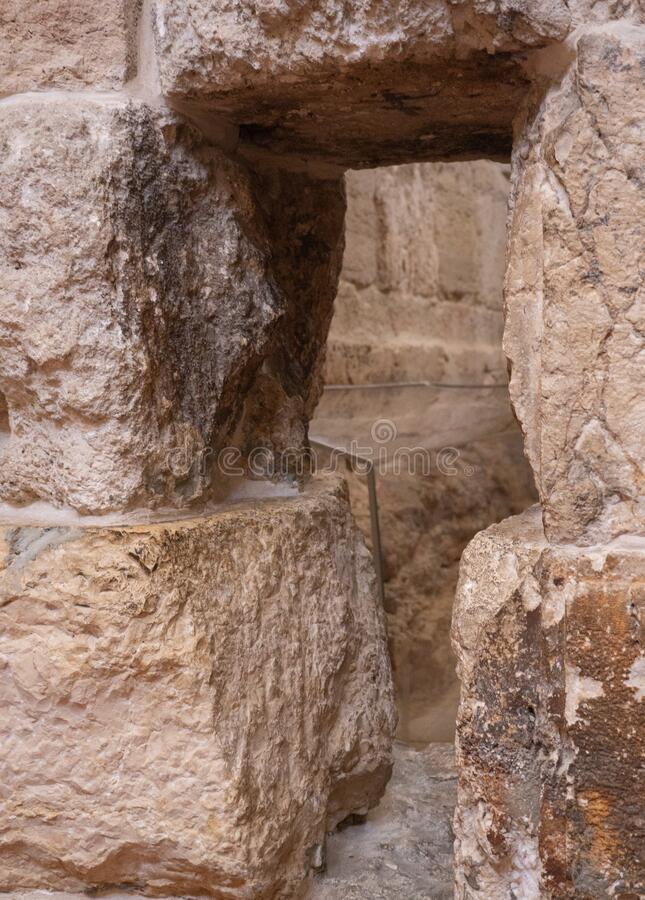



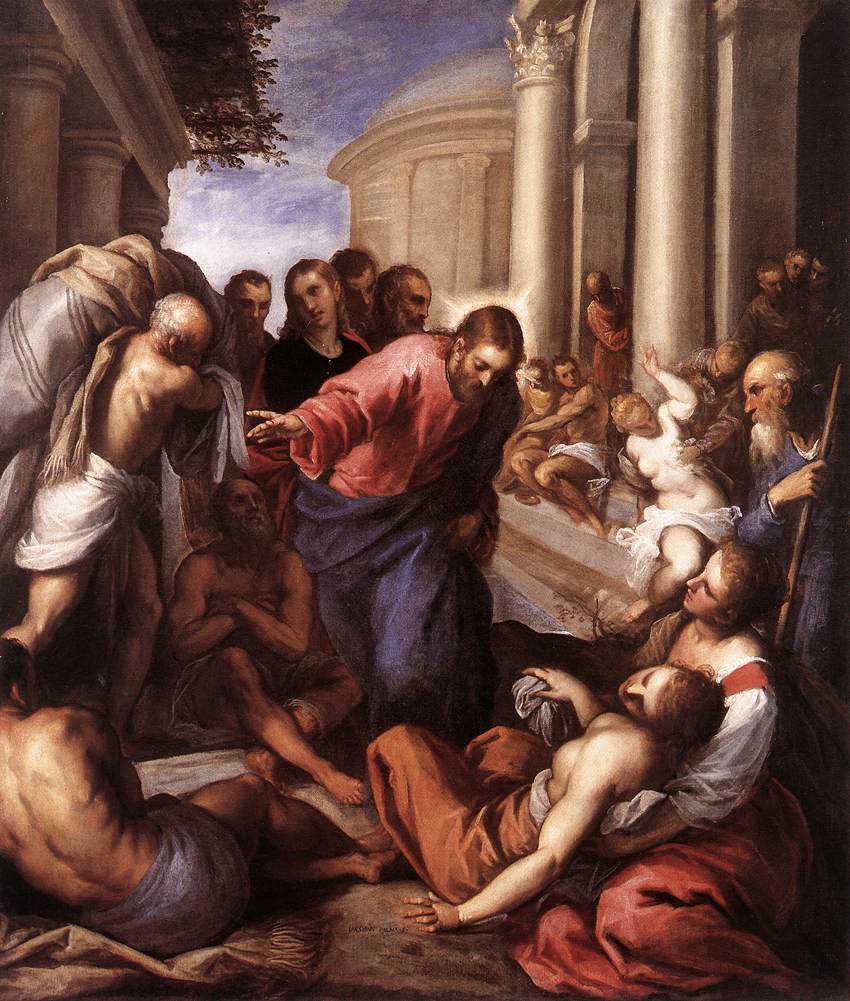


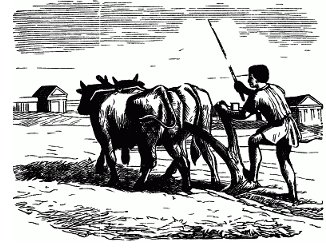




 The Maiden Warrior