The Long Swim to Shore: Part One

Following the Path

My husband and I officially entered pastoral ministry in the Wesleyan denomination in 1979. Little did we know when we entered the ministry that we were taking a front-row seat to witness the dissension that can accompany division that had begun to manifest centuries earlier in The Church. The Protestant mentality that spearheaded the schism in the Church was a protesting bent that was in keeping with the culture of the 1500s, authority was being challenged in the culture as well as The Church. At the time, it was referred to as reform by the protestors, but it played out just one rebellion after another against the Authority of The Ancient Universal Church that began with Jesus’ mandate to St. Peter and the other disciples just before His ascension.

You will receive power when the Holy Spirit has come upon you; and you will be my witnesses in Jerusalem, in all Judea and Samaria, and to the ends of the earth.”

Acts 1:8

Our denominational movement was one of the many spin-offs of rebellion, and it, like much of the Protestant movement, tended to disintegrate through protests that would rise up to the surface across the short history of a denomination. Within The Wesleyan Denomination, there was a spirit of protest: a Wesleyan church in Georgia could hold certain traditions as essential, while a Wesleyan church in California could pass them off as non-essential distractions. The absence of unity in our own denominational movement was disenchanting and embarrassing, yet it followed suit with the Protestant movement.

The paradigm of legalism that was typical for evangelical denominations until the 1970s would eventually shift to keep up with the culture; the “seeker-friendly” methodology was incorporated into nearly every facet of church life. Over time the denomination would follow the trend of the “Church Growth” movement that was big in evangelical circles in the ’70s and ’80s. Churches that used this formulaic programming promoted relevant preaching and had a preoccupation with worship styles that would meet people’s felt needs. When growing the Sunday worship attendance became the goal for the local churches, a subtle shift took place. Pastors needed larger portfolios: administration and management of local church endeavors required business savvy and a heavy dose of charisma. Churches had to be more “attractive” and “worship” more relevant. Members expected more interesting “experiences” on Sunday morning for themselves, their teenagers, their children, their toddlers, and their babies. A mediocre cup of coffee and maybe a donut or two were thought to make the trip to church more satisfying.

“[Worship] has been replaced by the yawn of familiarity. The consuming fire has been domesticated into a candle flame, adding a bit of religious atmosphere, perhaps, but no heat, no blinding light, no power for purification.”
–Donald McCullough

During the 1980s and ’90s, as evangelical and fundamental movements gained influence in politics and entertainment, churches seemed to take on more of a Christian country club mentality. Bigger is better! But what seemed to be getting big were egos and an inflated sense of entitlement among the members, pastors, and denominational leaders alike. We both started to question some of the bulimic fascinations with trends and methods for growing a church. The sense of spiritual starvation that was happening around us began to draw our own spirits toward a search for the sacred wisdom and understanding given to anyone who inclined their ears to the words of Scripture and the Sacred Tradition of The Faith.

Our desires to shepherd and care for the members of the churches we served were swallowed up by the pathology of Protestantism–dissension, division, and discord. Over our 34 years in service to the movement, we witnessed church splits over-inflated issues among members. We endured the loss of nearly half of a congregation in a week over the denomination’s stand against petty non-essential lifestyle commitments. We struggled to serve a church swept up in a vortex of political maneuvers that earned it a reputation for being hard on the pastors (and their families) who tried to serve them. And ours was not a unique experience! It was normal in many denominations to hear more about church divisions than anything else. Questions settled into our spirits that we found ourselves trying to answer more frequently the longer we served in ministry. Is there nothing sacred anymore? Where is a firm foundation of authority? What IS worship? What is the purpose of the Church?

The first great fact which emerges from our civilization
is that today everything has become “means.”
There is no longer an “end”; we do not know to wither we are going.
We have forgotten our collective ends, and we possess great means:
we set huge machines in motion to arrive nowhere.
–Jacques Ellul

Conversion, real conversion, requires pain and loss for transformation to be effective. And the years of ministry to our last church held many tipping points in our spiritual maturation. It has been said that doubt is the necessary partner to real faith. Though we often did not recognize at the time that the feelings we were having were caused by doubt, they surely served as stepping stones in our conversion through a deepening of our faith. The experiences were leading us away from the Protestant movement and bringing us closer to Catholicism, often without our immediate comprehension.

As I attempt to illustrate our spirit’s departure from the Protestant movement, I am very cognizant that the denomination we served is really no different than any other denomination or organization. It’s the human condition, but it is profoundly sad and disturbing when the same attitudes and pursuits of the world infiltrate the body of Christ where there is supposed to be unity. Churches, as well as organizations, contain posers, players, and bullies who attempt to exert their authority. Churches, as well as organizations, are made up of committed, uncommitted, and indifferent attendees who just want to come to church to worship God or to be a part of an organization to feel good about what they are doing and receiving from the church. Church life can very much operate as, and feel like, club life. The good, the bad, and the ugly. Our good experiences are filled with many acquaintances and several significant friends. Positive memories abound. Good people are everywhere. The bad and the ugly resulted from tensions mounting within the congregation, the denomination, and the Protestant movement

It was during our tenure at our last local church that we began to do more spiritual reading. Solace came through authors that appealed to each of our natures. My husband, Jeff, found significant help from authors who were outside our immediate denominational background. Eugene Peterson was especially helpful as his books dealt so much with the theologies of pastoral ministry and worship. Peterson’s writings were so often contrary to what Jeff sensed he was being pushed to believe in our local church and denomination. Denominational leadership bombarded pastors with articles, books, and conferences/seminars on leadership. Pastors increasingly were being compared to a CEO of major corporations. The insinuation or often direct teaching was that pastors were to lead like these business leaders. One particularly unsettling example of that focus took place during what was supposed to be a ministerial retreat. We both attended and were lectured on current marketing techniques that could be adapted in churches to make them more attractive and interesting. A “retreat” did happen in Jeff’s spirit! He began to see that many of the notions focused way too much on man’s abilities and too little on the enabling, equipping, and empowering gifts of the Spirit of God. He couldn’t put his finger on the source of the frustration rising up within him, but he did understand that there had to be a firmer foundation to give his loyalty to than the shifting sand we were sinking in in the Protestant movement. A straw that broke the camel’s back fell shortly before he decided to resign from pastoral ministry. Our denomination’s district leadership was intensely focused on expansion by numbers, so much so that an entire “state of the district” message was devoted to the “one thing” that is most important in the church. What was the “one thing” that should be central to worship? According to the predominant evangelical thinking and to our denominational leadership, it was doing everything we could humanly manage (read control) to get more people into the pews on Sunday morning. Of course, Jeff desired to touch people’s lives with the healing virtues of salvation. However, he knew that if worship of Almighty God was disordered by man’s preoccupation with success, there was no end to what could be conjured up, all in the name of evangelization. The ties of his loyalty to the denomination continued to loosen.

The growing frustration in Jeff regarding the attitude toward worship could not be ignored if he was going to maintain his personal and spiritual integrity. Gadgets, gizmos, and technology seemed to be abounding as if they pertained to the worship of Almighty God. The focus of attention was continually heightened on the pastor (as preacher/communicator) and the worship team (singers/musicians). Times of worship had to be slick, relevant, marketable, experiential, pleasing to all generations, and entertaining. In other words, man-centered. We both had come to understand, beyond a shadow of a doubt, that worship is something we give, not experience. Yet leadership believed a pastor was duty-bound to configure a worship service that “moved” attendees to “have some experience” with God. We disagreed. What had we come to? We both knew how we got there; we’d seen it unfold over our years of ministry in the denomination. Jeff began to doubt and question what he was witnessing. And he wasn’t sure that he could continue to stand by to see where it was all leading.

The longer we served the denomination, the more we found ourselves longing for worship that was saturated with the spoken word of God. We hungered for worship through thanksgiving and adoration of God’s saving work through Jesus Christ. The Old and New Testaments are filled with examples of what happened when men “exchanged the image of God” for the convolutions of man. Nothing is new under the sun. The results of false worship were and continue to be catastrophic to the people and to the generations that come after them! Worship must be Christ-centered, not man-centered. What did God think about the tipped-upside-down worship we conjured on Sunday mornings? We starved for authentic worship of the Triune God. Jeff had no idea then that we would eventually find biblically-ordered worship in the Catholic Mass. Worshipping in a Catholic Church wasn’t even on his radar screen at that time in our lives.

It was on my mind, though. One of the first books I read during those years of ministry in our last church was written by a Protestant. The author’s insights helped me discover more about meditation and prayer. But what astounded me were the rich quotes of people I had never heard about! The profound faith of writers such as St. Clement of Rome, St. Catherine of Siena, St. Bonaventure, St. Therese of Lisieux, and St. John of the Cross reached into my life and drew me back into the richness of the Sacred Tradition of the Catholic Church. And how had I never heard of Blessed John Henry Cardinal Newman?! As I began to read of Blessed John Henry Cardinal Newman’s conversion to The Catholic Church, I unknowingly stepped onto the long path of reconciliation with the Church. I could not comprehend the distant scene, but I was certain of every step. It wasn’t long before I devoured every book I could get my hands on about the Apostolic Fathers, early Church Fathers, and Saints of the Church.

The more we discovered about the fullness of the faith present in The Catholic Church, the more we searched. The morsels of beauty, goodness, and truth were like crumbs of bread, leading us down a path further into history. What we met on that journey was the transcendence of The Catholic Church, a light beckoning us deeper into the ancient Faith of The Catholic Church. Each step on the journey through our last ministry assignment was intensely humbling, yet our spiritual reading was astoundingly enlivening.

Drowning

Steer the ship of my life, good Lord, to your quiet harbor,
where I can be safe from the storms of sin and conflict.
Show me the course I should take.
Renew in me the gift of discernment, so that I can
always see the right direction in which I should go.
And give me the strength and the courage to choose the right course,
even when the sea is rough and the waves are high,
knowing that through enduring hardship and
danger we shall find comfort and peace.
–St. Basil of Caesarea

One summer in our last few years of ministry, we traveled to Maine to visit our son and his family. While on that vacation we rented a home on the beach. One afternoon Jeff and I decided to walk out during low tide to an island about a half-mile from the bay’s shore where we were staying. We began the walk feeling the weight of the condition of our lives like we had never felt it before. The heaviness in our spirits was nearly suffocating, but the walk soon turned into a refreshing and peaceful stroll through the low tide of water. We lingered at the island, walking the circumference of its shoreline and collecting shells as keepsakes to carry back in our bucket. After a while, we looked up at the sun’s place in the sky and decided to turn toward shore and begin the 1/2 mile hike back. We had misjudged the time and the distance that we needed to return to shore. Soon, we knew we were in trouble as the tide had already begun its return to the shoreline.

I am a lifelong swimmer and have often joked that in my past life, I was a mermaid since I feel most at ease in the water. I was a certified lifeguard, long-distance swimmer, and water exercise instructor for much of my working life, so the reality of the situation we were in was startling because I understood exactly what would be required of us if we were going to make it to shore. Jeff is not a swimmer; the gravity of the situation gripped him with fear as soon as his feet could no longer touch the ocean floor. Panic began to set in. As I judged the distance we had yet to go, about 1/4 mile, I quickly considered our alternatives. As a lifeguard, I knew that if I came into physical contact with him, his own natural fight-or-flight reaction could drive him to take hold of me. I had been trained to speak calmly to a drowning victim and, if possible, to extend a flotation device toward the victim. My presence and my calm voice were all I had to help him, and so I began to call to him to turn over on his back and stop looking at the shore, relax his body into the water, and allow the current of the waves to aid his arm movements, to look at the sky and follow my voice. He followed the instructions, all the while calling out, “Help us, Jesus.”

I let loose of the bucket filled with our ocean treasures and began to swim toward shore, every few strokes looking back at him and repeating the instructions, but each time I looked back, there was more distance between us, and his head was sinking further and further into the surf. My mind shifted between the knowledge that if I swam to shore for help he would probably drown, if I swam back toward him and attempted to take hold of him in the lifesaving grip, chances were strong that we would both drown. During those interminable minutes, I decided that I would swim back to him, and we would either survive or drown together. I would not leave him alone. Through God’s providence, I decided to allow my feet to drop below me before I swam to him, my toes barely brushed the ocean floor and I felt as all of heaven was surrounding us at that moment. I called to him, “I can touch, I feel the earth, relax, keep looking at the sky, reach toward my voice as you stroke your arms.” Someone on shore (we later learned her name was Angel) had heard my calls for help, saw we were struggling, and had been swimming toward us; she made it to us just as my husband had reached toward me and allowed his feet to drop. His adrenaline was doing all it could to move him toward life, but as soon as he touched me, he collapsed into our arms, and we dragged him to shore. That experience seemed to be the reality of our ministerial lives, drowning in tides that were against us; all attempts to keep our heads above the waters were sapping joy and hope from our lives, and we had no solid ground to stand on.

We returned from that vacation still very much unsettled, walking back into a current of “full catastrophe living” because our lives during the last twelve years of ministry seemed to be an unyielding tide of soul-shattering, life-altering circumstances in our private and vocational lives. There’s an old German proverb that goes something like this, “Sooner or later, a hush comes to every family.” We were living through extreme circumstances that brought a hush to our family, and we were grieving a deep and private loss that was profoundly life-altering. The loneliness, helplessness, and searing grief we felt tore at me like nothing I had ever experienced. The gravity of Christ’s suffering as the sacrificial Lamb for humanity’s sin is embedded in my heart. As we bore the weight of what sin had unfurled in our family’s life, we would never be the same. We often felt like we were drowning.

The church we served was mired in dissension My husband’s spirit–loyal and pastoral–began to diminish through a litany of demeaning circumstances in our service to the church. It was slowly pressing him toward deconstructing everything he believed about himself, his abilities and gifts, and his call. His devout faith in God and his commitment to daily immersion in prayer and Scripture reading, along with spiritual reading, served as his only source of spiritual refreshment and renewal. The evidence of the Authority of the Faith is still present in the Catholic Church, and the writings of Early Church Fathers began to draw his spirit, so much so that he quietly began considering his perspective on the Catholic Church. He was finding answers to the questions we both had about the purpose of worship in the Authority and Sacred Tradition of the Church.

Near the end of that season of our life, Jeff went away to a friend’s farm for a time of concentrated prayer and reading of the Scriptures to discern what God desired of him. He came home from that time away with the clear message from God that he was to resign from the church where we were serving. He also came home convinced that we needed some counsel on what to do because although he was certain he should resign, he was not certain how and when he should resign or whether he should take up another assignment.


The Right Time

Now after John was arrested, Jesus came into Galilee, proclaiming the gospel of God, and saying, “The time is fulfilled, and the kingdom of God is at hand; repent and believe in the gospel.

Passing alongside the Sea of Galilee, he saw Simon and Andrew the brother of Simon casting a net into the sea, for they were fishermen. And Jesus said to them, “Follow me, and I will make you become fishers of men.” And immediately they left their nets and followed him. And going on a little farther, he saw James the son of Zebedee and John his brother, who were in their boat mending the nets. And immediately he called them, and they left their father Zebedee in the boat with the hired servants and followed him.

St. Mark 1:14-20

Today’s gospel reading from St. Mark follows right after a messy situation that had gotten St. John the Baptist, the forerunner of Christ, arrested and eventually martyred at the hands of a tyrannical king. The gospel reading is also a turning point, a place marked in time and space (the right time) where a new king and a new kingdom, not of the world but of eternity, would rule.

On the heels of the arrest, the narrative immediately moves to Jesus proclaiming that the time is fulfilled, and the kingdom of God is at hand. What time was fulfilled? I’m not very good at keeping track of time or details or calendars; I’m just not! I don’t believe that Christ was looking at a calendar or triggered by a timer when he made the statement to the disciples. The time he was referring to is called kairos, time measured according to God’s providence. According to chronological standards, the Roman Empire occupied the land of Israel and cruelly ruled over God’s people (Does this sound familiar to you?) Jesus was drawing his disciples’ attention away from chronological circumstances into kairos, into the kingdom of God. Jesus’ proclamation of God’s kingdom sounded nothing like their reality, but all who followed him began to see the possibilities of peace and contentment, forgiveness and healing, hope and mercy.

The gospel reading includes a detail that is a very Chronos thing to do, “…he saw James the son of Zebedee and John, his brother, who were in their boat mending the nets.” Mending nets calls to mind the “the stuff of our ordinary and often disappointing human experience” that Eugene Peterson eloquently writes about in many of his books.

God’s Word reveals how the stuff of our ordinary and often disappointing human experience is the very stuff that God uses to create and save and give hope…nothing is unusable by God. The LORD uses everything and everybody as material for his work, which is the remaking of the mess we have made of our lives.

Just as Peter and Andrew and James and John lived in an appointed time and place, doing the stuff of the ordinary day-to-day life, Jesus comes to us with the same proclamation, “the time is fulfilled.” Sooner or later, we all become dissatisfied with an ordinary that is not united with God’s extraordinary Kingdom. Fulton Sheen wrote that,

“..all the human satisfaction of the cravings of the body and soul have one defect; they do not satisfy forever…[we] restrict ourselves to [ways and means] that will never completely satisfy.”

Jesus desires to withdraw us from the corruptible to the necessary–“the one thing”–the abundant life where worth and success aren’t measured by clocks and calendars. In telling the fledging disciples to leave everything that is under their control for he would make them fishers of men evokes the Kingdom of God’s law to love him with all our heart, mind, body, and strength and to love others as we love ourselves. It’s the abandoning of our self-control and our notions of satisfaction that draws us into the counterintuitive practice of detachment from all things to follow Jesus, our Savior, into our kairos identity.

Jesus calls his disciples to repent and believe in the gospel. Changing our minds about how we live in Chronos-time requires the power of the Holy Spirit rearranging our mindset. Perhaps you struggle to see the draw of following Christ as satisfying. Perhaps you enjoy mending nets far too much to think about the good Jesus has in store for you. Perhaps you don’t see the need to repent of anything.

Or perhaps your eyes are fixed on what is happening around you in society, and it causes you to fear. Maybe the thoughts about the trajectory of our government mess with your understanding and faith in the LORD’s providence. Perhaps the lackluster mending of nets causes you to doubt the LORD’s presence to you. Perhaps you haven’t repented of your emotions, and you can’t see how Jesus can satisfy you.

Jesus comes to each of us in the time and space we are in, and he asks us to follow him. The way we follow him makes all the difference. Whether we are satisfied with life or dissatisfied with life, Jesus aims to lead us to the Kingdom of God where satisfaction, joy, and fulfillment are out of this world!

Oh, Jesus, you know us; you created us. You know how taken up we can be by what is happening around us, whether we enjoy it so much that we ignore you or whether we fear it so much that we doubt you. LORD, would you draw us into your Kingdom here on earth as it is in heaven?

We ask this in the Name of the Father, and the Son, and the Holy Spirit.

As it was in the beginning, it is now, and ever shall be, world without end.

Amen

Light

I kindle to light (pun intended)–bright sunshine, the liminal light of a candle, twinkly lights on a Christmas tree, and I even like flashlights. My appreciation for flashlights increased during a recent visit to one of our children’s families. During the first night, I groped my way through a dark hallway to the bathroom, and I stepped onto some stray legos! Let’s just say the words that escaped my mouth are not a part of my day-to-day vocabulary. The next time I got up during the night I used my phone’s flashlight app to light my way. That memory came back to me this past week as I’ve contemplated the many scriptures in the daily readings that drew our attention to a theme of light. I, like the Israelites, can lose myself in groping around in a conjured darkness of my mind or emotion. Have you been there, too? You know what I’m getting at: a spiritual night falls, and you keep stepping on stray pieces of regret or careless words that linger from time already passed. St. John wrote:

“God is light, and in him, there is no darkness at all…walk in the light.”

I John 1

The Light that God sheds on us abides no darkness; he desires that we walk in his Light. Walking forward rather than stumbling around in our darkened understanding requires increased faith that God’s Light became flesh and lived in the darkness with us. Walking forward requires remembering that the LORD has walked the path before us, dazzling this dark world with hope, mercy, and grace. Jesus absorbed all the darkness of the world for us so that his Light would banish our darkness, lightening our way and enlightening our hearts and minds! Much more than that flashlight did for me in a darkened hallway.

Yesterday we celebrated The Feast of the Epiphany, which was the manifestation of The Light of the World, Jesus Christ, to the magi. Great timing! Niggling thoughts about the purpose of life tend to crowd into this time of year as we cross the threshold of a new year. Those thoughts may be caused by the anticipation of what might be ahead of us or what is behind us. This yearly exercise of self-examination needs a light that is not of this world; we need a new Light; so to speak. We need the Light of the World to grant us the peace of mind that he alone can give. A peace that is enduring and stable no matter what day of the calendar year it may be. St. John wrote to The Early Church:

“Beloved, I am writing you a new commandment to you, which holds true in him and among you, for the darkness is passing away, and the true light is already shining…remain in the light

I John 2

That small word, “remain,” is the kindling for the light God alone gives in every moment that passes. Do you have moments where the thoughts of the past and future threaten to extinguish trust in the true Light of Life? You may even be thinking those thoughts right now as you look at the calendar for 2022.

I came across a phrase a while back, “Don’t fetch fears.”  As I learn to “remain” with the LORD present in each moment, I recognize how pointless it is to fetch fears about the unknown. I can picture the times when one of our children would run into my arms out of fear of something; I didn’t pooh-pooh their fear because I knew how fear felt. No, I would soothe them with a back rub and quietly hold them while their heartbeat slowed and their body relaxed into my arms. The heavenly Father is in the present with us, but we, like children, can be held captive by our fears when we fetch all kinds of what-ifs, can’t we? I imagine that the LORD responds to me in the same way as I did to my children’s fears. Shhhhh. Remain here in my arms, dear daughter.

Here’s another phrase I came across that assists me in learning to remain present to the LORD. “Don’t stumble on things behind you.” I’ve wasted many moments consumed by the past; something I said or didn’t say, or something that I did or didn’t do, or something that happened or didn’t happen to me. Even great memories from the past can cause me to stumble. Years ago, we moved from one part of the country to another. We left behind my dream home, cherished friendships, and a great climate that didn’t include arctic winters. The transition was hard on me for a lot of reasons. I wasted many moments thinking about what was behind me instead of what could be in the present. I was stumbling around with self-pity, anger, and resentment about why the LORD had changed things so dramatically for us. Words from an oracle of Jeremiah’s tiptoed into my snagged emotions as I prayed one day, which changed my perspective entirely!

Thus says the Lord:
Stand at the crossroads, and look,
    and ask for the ancient paths,
where the good way lies; and walk in it,
    and find rest for your souls.

Jeremiah 6:16

When I allowed myself to look at the ancient paths God walked with his people in the Old Testament, sunshine broke into my restless emotions because I realized that the good way, the good life, that God grants is not about where I live or how comfy my life is. The rest my soul desired settled in once I stopped stumbling on things behind me.

I’m wondering Friend if you share some of my struggles? As the dawn of the new year is breaking open before us, are you groping your way through emotional or spiritual darkness, stepping on the sharp edges of an untended life?

Jesus, true light, illumine our darkness.

Is fetching fears a pass-time for you? When we’re preoccupied with the “what ifs” of life, so consumed by those thoughts that we even worship them with our unconscious and conscious thoughts, we only need to invoke the Holy Name of Jesus into our thoughts, and he will pierce our self-imposed darkness. 

Jesus, God of peace, fill us with your peace.

Do you find yourself spending more time looking back or looking ahead as a way to distract you from where you are? The disordered attachment to what was or what might be cast a shadow over the present. That’s not where Jesus has fixed his gaze; why do we? 

Jesus, our way and our life, fix our gaze on You.

In the name of the Father, and the Son, and the Holy Spirit.

As it was in the beginning, it is now, and ever shall be, world without end.

Amen

My Passion

Steer the ship of my life, good Lord, to your quiet harbor, where I can be safe from the storms of sin and conflict. Show me the course I should take. Renew in me the gift of discernment, so that I can always see the right direction in which I should go. And give me the strength and the courage to choose the right course, even when the sea is rough and the waves are high, knowing that through enduring hardship and danger, we shall find comfort and peace. –St. Basil of Caesarea

Greetings, beloved.

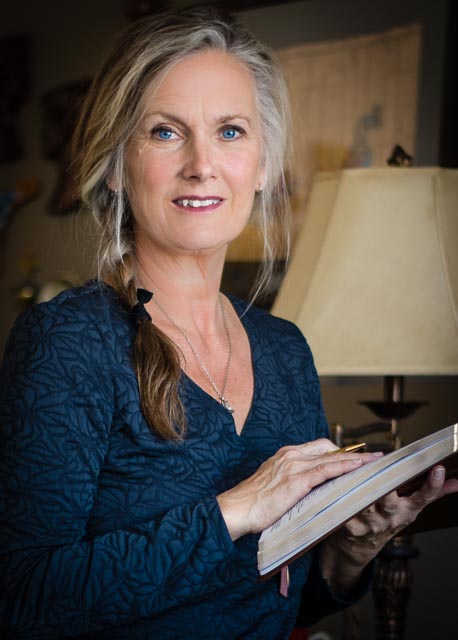
The motivation for beginning this blog is a simple desire to pass on to my family the lessons I have/am learning in the great exchange of living into my identity as a beloved daughter of the Most High God. “LORD”, is the name I speak in my daily conversation in this divine intimacy. Why? It invokes the sacred response I desire to live as a daughter of the KING of kings. This place you have found or even stumbled upon is an offering of my thoughts and prayers to my family in my desire for the LORD–to know Him and to become one with Him. The long passage of time, 63 years to be exact, “has been a long obedience in the right direction” that is slowly and steadily steering me to the quiet harbor of peace. This is the inheritance I want to leave my family, nothing I own is more valuable to me than this.

I am a woman, a beloved daughter of the LORD

….endowed by our Creator for such a time as this. We all are! I can’t unpack your endowment, only the LORD can do that for you. I’ve learned this truth through shiploads of experiences that ride the tides of my life. I have hope and encouragement to share

….endowed with a creative imagination that is the blessing and bane of my existence. I have a few thoughts to share.

….endowed with a zeal for the fullness of The Faith that consumes me. The journey that began in climbing a fig tree when I was four still leads me to sacred ground where I hear the whisper of my Beloved to come away and meditate on His Word and learn from the Salvation History that is my inheritance. Ever fresh, ever calling, ever wooing me upward and onward. I have many thoughts to share.

….endowed with a melancholy and introspective spirit that desires to see beyond the scrim of this world’s reality into the heart of God. In truth, I have been climbing fig trees all my life. The view is bewildering sometimes to me yet it is always a panorama shrouded with the holy, I have many thoughts to share.

….who battles over-weaning pride. The besetting sin of my life is the thorn in my flesh, but for the most part, the “thorn” is an instrument that the Holy Spirit re-fashions to humble me and transform my flesh into more of Christ and less of me. I have bundles of hard lessons to share.

….who is still carrying baggage from my past. I believe we all do. I can only offload the content of the bags as I live life. In the past I had often been told I’m too much or I’m not enough–that pretty well sums up what’s in the bags. It’s taking a lifetime to empty the bags. I’m becoming lighter as I travel, but that is only through the power of the LORD’s healing remedy; because of this I am able to consistently discard from my life the power of the voices that spoke those lies to me I have batches of thoughts to share.

I am a wife–

I have been married to Jeff for 44 years (1978). Those 44 years of living with and loving the one human who knows me best has been an incubator of sorts for nurturing in me a better me that I could have never become without the grace and balance that Jeff has modeled to me. I have many thoughts to share.

I am a mother–

Together we raised 3 children and I marvel how the LORD has used my vocation as “mother” to teach me the beauties of Him as my Father. And now, at this stage of life, our children and their spouses are teaching me in their own ways the grace, mercy, and humility that I so very much need. I have many thoughts to share.

I am a grandmother–

To date, we have 16 grandchildren between our three families. Some of the most beautiful glimpses of eternity and the LORD’s great love for me have come through them. I have many thoughts to share.

The Long Swim to Shore, Introduction

“You’re doing what? Going over to the Catholics!”

[I’ve decided to add to my blog this memoir of my husband and my journey to The Roman Catholic Church for two reasons. The longer I am Catholic the more I realize how frustrating it can be for a Catholic to share the Truth, Beauty, and Goodness of The Faith that is intact in the Roman Catholic Church with Protestant Christians. I pray that what follows will grant some insight into Evangelical as well as mainline Protestant thinking. Secondly, I’m including this for all Protestant Christian readers who may be bewildered by what they think they know about The Roman Catholic Church. I am praying it will give you, the reader, a bit of insight into what, by the grace of God, we discovered and why I zealously share the Truth, Beauty, and Goodness of the One Holy Catholic and Apostolic Faith present in the Roman Catholic Church through this blog, podcasting, and teaching. Our journey has given us more security, peace, and contentment than we ever knew as Protestant Christians. In sharing this, I do not intend to cause unusual angst to my fellow Protestant Christians. However, I want to compel my fellow Christians (Catholic and Protestant) to consider The Faith in its entirety, for, at some point, we all must come to a firm conclusion on what we believe and why we believe it. This story will be shared over a series of blog entries. I will delineate each blog after this introduction with an added “Part One, et…]

The responses to our reconciliation with the ancient Faith in the Roman Catholic Church ranged from support to surprise, bewilderment, and even anger. It’s not every day, or at least people think it’s not every day, that a Protestant pastor decides to reconcile with the Mother Church, The Catholic Church. But in fact, there are thousands of Protestant pastors and Protestant laypeople reconciling with The Church every day; there is a groundswell that is giving way to the tectonic shifts of The Faith.  We are a part of that groundswell, a quiet yet unstoppable wooing of the Spirit in the hearts of mankind.

Our decision to reconcile with The Catholic Church was actually the result of a lifelong conversion of mind and heart through the circuitous path of ministry in the Protestant movement. Our progress toward the ancient Church was early-on without an immediate comprehension that The Catholic Church would be our eventual destination. We hungered and thirsted for more substance and stability and so we searched hard and long. As Friedrich Nietzsche once put it, “The essential thing ‘in heaven and earth’ is….that there should be long obedience in the same direction; there thereby results, and has always resulted in the long run, something which has made life worth living.” Together, our “long obedience in the same direction” led us on a happy, sometimes discouraging, trek to the sure foundation of The Catholic Church and it has certainly made life worth living! Our steps on this journey away from the shifting sands of the Protestant movement gradually turned into leaps toward the solid foundation of the Catholic Church the longer we served in our 34 years of service to our Protestant denomination. It is here that we discovered that the beauty, goodness, and truth of the Faith remain intact, and flourish in our world today. But there was a “meanwhile” on that journey that drew us through the desert of discontent.   It is that desert wandering that forced us into a resolve that looking back now makes sense, but at the time we were just trying to survive the disarray in the Protestant ministry.

There are certain observations my husband and I both share about what we have witnessed in our service to the Lord in formal ministry within the Protestant movement.  Our Lord drew us both at different times and in different ways into the fullness of the Faith that we have found in The Catholic Church.  Life unfolded by simultaneously removing our spirits from the Protestant movement and beckoning us into The Catholic Church. My motivation behind including this blog on The Maiden Warrior is that I desire to answer the question,  “Why have you reconciled with the Catholic Church?” I will follow Lewis Carroll’s advice to begin at the beginning and go on until I come to the end; then I will stop. Well, actually I will just be beginning.  

The Beloved: Feast Day of St. John, the Evangelist

When I realized that today is the feast day of St. John the Evangelist, and that I am privileged to share my thoughts about St. John, I didn’t know where to start! The Holy Spirit has guided me in my journey into the fullness of our Faith using the incredible gift we have in St. John’s contemplative narration of Jesus’ life as well as his letters to the Early Church. St. John’s gospel is quite different than the other three; it is more like a conversation between friends. Yes, we observe Jesus’ compassion and passion as Jesus spoke his salvation into others, but St. John draws us to see Jesus right here, right now in our daily round. Salvation is a noun, yet as we live our life, it is a verb that unfolds through the extremes and the mundane of our life. I need that reminder so that I will allow myself to be saved from myself through living my ordinary life. Learning to live intimately inclined to Jesus as the Lover of my Soul has been a hard-fought battle. It wasn’t until I reclined in conversation with the Jesus of St. John’s gospel that I saw him beholding me!

The next day John again was standing with two of his disciples, and as he watched Jesus walk by, he exclaimed, “Look, here is the Lamb of God!” The two disciples heard him say this, and they followed Jesus. When Jesus turned and saw them following, he said to them, “What are you looking for?” They said to him, “Rabbi” (which translated means Teacher), “where are you staying?” He said to them, “Come and see.”

Seeing or beholding is a prevalent theme St. John uses throughout his gospel narrative. He begins his gospel with the words, “In the beginning was the Word, and the Word was with God, and the Word was God…What has come into being in him was life, and that life was the light of all people. The light shines in the darknessand the darkness did not overcome it…And the Word became flesh and lived among us, and we have seen his glory.” St. John proceeds to narrate the fullness of this truth by pleading with us to “come and see”; to behold our Savior through contemplation.

Take a moment to place the palm of your hand close to your face. What do you see? What can’t you see? In essence, what St. John is asking us to do is to pull away OUR palm (our SELF) and see what lies before us. Do you have trouble with your vision? Is it hard for you to see the life our Savior desires for you? I’ve struggled most of my life to look for God with my palm in front of my face. Through tremendous healing, I learned to remove my palm from my vision. Beholding the LORD through John’s eyes was transforming. What I saw in that light was that I am the beloved daughter of the Most-High God. I kindle to that word, “beloved.”

Today’s mass readings include a passage from one of St. John’s letters to the Early Church that begins with the greeting, “Beloved,” and concludes with, “We are writing this so that our joy may be complete.” Isn’t that what we long to know? That we are beloved and that our joy can be complete. Seem’s impossible sometimes, does it not? How do you feel about yourself and your life right now, right this minute? Is there a permeating understanding that you are God’s beloved and that joy is complete because of it? Or are you still waiting for some next thing to make you feel Beloved and joyful?

Beloved:
What was from the beginning,
what we have heard,

what we have seen with our eyes,
what we looked upon
and touched with our hands
concerns the Word of life —
for the life was made visible;
we have seen it and testify to it
and proclaim to you the eternal life
that was with the Father and was made visible to us— 
what we have seen and heard
we proclaim now to you,
so that you too may have fellowship with us;
for our fellowship is with the Father
and with his Son, Jesus Christ.
We are writing this so that our joy may be complete.

I John 1:1-4

Eugene Peterson wrote that the two most difficult things to get straight in life are love and God. Do you agree with that? I’ve come to believe it to be true in my own life. I know how messy my understanding of God has been and how that affected how I received his love and gave love to others. Is it just me, or do you struggle to detach “love” from approval and performance from abuse or neglect? For much of my life, I saw God as Judge, period. It wasn’t until these later years of my life that I’ve allowed myself to consider God as Lover, it has and continues to save me!

A turning point for me was a moment I shared with our eldest grandchild when she was eight months old. I was taken up in the wonder of Margot, the dimples on her tiny hands that would one day emerge as knuckles, her blue eyes that were so much like our sons, every detail of her existence swept me up in a love that only a grandparent can know for a grandchild. I adored her as I had never adored anyone else! We sat alone one day on the floor as she watched a Baby Einstein video. Observing her delight in the show caused me to delight. She would turn to me and look at me and smile and giggle, then point back to the television as if to invite me to watch the show with her. Into those moments, I dropped that proverbial palm from my face, and the LORD spoke very clearly to me, “Lois, I know that you could gaze at Margot for a long, long time, you would move heaven and earth for Marguerite to remain safe and secure in your presence and your love for her. Lois, I adore you more than you can adore Margot. I enjoy you; you are a pleasure to love; you are MY beloved daughter! Will you adore me as I adore you?” Tears poured from a wound that had never healed, a wound caused by conditional love and harsh judgment, a wound that infected my understanding of God, my Father. What followed was a journey guided by St. John’s gospel and letters.

God is love. When we take up permanent residence in a life of love, we live in God and God lives in us. This way, love has the run of the house, becomes at home and mature in us, so that we’re free of worry on Judgment Day—our standing in the world is identical with Christ’s. There is no room in love for fear. Well-formed love banishes fear. Since fear is crippling, a fearful life—fear of death, fear of judgment—is one not yet fully formed in love. We, though, are going to love—love and be loved. First, we were loved, now we love. He loved us first.

I John 4:17-19 (The Message)

I’ve learned that God desires to dwell with ME! Where once I felt I had to get things just right, say the right things, look the right way, perform in a certain way, I now see him sitting on the floor beside me. He doesn’t reject me; he adores me! There is nothing that would ever change his mind about me.

Friend, do you have a wound that festers in your life? A wound that blinds you to the truth of God’s love for you and infects how you love others. God adores you!

What are the messes you have made because of your fear that God will not come through for you or that you have to earn his love? God still adores you!

Does your fear, your pride, or your anger cripple you? Stand in line. Our first parents acted on their fear but God still loved them. God did, God does, and God will always adore you!

Lover of our Soul, teach us to see you; to behold you; to adore you!

In the name of the Father, and the Son, and the Holy Spirit.

As it was in the beginning, it is now and ever shall be, world without end.

Amen

WAITING

I have learned to appreciate the posture of waiting over the last decade or so of my life. There are all kinds of waiting, but there is the silent waiting and yearning to see God come through for you. Sometimes our pain or desire is so private that we can’t bring ourselves to voice to the LORD what is so horrible or magnificent to contemplate. That is where I found myself about ten years ago during the Advent season-a tragedy in our family that turned our world upside down. We were robbed of hope and trust, and in exchange, grief so heavy to bear set into our lives for years. St. Paul reminds us that the Spirit of God knows the groanings of our hearts, good thing, for during that time in my life there were no words to form into prayer. Yet the LORD knew and he miraculously brought about healing and restoration, not instantly, but in his good time. Friend, do you ever let out a deep groan of pain over loss in your life? Or do you treasure some dream that you don’t dare put to words for fear of rejection or failure? I believe we’ve all been there from time to time.

I came across this quote a while back, “We can wait empty, or we can wait full. It all depends on what we do with the time. Those who wait empty get irritated or dissipated. Those who wait full get richer as time goes by. Those who wait empty; wait aimlessly. Those who wait full do something that changes them by the time they get what they are waiting for.” I like that! It is a constant reminder to me to take a deep breath, step back, and allow the LORD to reveal himself when he desires so. And he always does, not dramatically, but over time his recompense comes, steadily and surely out of ashes beauty emerges.

Have you noticed how much the Church turns our attention to Isaiah’s oracles during this season of Advent? The Holy Spirit inspired Isaiah to deliver the oracles about the coming of the long-expected Messiah with a familiar preamble of “On that day.” Isaiah’s words offered hope for the coming day that the LORD had ordained from the beginning. Isn’t that what we all need when we wait for God’s intervention in our circumstances? Isaiah wrote:

“It will be said on that day,
    Lo, this is our God; we have waited for him so that he might save us.
    This is the Lord for whom we have waited;
    let us be glad and rejoice in his salvation.”

Isaiah 25:9

About 400 years of suffering in the darkness of the times ensued after the Old Testament period. The waiting was rife with the unremitting hopelessness of the human condition. For the Jews, they endured without a word from a prophet. Some waited empty–embittered by persecution and subjection but, there were a few, a remnant, that refused to lose the gift of expectancy, even when all signs pointed the other direction. They waited full of hope, HOPE in God, to reveal himself as the promised Messiah.

Then, one night in a forgotten town in a forsaken country, the Messiah made his humble entrance into the world in the most ordinary way–a birth. Six pounds of pure flesh filled the emptiness of the world! The scriptures say, “In the fullness of time…,” The Sovereign LORD knew what had to be fulfilled before he incarnated himself into our darkness. I also think he came because of those waiting full; the moment was according to plan, the right humans were in place. They saw hope revealed because they never lost sight of the truth that God is good! How they waited made all the difference for them and the rest of history.

I wonder, friend if during this particular Advent you are facing circumstances where the malignant enemy of despair has you in its clutches. You aren’t alone, many stand as witnesses before you to show that waiting was eventually satisfied and hope eventually fulfilled. Hope sometimes comes immediately, other times it unfolds as the years go by. What seems dreadful to us can come to life through the power of that 6 pounds of flesh incarnating himself into our humanity.

In these days of Advent, a season of waiting and penance, as we prepare to celebrate Christ’s first coming, let’s remember that He waits to be invited into our flesh and into our weakness in, the second coming of sorts. Come, LORD Jesus, we wait for you!

Perhaps the garish display of unforgiveness in our lives hides the wisdom of our Wonderful Counselor as he waits for us to invite him into our relationships. Come, LORD Jesus, we wait for you!

Our Mighty King may be waiting for us to stand down from our pride and fear and fall to our knees in complete surrender to his sovereign will in our lives. You may have a desire that is voiced only to the LORD, he hears your heart. Come, LORD Jesus, we wait for you!

Could it be that the Prince of Peace sits with us ready with his oil of peace to anoint every nook and cranny of our spirits with the peace that surpasses all understanding? Come, LORD Jesus, we wait for you!

Our Mighty God is mighty to save us from ourselves, which can be our worst enemy. He waits for us to stop striving to be junior Holy Spirits for the circumstances and relationships of our life. Come, LORD Jesus, we wait for you!

Everlasting Father, your psalmists so often proclaim that in silence and rest we enter into your presence. You know just how hard it is for us to wait, worse yet, to trust you will come through for us. Why do we doubt what has already been given to us in your incarnation into our flesh? You suffer with us, you celebrate with us, you redeem us. Come, LORD Jesus, we wait for you!

In the name of the Father, and the Son, and the Holy Spirit. As it was in the beginning, it is now, and ever shall be, world without end. Amen.

In the name of the Father, and the Son, and the Holy Spirit. As it was in the beginning, it is now, and ever shall be world without end.

Amen.

Making Room for Christmas

I’m making room for Christmas in all sorts of ways. I’m finding more hours in my days to clean and scrub, deck the halls and trim the tree. My rooms will be clean and ready to welcome holiday guests.

I’ve cleared some room on my counters to hold all the sweet treats I plan to make in the room I make for Christmas. With my grocery list in hand, I’ll scan the market aisles and find all my ingredients and even some more along the way. I’ll slice, and I’ll dice. I’ll bake, and I’ll shake as I make room for Christmas.

With each treat and hors d’oeuvre that passes my lips, I’ll find room in my stomach and some on my hips. Then when I find there’s no more room in my clothes, I’ll find more room in my days to work out at the gym. I’ll jog ’til I faint, lift weights ’til I ache. I’ll dance ’til I’m trim or maybe go for a swim. If that all fails, I can always shop ’til I drop for clothes that will fit; I’m sure the credit card company will happily help me find more room for holiday excess. An increased line of credit is their promise–somehow, I think I might regret it come January when I’m no longer making room for Christmas.

Maybe I’ll remember to make room in my schedule to hold a quiet vigil on the night before Christmas. I’ll remember the Savior and ponder His birth. Why was there no room in the inn, I’ll wonder to myself? Who doesn’t have room for Jesus?! But I don’t have any room to consider that right now. I have gifts to purchase, parties to attend, and neighbors to impress. There are roomy stockings to stuff and cards to send. But what’s this feeling settling into my chest? I can’t seem to breathe.

What’s that I hear? Is it you, Savior in a cradle? Or is it your Blessed Mother that proved able to carry Christmas to the world from a stable? Ah, it’s Blessed Mary, Mother of God, adoring You, treasuring all that You gave on that first Christmas and pondering it in her heart. As you filled the empty room of this world with Your presence, she knew where to start, “My soul magnifies the Lord, and my spirit rejoices in God my Savior!”

Could it be that all my business is just crowding the room in my soul that only You can decorate? Could it be that all my indulging leaves no room for you to feed my deep hunger? All this clutter just makes me mutter, “Is this all there is?” And then I remember the words of the prophet,

…the Lord himself will give you a sign. Look, the young woman is with child and shall bear a son, and shall name him Immanuel.

Isaiah 7:14

For a child has been born for us,
a son is given to us;
authority rests upon his shoulders;
and he is named
Wonderful Counselor, Mighty God,
Everlasting Father, Prince of Peace
.

Isaiah 9:6

Savior of the World, you emptied yourself and came into a world crowded by agitation and discord, a world that chased after other shiny things to satisfy the ache in their soul. A world of useless endeavors for peace and contentment, joy and hope. Come into me.

Wonderful Counselor, guide me as I empty my life of futile endeavors.

Mighty God, reveal all the shiny things I strive after that are nothing more than just idols that twinkle and glimmer.

Eternal Father, fill the room of my heart with the everlasting gifts of Your Spirit.

Prince of Peace, teach me to ponder the gift of You to the world and treasure my salvation.

Immanuel, God with us, I magnify You and my spirit rejoices in you my Savior.

In the name of the Father, and the Son, and the Holy Spirit. As it was in the beginning, it is now, and ever shall be, world without end.

Amen.

“The-Saint-Who-Stocks-Me”

Remain in Me. It is the Word of God who gives this order, expresses this wish. Remain in Me, not for a few minutes, a few hours which must pass away, but remain… permanently, habitually, Remain in Me, pray in Me adore in Me, love in Me, suffer in Me, work and act in Me. Remain in Me so that you may be able to encounter anyone and anything; penetrating further still into these depths. This is truly the ‘solitude into which God wants to allure the soul that He may speak to it,” the prophet sang.‘”

–St. Elizabeth of the Trinity

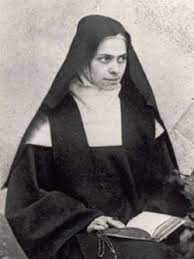
I was visiting a friend recently, and I noticed a new picture on her wall of one of the Saints of the Church. I commented on it and asked if the saint was her patron saint. She replied, “No, it’s The Saint-Who-Stocks-Me!” She went on to explain how the writings and prayers of the saint had compelled her so many times in her walk with the LORD. I knew what she was getting at because I had had the same experience with St. Elizabeth of the Trinity. I had talked with my spiritual director about how the timeliness of St. Elizabeth’s prayers and letter at a point in my life was a surprise blessing for me. She said that St. Elizabeth had chosen me. My experience confirmed what she said. And now, since hearing my friend’s title for the saint on her wall, I refer to St. Elizabeth as The-Saint-Who-Stocks-Me. Her prayers have so melted into my prayers that, at times, I’m not sure who’s voicing my prayer, me or St. Elizabeth through the power of the Holy Spirit praying through me!

It’s been three years since St. Elizabeth began stocking me. You see I had reached a point in my life where after three surgeries to give me relief from a genetic disease failed to stay the deterioration of my physical abilities. I was in a dark place, unable to see any good coming out of the physical suffering. I was more focused on what I had lost than what I might find. And then came St. Elizabeth of the Trinity, offering me insight and wisdom from her physical suffering with Addison’s disease that eventually took her life at age 26 in 1906. Me, I suffer because of loss of ability and chronic pain, but it is unlikely I will end in a physical death because of it. I had so much to learn and so much joy and hope yet to discover! St. Elizabeth stocks me as a persistent companion along the path of holiness.

The first words recorded from her final days begin with the Latin word, Nescivi–“I no longer know anything.” That’s quite a declaration coming from a nun who consumed the Word of God as breath itself! I think, though, I know what she was getting at. We come to the place in life where we realize all that we thought was sure, dependable, and controllable illudes us. I echo her thoughts, for I no longer know anything that I thought I knew before permanent deterioration set in. Have you been in a place where your spirit screams Nescivi? We can say with St. Elizabeth in response to an altered reality, “I no longer know anything. I do not want to know anything except ‘to know Him, to share in His sufferings, to become like Him in his death.'”

The LORD’s ultimate goal for us is to conform us into the image of Jesus, our LORD with skin on. How he allows life to unfold to accomplish that perfection in us varies, but it will always include suffering in some form or another. According to the letter to the Hebrews in the New Testament, God redeems suffering: “It was fitting that God, for whom and through whom all things exist, in bringing many children to glory, should make the pioneer of their salvation perfect through sufferings.” St. Paul wrote to the Colossians, “I am completing what is lacking in Christ’s afflictions for the sake of his body, that is, the church.” As uncomfortable it is to take in this truth, it does offer hope. My physical suffering isn’t unique when I consider this truth, and learning from St. Elizabeth’s short life is how the LORD opened my spirit to acceptance of life as it is and freedom from the futile doubting that delays spiritual transformation.

St. Elizabeth prayed, “O my God, Trinity whom I adore, help me to forget myself entirely so as to be established in you as still and as peaceful as if my soul were already in eternity. May nothing be able to disturb my peace…” She desired that every moment of suffering from Addison’s disease carry her into the depths of God. She asked Him to pacify her soul and make it His heaven. When I read that, I regretted the time I had wasted being agitated by what God had allowed in my life. I began to recognize that He chose me as his beloved daughter, and nothing escaped his divine plan for me. I began praying with St. Elizabeth in her prayer, “Come into me as Adorer, as Healer, as Savior. O Eternal Word, Word of my God, I want to spend my life listening to you; I want to be completely docile, ready to learn everything from You. Then, through all nights, all voids, all weakness, I want to fixate on you always and to remain under your great light.” 

What about you, friend? Is your spirit bogged down in the miry clay of disappointment and regret? Do you wonder if God is a loving God intimately acquainted with your existence? The Saints of the ages have suffered and questioned God’s love, too. They stand as witnesses to us, sometimes weeping with us, sometimes instructing us, always cheering us on in the good fight of Faith in God. The Saints do stock us because they have eternity’s perspective to offer us if we will but seek the LORD in the Communion of Saints.

Dear loving Father, into your hands we commit our spirits.

In the name of the Father, and the Son, and the Holy Spirit. As it was in the beginning, it is now and ever shall be, world without end.

Amen.

Friends in High Places

The saints have always known that the power of good is something incalculable.

–Sigrid Undset

This month of November is, for Catholics, a month of remembering those individuals who have gone before us into eternity. We concentrate our intercession for their souls as they await judgment. But every day of the year offers moments to join our prayers with the Saints who have gone before us, who are before the Throne of God in worship, praise, and intercession for us. They are our mentors and guides as we make our way to Eternity; they surround us, interceding for us, the Church here on earth! (Book of Revelation 5-22).

There are saints among us, as well; saints-in-the-making. The ordinary people in our lives whom the Holy Spirit has placed there to spur us on and intercede for us. No doubt you can think of the names of the people who the LORD has sent at the right time in the right place to walk with you in our journey in sainthood. St. Paul lists a cadre of people in his letters who were nobodies by the world’s standard but were a part of the community of saints-in-the-making who assisted him.

I have benefited from the influence of a handful of individuals over these last few decades of desiring to know God more deeply. Let me tell you about one saint-in-the-making that came along beside me to introduce me to another completed Saint. I was a water fitness instructor for years, and in those years, I came to know Sister Margretta Doyle, who regularly came to swim during my early morning shift at a local health facility. Sister Margretta’s winsome spirit was contagious, and it wasn’t long before I positioned myself in the pool next to her so that I could learn from her life. The attractiveness of her life and her obvious love and devotion to Christ and His Church was a gift to me at a tumultuous time in my life. I desired stability, order, and purpose. The circumstance of my life had shown me that there are some things in life that simply cannot be easily manipulated. I was in a situation that wasn’t getting better, and the unpleasant realization of this wouldn’t go away. Have you ever felt that way, kind of painted into a corner that you did not choose? The common mentality that surrounded me focused on external solutions for that deep ache of my soul. You’ve been there, I am sure. When you realize that prized comforts no longer bring enough comfort. When you hear the emptiness of constant conversations and cultural noise does nothing but wear you out. When superficialities that once gave you a sense of false contentment now suck the life out of you. That’s where I was at, I was seeking depth and integrity. The Holy Spirit knew this, of course, and that’s why Sister Margretta was appointed to me, a guardian saint-in-the-making for the journey that was ahead.

One day, Sister Margretta wisely asked me if I had ever heard of St. Benedict. I had in the historical sense, but my knowledge of him was woefully limited (I didn’t grow up in a faith tradition that accepted the fullness of the truth of the Communion of Saints). What followed that conversation was the beginning of the fulfillment of a spiritual longing I had had for much of my life. I studied the life of St. Benedict with Sister Margretta and a group of men and women who were beautiful examples to me of how enlivening my life as a Catholic could be.

Through the witness of St. Benedict, I learned the LORD’s wisdom on how to live an ordinary life ordered according to God’s precepts. I witnessed how life-giving it could be if I allowed His Holy Spirit to order my life by the charism of St. Benedict’s life. St. Benedict faced the same challenges in the 6th century as in the 21st century–nothing new under the sun! The culture that is antichrist is perpetual and will be to the end of the age. The Rule of St. Benedict is based on the teachings of the Gospel and offered me hope for living in the mire of the antichrist milieu.

As I opened myself to St. Benedict’s example, I noticed a common thread among the men and women who have passed through the scrim of eternity. St. Benedict faced down the challenges of his day by choosing a way of life and an attitude of mind that mirrored Jesus. The dictum to listen as the foundation of spiritual growth threads through the entirety of the Rule of St. Benedict. His rule begins with, “Listen carefully, my child, to my instructions, and attend to them with the ear of your heart.” St. Benedict and all the Saints teach us not to base our judgments, goals, or sense of worth on what we see around us. We benefit from the story of their lives that live on in the Tradition of The Church.

When we are tempted to fix our gaze on what we can see, touch, hear and taste, we can study the lives of the Saints whose gaze was fixed on heaven in the midst of poverty, disease, persecution, and even death. Another practice we can do is pray with the Saints of the day. Our liturgical calendar cannot exhaust the many men and women who are, right now, praying before the throne of God for the salvation of the world.

When we find ourselves wringing our hands over the influence of the antichrist culture that we live in, we can recall that Saints lived in antichrist cultures, too. Just as St. Benedict stepped through eternity into my life to walk beside me, there is a Saint whom God desires to draw you to when you need them most. Ask the LORD to choose someone for you from the great cloud of witnesses that surround us.

We are all saints-in-the-making. Like Sister Margretta, whose life inspired my faith, we have observers of our life who the LORD wants us to inspire with our presence. They may be as close to you as a family member or as unknown to you as a grocery clerk. As saints-in-the-making, someone is always observing us. We are placed in their lives to spur them on in The Faith.

Father, you know who and what we need every moment. We thank you for the saints-in-the-making you have placed in our lives. We thank you for the gift of communion with the Saints who surround your throne!

In the name of the Father, and the Son, and the Holy Spirit.

Amen.