Childlike

At that time the disciples came to Jesus and asked, “Who is the greatest in the kingdom of heaven?” He called a child, whom he put among them, and said, “Truly I tell you, unless you change and become like children, you will never enter the kingdom of heaven.

–St. Matthew 18

The Liturgy of the Word has been drawing our minds to consider the innocence of children. Several times in the Gospels, Jesus draws a child to him to illustrate the relationship between God and humanity: his fatherly love for us his beloved children. He desires for us to childlike, living in our home which is the kingdom of heaven; he never planned that we would leave home so he shows us how to return home by becoming childlike in our faith. Jesus said:

“Let the little children come to me, and do not stop them; for it is to such as these that the kingdom of heaven belongs.”

Jesus was teaching that childlike trust is a requisite to a spirit of gratitude. Can you imagine a young child saying to her father, “I’m better off fending for myself–I don’t need you to provide food, shelter, or protection for me. I’ll figure things out for myself.” No, children trust their needs will be met by their parents–they don’t even give it a second thought. A child will come to the dinner table without a thought to how the food was grown or from where the food came. A child doesn’t examine her plate, wondering if she can trust that the food is good for her. She just eats! When we aren’t childlike, we make life so complicated because we mistrust our Heavenly Father; therefore, we take on motivations, doubts, and behaviors that lead us away from home with our Heavenly Father. Do you find yourself doing that, friend? Running helter-skelter after whatever we think we need. Our Heavenly Father stands at the threshold of our home with his arms laden with every provision we could ever need.

Then he took a little child and put it among them; and taking it in his arms….

I’ve folded my arms around my children and grandchildren many times, embracing them with all the love I had for them. If a threat were to come at them, you bet I held them close to me while I used my other arm to protect and defend them. The threat may have been as simple as a sibling wanting to tickle them, or the threat may have been a real and present danger. The posture of Jesus here as he takes the child in his arms is an icon of our Heavenly Father’s love for us–his everlasting arms enfolding us and drawing us into his protection. We read of the LORD’s right arm protecting his children in the Old Testament; protection from others as well as circumstances. What’s his other arm doing? He is holding us to him as our Protector and Defender! Our Heavenly Father is the perfect father; his arms do not grow weary. Consider Isaiah’s words:

“Do not fear, for I am with you; do not anxiously look about you, for I am your God. I will strengthen you, surely I will help you, Surely I will uphold you with My righteous right hand.” (Isaiah 41:10)

A child trusts in her parents’ attention to her; the idea that she has to earn their love or she’ll be thrown out of the house and forgotten by her parent never enters her mind. Her parents are biased toward her; she is flesh of their flesh, bone of their bone; they will move heaven and earth for her. Likewise, our Heavenly Father doesn’t love us for what is in us, what we do and don’t do. No, he loves us for what is in him because we are his flesh and bone, the image of himself. He did move heaven and earth for us! His love is extravagant, without limit.

Do you know that the word extravagant is another word for prodigal? With this in mind, let’s consider the parable of the Prodigal Father and Sons. The extravagant rebellion of the younger son didn’t decrease the extravagant love his father had for him. As St. Luke puts it,

…while he (the prodigal son) was still far off, his father saw him and was filled with compassion; he ran and put his arms around him and kissed him.” 

Consider the older brother who didn’t rebel against his father, but he was extravagant in his hard effort to impress his father. All the son’s effort couldn’t increase the extravagant love his father had for him. The father says to him,

Son, you are always with me, and all that is mine is yours.” 

Friends, we are the beloved children of the Everlasting Father! He has called us by name, and as Isaiah puts it, our name is written on the palm of his hand. This image comes from an ancient tradition; people would have the name of their tribe tattooed on their hands. People lifted their arms in greeting so that they could reveal who they belonged to; they, in turn, could identify the other as friend or foe, which could mean life or death if you were alone on the backside of a desert. Isaiah used this tradition to remind the children of God that they were protected by God, no matter where they were. It is the same for us today–all we need to do is be childlike and remember to whom we belong.

Pray with me a portion of The Litany of the Childlike.

Jesus, grant me…
…Trust in Your Father’s providential care for me.
…Trust in Your desire and ability to heal me
…Trust that your Holy Spirit is constantly guiding me
…Simplicity of heart.
…Tranquility, confidence, and the peace that only You can give.
…A heart full of gratitude.
…The conviction that my worth comes from being the Father’s child and not from what I do.
…The conviction that I am known and I am loved.
…The conviction that You have a plan that is just for me.
…The conviction that you delight in me.
…The humility to see myself as You see me.
…The freedom to try and fail.
…The grace to run to you in times of temptation.
…The grace to immediately turn back to You when I sin.
…The grace to share with You everything that is on my heart.
…The grace to rest in Your loving arms.

Jesus, make me so childlike so that I can receive everything from you.

In the name of the Father, and the Son, and the Holy Spirit.
As it was in the beginning, it is now and ever shall be.

Amen

Glory Be

My bet is if I say, “Glory be to the Father,” to you as a practicing Catholic, the remainder of the prayer would roll off your tongue back to me, “…and to the Son, and the Holy Spirit. As it was, in the beginning, it is now and ever shall be world without end.” To say that the Glory Be is embedded in our Catholic identity would be an accurate conclusion. We have prayed The Gloria, and extended Glory Be, in chant or song when we celebrate the Mass since about 380 A.D. I counted up how many times we pray the Glory Be each day as a response in the Liturgy of the Hours: we pray it at least 38 times starting with Morning Prayer and concluding with Night Prayer. So, why does the liturgy of the Church train our minds to weave this sacred tradition of prayer into our daily lives?

We, in our finite existence, recognize the LORD’s infinite existence, we bow our minds to that truth when we pray the Glory Be. It takes time and not just a little bit of effort, on our part, for our hearts to believe what we pray, doesn’t it? To entirely abandon our desire for control is no small undertaking so The Church, in her wisdom, inches our minds closer and closer to detachment from the world’s ways and means through a habit of prayer.

I kindle to something St. Irenaeus wrote, “The glory of God is man fully alive”, we can stretch that truth a bit to read, “When I live fully alive to God I give him glory.” We can conclude that when we die to the world we are more fully alive to God’s glory. Praying the truth of the Glory Be with this understanding trains us in wisdom; it becomes a prayer of detachment from the sways of the culture. We may get to the place where we appreciate the beauty of God’s creation and the goods it provides for us without depending on them for our joy and peace of mind. I can imagine the LORD smiling as we pray the Glory Be because we ascend to him each time and with baby steps, we gain his Spirit’s wisdom. That gives him glory!

So how does praying, “As it was, in the beginning, it is now and ever shall be, world without end.” train us in the Spirit’s wisdom? It anchors us. I don’t know your life; however, I know mine. I NEED anchoring. Elsewise, I’m tossed to and fro by what is happening around me in the world. I remind myself through this prayer that the constancy of God from the beginning remains because He never changes. His faithfulness is new every morning, as the prophet Jeremiah wrote. When I stop my runaway thoughts to pray instead of wallow in distress, I glorify this constancy of our Triune God, and his Spirit grants me understanding and wisdom. Do you ever get carried away with angst or despair at what you see happening around you? Then pray, “Glory to the Father, and the Son, and the Holy Spirit. As it was in the beginning, it is now and ever shall be world without end.”

Knowing and believing that the love of God that spoke this world into existence and remains faithful through all time, enfolding us here and now and into the future liberates us from counting on this life to give us a security that only comes from God alone. Praying the Glory Be is a clarifying prayer in that believing what we are praying moves our eyes off the tide of changing history. We learn to give glory to God when we enjoy his blessings, remembering that he is the Giver of all good things. And then when the tide changes and we feel unsettled, God faithfully clarifies for us the way through that tide until we gain our equilibrium once more.

Praying the Glory Be is a calming prayer in that the weight of God’s glory settles down on us, enfolding us in the secure knowledge that “All is well, and all manner of things will be well.”* Much like a weighted blanket calms anxiety for a body that is agitated, the LORD in his goodness rests down upon us the glorious weight of the splendor of his eternal presence. It is a Presence that endures through all times and events (Psalm 145). We aren’t created to be hand-wringers, tossed to and fro by every possible change that comes along. No, we are created for eternal life with God here and now, we are created for peace. When we fix our gaze on the Kingdom of God knowing that “as it was in the beginning, is now, and ever shall be world without end,” the weight of this truth presses our disordered reactions into responses secured in the knowledge and understanding that “Eternal life is [knowing God].” (St. John 17:3)

Father, you are near to all who call upon you. The more we call upon you, the more we learn to know ourselves. Transform us as we give glory to you.

Jesus, your Word tells us, “Blessed are those who are pure in heart for they shall see God.” You wouldn’t promise that if you didn’t mean it! With every upward surge of our heart, we glorify you, enlighten our darkened understanding of who you are.

Holy Spirit, foster in us a spirit of indifference toward the world. Train our desires to always give glory to you, and you alone.

Glory be to the Father, and to the Son, and to the Holy Spirit. As it was in the beginning is now and ever shall be, world without end. Amen

Home Improvement

By wisdom a house is built,
    and by understanding it is established;
by knowledge the rooms are filled
    with all precious and pleasant riches.

Proverbs 24:3-4

Today The Church honors the parents of Our Blessed Mother, Mary. The oral tradition of the early Church conveyed their names as Joachim and Anne and they are honored by The Church for their faith in the Covenant with God. They represent the entire quiet remnant that for generations faithfully lived their lives following the Shema. We know that they practiced their faith and established in their home an atmosphere for the coming of the Messiah.

The fruit of their faithfulness to God’s Covenant was Mary then ultimately the long-awaited Messiah Jesus. What we know of Mary is her humble and obedient spirit, her knowledge of God’s promises fulfilled in the Messiah, her charity toward others and most importantly the hope she put in God’s promise fulfilled in Jesus. These I believe is what we desire for ourselves and for our families.

The Shema that Sts. Joachim and Anne surely lived by remains a map of life for us here and now as we raise our families in The Catholic Faith.

“Hear (Shema), O Israel: The Lord our God, the Lord is one. You shall love the Lord your God with all your heart and with all your soul and with all your might.  And these words that I command you today shall be on your heart. You shall teach them diligently to your children, and shall talk of them when you sit in your house, and when you walk by the way, and when you lie down, and when you rise. You shall bind them as a sign on your hand, and they shall be as frontlets between your eyes. You shall write them on the doorposts of your house and on your gates.”

The Shema is a sort of checklist for us as we live each day inclined to the LORD and listening to Him. The following quote by James Clear came to my mind as I was writing my thoughts down about the practice of the Shema. “Goals are good for setting a direction, but systems are best for making progress.” So what is our goal as Christians that sets the direction of our lives? “To love the Lord God with all our heart, soul, and might.” What is the system that will lead us to this goal? The Shema offers the atomic habits, so to say, that will compound our growth and progress in reaching our goal for ourselves and our families.

How do we then achieve our goal in our family life? The daily habit of reading the Sacred Scripture writes on our hearts the truth, goodness and, beauty of our Faith; it embeds in our mind who we are and what we are to be about. Mary knew the prophecies of the Old Testament about the Messiah. She didn’t pick them up by accident. Her faithful parents’ practice of the daily reading of the Sacred Scripture and worship of the LORD in the synagogue formed in Mary wisdom, understanding and, knowledge.

Do we arrange the priorities of life below our priority to teach our children to love and honor God above all things? Stop and think about that. Do we consider building our family’s foundation of faith our ultimate purpose. The habit of daily prayer together and the reading of God’s Word must be the foundation of wisdom, understanding and, knowledge for our children to build their lives on.

It is our sacred responsibility and privilege to magnify the LORD before our children. Talking about our Faith when we “sit in our house” is a tall order. Fewer and fewer families have the habit of “family time” let alone “family worship”. The burden of responsibility relies on our parental stick-to-itivness. Remember the goal? It is up to us to practice atomic habits to achieve that goal. You may be thinking how can we do this? I’m glad you asked!

Incorporating our faith in God a little here and a little there as you “walk by the way…when you lie down….when you rise” wins the day. The habit of arrow prayers throughout the day can stay with a child for a lifetime. My mother would pray the psalm, “Weeping may last for the night, but joy comes in the morning.” over me when I struggled against melancholia. That prayer has come from my own lips many times for myself and as I parented our children. I now have opportunity with some of my melancholy grandchildren to pray that over them.

The priority of keeping Covenant with the LORD through the Sacraments of our Faith builds the foundation of faith in God for the next generation. Weekly worship at Mass isn’t just a duty, it’s a privilege; we, with our families, gather together to show our gratitude to God for becoming our LORD and Savior, Jesus Christ. Foster an atmosphere of anticipation about worshipping at Mass. If we feel that way, our children will follow. Living our life of faith in the LORD is a frontlet before the eyes of our children, so to speak. Our habits imprint on the doorposts of our children’s lives. The consistency of our practice of The Faith is paramount and with the Holy Spirit’s leadership we are given the fortitude we need.

LORD, you promise us in your Word that if we raise our children up in the habits of our Faith they will not depart from them. Help us to Shema you; to hear and obey you as we strive toward the goal of our children and grandchildren knowing You and loving you with all their heart, mind, body and soul! Sts. Joachim and Anne, pray for us. Blessed Mother intercede for us.

In the name of the Father, Son, and Holy Spirit.

Amen


Hunger Seeking Bread

“One does not live on bread alone,
but on every word that comes forth from the mouth of God.”

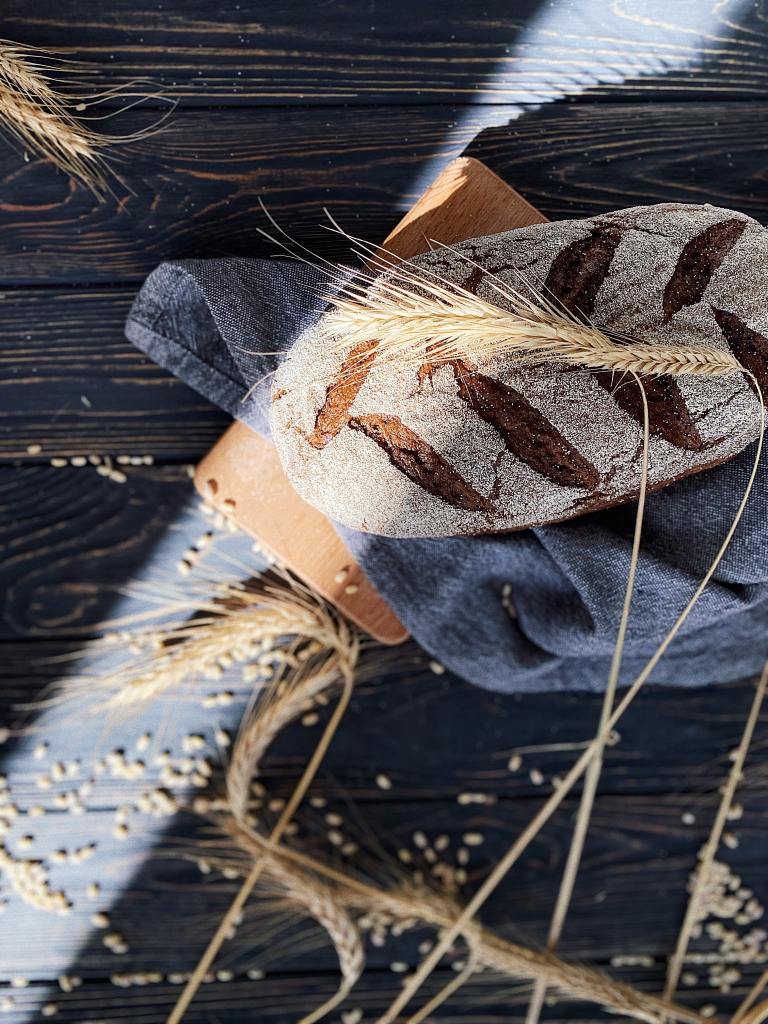
The timing of my weekly bread baking and the reading of the Gospel for today couldn’t be more apropos. While I’m writing these thoughts, the aroma of the loaf of sourdough bread baking in my oven has awakened my appetite; I wasn’t hungry before the bread started baking, but now….now I am anticipating the taste of butter on freshly baked bread. I’m counting the minutes until I can remove the bread from the oven, then I’ll count the minutes until the bread will cool enough for me to slice into it. My mouth waters at the thought of it! I’m consumed with a yearning for that bread in my oven, and no slice of store-bought bread is going to satisfy that need!

I wonder if the people who listened to Christ’s teachings on hunger and thirst for bread and water knew something of what I am feeling just now as my bread is baking? I wonder if they allowed their minds to go beyond their physical hunger and thirst into the appetite of the soul Jesus was awakening in them? They were familiar with the Old Testament’s scriptures that foreshadowed The Bread of Life that would be fulfilled in the New Covenant. They would have known the psalms and oracles from the Old Testament that we are reminded of in today’s readings. Let’s consider how, from the beginning, the LORD has whetted humanity’s appetite for the fulfillment of His promise in the body and blood of our Savior Jesus Christ.

The psalmist describes the faithfulness of the LORD in Psalm 145 by saying, “The hand of the Lord feeds us; he answers all our needs.” The LORD prepared his people for the ultimate Bread from Heaven that would satisfy the hunger and thirst of their souls. The writer recalls what the ancient Israelites had learned about this heavenly food through the physical hunger they had in the desert after escaping slavery in Egypt. The LORD poured forth manna from the heavens to satisfy their desires. He brought forth springs of fresh water from the rock to slake their thirst. In delivering them from slavery, He blessed them with the created bounty of bread and water to draw their minds beyond reality to the freedom that comes from the LORD alone.

The eyes of all look hopefully to you,
    and you give them their food in due season;
you open your hand
    and satisfy the desire of every living thing.

Psalm 145

Then, through his holy prophet Isaiah, he beckoned His people to Himself as their Source of Life—a life lived in covenant with Him—the covenant that made satisfaction between God and humanity for all of time. He drew them through their physical hunger to consider the everlasting covenant that would be fulfilled in the coming of the Messiah. This God/Man would be THE Bread of Life, and the grace would be that we would recognize that our soul’s deepest hunger is satiated in Him.


Why spend your money for what is not bread;
your wages for what fails to satisfy?
Heed me, and you shall eat well,
you shall delight in rich fare.
Come to me heedfully,
listen, that you may have life.
I will renew with you the everlasting covenant,
the benefits assured to David.

Isaiah 55:13

Something our priest said to my husband and me near the completion of our journey to The Roman Catholic Church has come to mind as I have meditated upon the Gospel readings during these days that surround the Bread of Life Discourse that we read yesterday at Sunday’s Mass. Father Fitzpatrick said to us, “You have been hungry seeking bread, and now you have found The Bread who has sought your hunger for all these years.” You see, we had never been fully satisfied with the “store-bought bread,” so to speak, that we had hoped it would satisfy our deepest longings. We were left weary and malnourished, our hunger drove us to the transcendent Mystery (“to shut the mouth”) of the Triune God present in the holy sacrifice of The Mass and the Truth, Beauty and Goodness of The Faith.

Has it been that way for you, friend? Have you been trying and trying to feast on the goods of God’s creation and the distractions of this life but still find yourself hungry? I like how Bishop Barron describes how the satisfaction in things and experiences fade away. It is like a fireworks show, bursting before us as we ooh and ahh, but fading away, leaving the sky empty. Leaving us wanting more. We are created for perfect happiness with God, and that is ultimately given through the receiving of Christ’s body and blood in The Eucharist. Why settle for eating the stale bread of this life? In the celebration of the Mass, the heavens open with God’s bounty of grace through the memorial of Christ Jesus’ sacrifice for us–pouring into our hunger, filling us with the food that lasts forever.

We still eagerly anticipate the celebration of the Mass? Do you? Do you recognize it as the source and summit of your life? Do you believe it is the only feast that will heal your malnourished soul? Do you prioritize celebrating the Mass above all the things and distractions you enjoy?

Does your spiritual appetite make your mouth water when you hear the priest pray over us the words of Christ,

“Take, eat: this is my body…Drink [from my cup] this is my blood of the covenant, which is poured out for many for the forgiveness of sins.”

Matthew 26:27, 28

We are hunger seeking Bread, Jesus Christ is the Bread seeking our hunger!

Oh, LORD Jesus Christ, you are our salvation, the source and sustenance of our lives. In consuming you we receive the peace that passes all our understanding.

We are infused with your love, mercy, and faithfulness, and you feed us with the fruit of your Spirit.

May we hunger and thirst for you in the holy sacrifice of the Mass!

In the name of the Father, and the Son, and the Holy Spirit.

Amen.

To my Grandchildren, Chapter II

Don’t

Forget

to

Remember

Do you remember from the first chapter why God created the first man and woman? You are right; God created them to enjoy being with him, to look at Him the way He looked at them. We talked about how everything was perfect; God, man, and woman joined together as best friends. What happened that changed the perfect garden that God, the man, and the woman lived in? You are right; the man and the woman decided to look into a creature’s eyes, a serpent who hated God. After that time, bad stuff started to happen when they stopped looking into God’s eyes. They had ugly thoughts about each other; they spoke ugly words to each other. God still loved them very much; he never stopped gazing at them. God knew ugly things would happen because they stopped gazing into His eyes. The first terrible thing, probably the most terrible thing, happened after the man and the woman had their first two sons. What do you imagine is the most terrible thing that can happen? Let me tell you about it.

The man and the woman started a family; their oldest son was named Cain, and he liked to play with the dirt, planting seeds and growing vegetables. He was good at it; God had created him to enjoy caring for the earth’s dirt. The second son was named Abel, and the Sacred Scripture tells us he was a keeper of sheep. Do you know what that means? He enjoyed taking care of sheep; we call that shepherding so we could say Abel was a shepherd. God had created Abel to enjoy taking care of animals. From as long as they could remember the sons regularly prepared an offering with their parents to give to God. What do you suppose their offerings looked like? We can’t be sure, but we can guess. Sometimes they would give God an offering of the grains grown from the ground and sometimes they would offer God a young animal they had shepherded. It was their way of saying thank you to God for creating them and loving them in spite of their decision to look into the serpent’s eyes and think he loved them. We still do what they did today, our offerings of thanksgiving look a little different than they did then, but it still means the same thing.

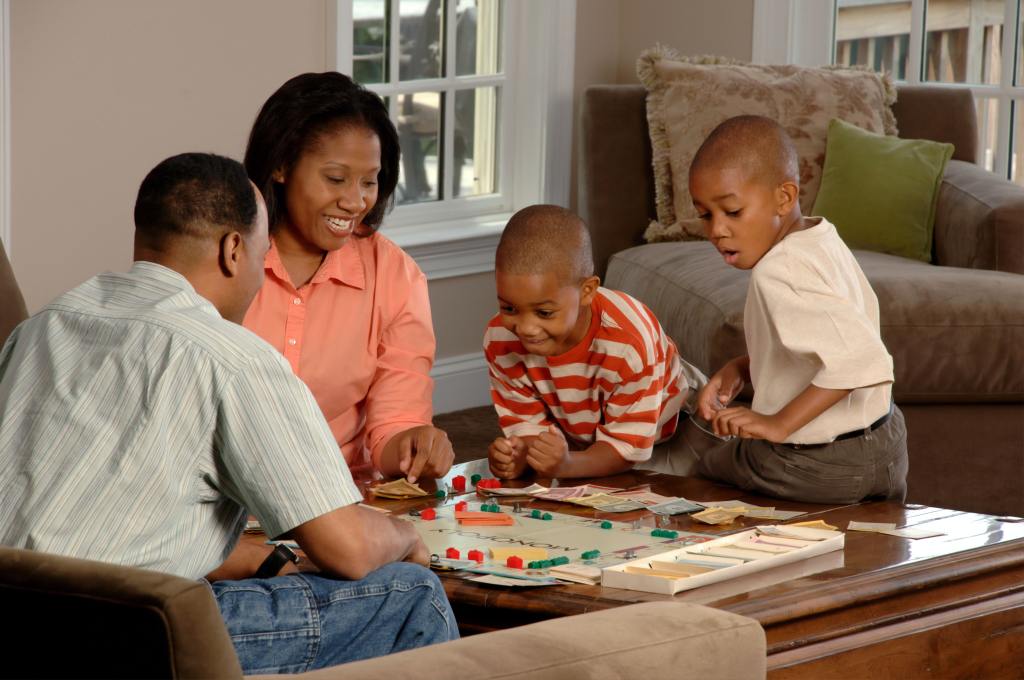
As the boys grew older, God began asking Cain and Abel to bring offerings of their own to Him to show Him how much they loved Him. The Sacred Scripture tells us Cain would bring the fruit of the ground he enjoyed taking care of and Abel brought the firstborn of the flocks of animals that he enjoyed taking care of. Somewhere along the way, Cain’s attitude changed about giving an offering of thanks to the LORD. We are given clues in Sacred Scripture about how that might have happened. I know you like to play the game Clue when we are together so I know you like clues, too. Professor Mustard will find a clue that could help him solve a mystery. It works the same way in Sacred Scripture, but Sacred Scripture is not a game; it is the Truth. It seems to me that if God wants to give me hints when I read His Sacred Scripture, I better pay attention because it is going to lead me to something important I need to know.

It happened one day that when Cain and Abel offered their gifts to God as a thank you, the LORD had regard for Abel’s offering. Do you know what that means? It’s a word you heard in the first chapter. The other word you can use for regard is gaze! Remember how much God loves to gaze at us; he also likes to gaze at what we enjoy giving to Him. Abel’s offering of a new lamb must have been beautiful to look at. You know what? The Sacred Scripture tells us that God did not regard Cain’s gift to Him. I wonder why? Do you think there was something wrong with the fruit of the ground that Cain brought to give God? Remember about clues. Here’s a clue about why God didn’t gaze on Cain’s offering very long. “Cain was very angry, and his countenance fell.” Hmm? That’s a curious clue. Cain probably was jealous of Abel, and when he realized God gazed at Abel’s offering longer than He did at Cain’s, he got angry. Not only did Cain feel angry, his face; his countenance fell. That means his look changed. I bet you know what this means because I know sometimes you get jealous of your sister or brother; you may even think that your parents love them more than they love you. I remember feeling that way!

You know what I think? God knows everything, even our thoughts, even when we don’t say our thoughts. God looks into our eyes and knows what we are feeling because He created feelings, too! So this clue about Cain’s feelings tells us something God knows that we don’t know because we aren’t God. Here’s what God did when Cain’s anger and jealousy showed on his face. He asked him some questions. The questions give us another clue about how the story may end. God asked Cain, “Why are you angry, and why has your countenance fallen? If you do well, will you not be accepted? And if you do not do well, sin is crouching at the door; its desire is for you, but you must master it.” God looked into Cain’s eyes and saw what He already knew. We use a big word to describe what only God can know, it is omniscience. Omni means “all,” and science means, “knowledge”–God alone has all knowledge, or we can put it this way, God is all-knowing. He knows EVERYTHING about EVERYONE at ANY TIME, ANYWHERE. That makes my brain sweat to even think about it. Doesn’t it do that to you? God is so spectacular that He keeps track of everything and everyone! Would you like to be omniscient? What are some of the things you would like to know?

There are so many words that describe God, but the most important is LOVE. When God saw that Cain was angry and jealous and that Cain assumed that God had rejected his offering, he still loved Cain. Cain was still learning how to love God. We do that sometimes, don’t we? Remember that God is omniscient so He knows what we are thinking and why we are thinking it. And He still loves us! This is a good thing to remember when we read the rest of the story about Cain because he makes the worse choice ever. Can you guess what the worse choice is?

A little while later, Cain tricked his brother. He told Able, “Let’s go out to the field.” Cain didn’t want to go to the field just to play soccer. What happens next is a terrible choice–Cain killed Abel! He killed him because he was jealous of him so he thought the solution to his feelings of jealousy was to get rid of Abel. Does that make sense to you? God had a curious way of handling Cain’s terrible choice; instead of yelling and screaming at him, he asked Cain two questions! “Where is you brother?” and “What have you done?” Remember that God knows everything? So, why do you think he asked Cain that question? This question gives us another clue, and it’s about the way God loves us.

God loves you more than your parents and loves you more than I love you. That’s almost impossible to believe that anyone could love you more than your parents or me. God wants you to choose to love Him just like he wanted Cain to love Him, and so would remind Cain about the most important choices he would need to make in order to have the happy life God had planned for Him. And even though Cain ignored God and got mad at God, God still loved Him. Even though Cain did the worst thing ever, God still wanted to Cain to gaze into His eyes and tell him the truth about what he had done.

Do you remember a time you did something wrong and Dad has you a question about what you had been doing? Then you figured out he already knew what you were doing but wanted you to admit you did it. The word we use for that is “confess.” The Sacred Scripture is full of stories like Cain’s where God shows His love in the same way as He did with Cain and as Dad shows his love to you. God knows that if you confess what you did was wrong, He can help you fix your gaze back on Him. If you don’t confess what you’ve done wrong, it will be very hard to gaze into His eyes. Another thing it will do is it will make it easier for you to keep ignoring God and to keep choosing to do things will eventually cause you to forget how much God loves you.

This leads us to a conversation God had with a man named Abram. Abram was scared of a lot of things, but God taught him how to trust Him and quit being scared. We’ll read about that in the next chapter.

In A Word….”Selah”

Today’s readings from the psalms and oracles of the prophets serve as a soundtrack, as it were, for us as we have been considering the beginnings of God’s chosen people, the Israelites, recorded in Genesis. It’s not hard to recognize the same soundtrack plays as a backdrop for our own lives as we grow into our identity as God’s child. In fact, I believe that is why the psalms and oracles are so prevalent in The Liturgy of the Church, the words unite our spirit with the Spirit of God’s voice throughout the ages.

There is a certain word that is often sung or implied as a theme and by heeding it I may receive the LORD’s help as I walk the path of salvation. The word acts as a pop-up reminder to us to remember who we are and to whom we belong as we tread our own way through the high and low places of our journey of salvation. Consider this paraphrase of Psalm 46.

God is [my] refuge and strength,
    a very present help in trouble.  Therefore [I] will not fear …… Selah

…God is in [my] midst; [I] shall not be moved;
God will help ….
 Selah

….“Be still, and know that I am God.
    I will be exalted among the nations,
    I will be exalted in the earth!”….
 Selah

The words of the psalmist convey the ever-present help of the LORD to us as the way to mindfulness of the LORD’s quiet presence to us. The psalmist ends each phrase with the word “Selah”, which means “forever” or “to lift up; exalt”, its presence in the psalm is a cue for us to pause or to take a breath allowing our minds to take in what the psalmist has proclaimed. It serves as a sacred and silent interlude for us to receive the LORD’s truth. Within this particular psalm, there is the implication of the “if/then” of the fullness of God’s Covenant with us. He calls the people to “Be still and know that I am God,” to consider what the LORD in his mercy is trying to teach us as we live out our salvation: If you will remain silent, listen and linger with me, then you will know I am your fortress; I will be your salvation! Sounds easy enough, doesn’t it? Yet in practice, it can take a colossal effort to remain silent. I am sometimes tempted to rely on my own judgment to quickly plow through the interruptions of life or become so enamored by the shiny parts of life that I’m distracted from the reality of the LORD’s Covenant with me.

We see this evidenced in what we’ve been reading about the history of God’s people; how fear and pride dogged their path, how they allowed the so-called gods of the culture around them to lose sight of the LORD’s Covenant. Eventually, fatigue from their striving to fit in with the culture wears them down. What I have observed in my own life is that if fear and pride don’t drive me to my knees before the LORD, fatigue certainly will. I need “Selah” for I weary of the tug of war between my own will and the LORD’s will…..that’s just like him, isn’t it? He allows us to come to the end of ourselves where we finally cease striving. It’s as if the LORD says, “Lois, I finally have you where I need you…..now, let’s consider how you are striving to achieve and acquire what comes from Me alone.”

Two other passages from the psalms and the prophet are included in the Liturgy today that draws our spirit into a “Selah”. From Isaiah 30:15, “By waiting and by calm you shall be saved. In quiet and in trust your strength lies.” And again in Psalm 124 we can imagine the psalmist seated on a mountainside of the rugged terrain of Israel. As he sits there, he is pondering all the “what ifs” of life and remembers the faithfulness of the LORD as his rock and refuge. In that “Selah” a song formulates in his mind and he begins to sing,

If it had not been the Lord who was on my side
    when people rose up against me,
then they would have swallowed me up alive,
    when their anger was kindled against me;
then the flood would have swept me away,
    the torrent would have gone over me;
then over me would have gone
    the raging waters.”

Friend, are there “what ifs” in your life? Do you sit still before the LORD as you ponder them?…. Selah

Have you come through a time of celebration and are left with a sense of satisfaction and gratitude?… Selah

Were you following a path set before you when circumstances went sideways for you? …Selah

Has someone you trusted betrayed you? ….Selah

Has the pandemic brought about a financial reversal in your life?… Selah

Do you tend to focus on what the LORD hasn’t done for you?… Selah

When you scurry after pleasures that are passing, do you…Selah?

The joy of our salvation comes through our own willingness to Selah; to be still and know that the LORD is forever faithful and true. Only He can truly satisfy.

LORD God, remind us that nothing is new under the sun. You never change and your responses to our own choices are the same as they were to our ancestors in the faith. LORD, you are faithful and true even when we are not. Slow us down, train us to embrace “Selah” in our posture before you.

In the name of the Father and the Son and the Holy Spirit. Amen

Let It Be

When I find myself in times of trouble, Mother Mary comes to me
Speaking words of wisdom, let it be.
And in my hour of darkness she is standing right in front of me
Speaking words of wisdom, let it be.

–The Beatles

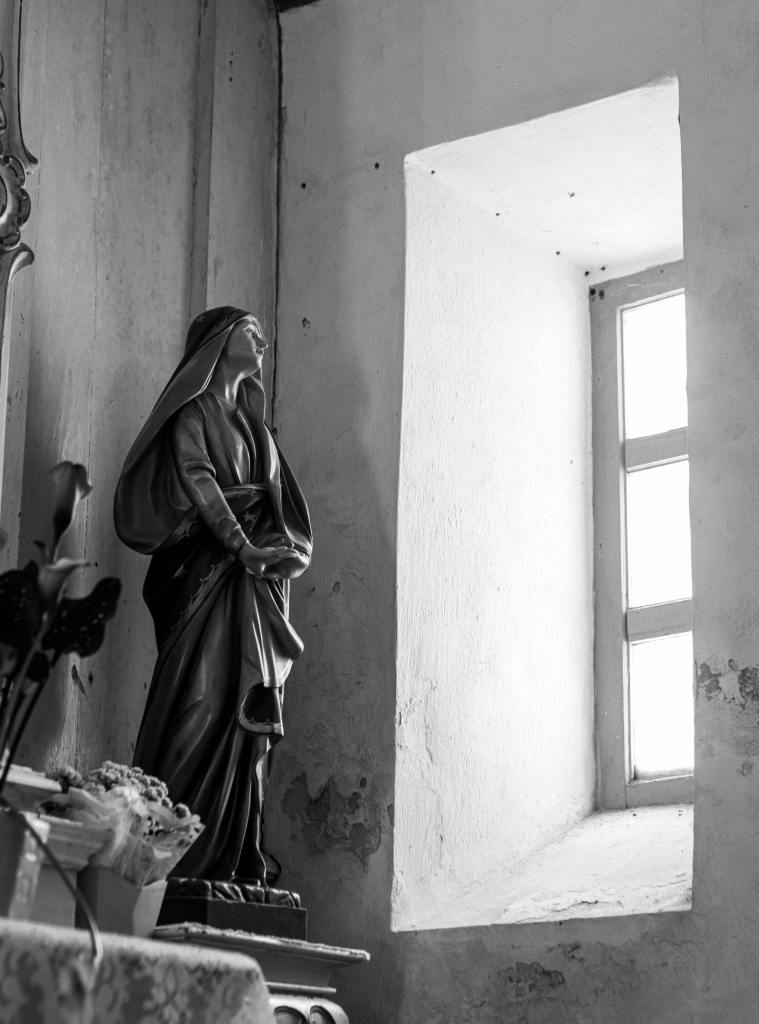
My first encounter with the beauty of our Blessed Mother came through the 1968 release of the popular song, Let it Be, by the Beatles. What the Beatles communicated in that song, though not exactly scriptural, began to draw me to Mary long before I converted to Catholicism decades later. The notion that the mother of Jesus could speak words of wisdom to me intrigued me.

Later in life when I was a tenderfoot Catholic I began contemplating all the words of Our Blessed Mother and I found that praying, “Let it be” could usher me into the grace the LORD has for all who will magnify Him. How so? By observing this grace-filled woman, this perfect mother, we learn how to detach ourselves from our own notions about how life should go. Let’s use the Beatles song to expand on how Mary’s fiat leads us into wisdom.

“When I find myself in times of trouble…” Our Blessed Mother knew times of trouble, she knew what confusion felt like, she knew what rejection felt like, she knew what poverty felt like. Her response to those rugged realities– “And Mary kept all these things, reflecting on them in her heart” reveals her humility. As we learn to respond rather than to react when the unexpected throws us off-kilter we leave room in our soul to reflect on the circumstances from the LORD’s point of view as Mary surely did. In that space of reflection we learn to listen to the Holy Spirit’s wise counsel. Though life may remain rugged, we may more readily accept the pratfalls of life as sacred ground for our spirit to rest in the LORD’s great love for us.

“And in the hour of darkness…” Allow me to use my own experience with “the hour of darkness” to show how our Blessed Mother comes to us speaking words of wisdom. In the years before I officially converted to The Catholic Church, I devoured books written by contemplative Catholics. My spirit kindled to reading about the sacramental life of The Church, especially when the life of Our Blessed Mother was the topic. My spirit opened to belief in her intercession for me. One afternoon in the midst of a collection of grief-filled realities, I was feeling the seer of pain from an unspeakable tragedy our family was enduring. The hours, months, years were filled with dark hours! I cannot say I put Mary to the test but, somewhere deep down I hoped that she would be my Mother as I was being a mother in the midst of loss and grief. A moment came when I dropped to the floor from physical exhaustion of the trauma; I began to pray. Who did I pray to? The LORD of course, but who was there holding me, weeping with me, crying out with me the extreme of my emotions? It was Our Blessed Mother! I cannot articulate the infused comfort and hope my spirit received that day, but I experienced the “lifting up of the lowly” that Mary declared in her Magnificat.

“And when the night is cloudy…” When we are on our last tether and we can’t see our way through a dilemma, if we listen, we hear the echo of Our Blessed Mother say to Jesus, “[She] has no wine.” When our resources don’t measure up to the expectation of others, if we listen we can hear her say, “Whatever He says, do it.” And what do we do when Christ abundantly supplies? We do as Mary, we reflect on God’s goodness and treasure it in our heart.

“I wake up to the sound of music…” As we pray the rosary of our Blessed Mother we join Mary in contemplating the joys of the life of our Saviour. He laughs, he celebrates; when He walks in He literally lights things up! And we can imagine Mary laughing right along; why? For she knew that “He who is mighty has done great things!” We receive the same peace and joy when our mighty Saviour does great things in us!